
Maruti Suzuki India's net profit surged 80.3 per cent to Rs 3,716.5 crore in the September quarter, driven by better sales, softening commodity prices, cost reduction efforts and higher non-operating income. The company had delivered a net profit of Rs 2,061.5 crore in the year-ago period, Maruti Suzuki India said in a statement on Friday. Maruti said it is expecting the affordability of small cars in the domestic market to come back in the next 2-3 years in the face of rising income levels of people and a growing economy, among others.

Tata Motors, Mahindra & Mahindra and Kia India on the other hand witnessed an increase in their market share based on the retail sales last fiscal. As per the Federation of Automobile Dealers Associations (FADA), the retail sales of country's largest carmaker Maruti Suzuki India rose to 14,79,221 units in 2022-23 fiscal, attaining a market share of 40.86 per cent. It had retailed 12,39,688 units in 2021-22 and grabbed a market share of 42.13 per cent.

India's flagship motor show Auto Expo 2023 kicked off on Wednesday with the global unveiling of Suzuki Motor Corporation's concept electric SUV 'eVX' which is slated to hit the market by 2025. The company's Indian arm Maruti Suzuki India is among the major manufacturers participating in the show that has returned after three years. The Concept eVX is a mid-size electric SUV concept designed and developed by Suzuki Motor Corporation (SMC), Japan. It will be powered by a 60 kWh battery pack offering up to 550 km of driving range on single charge.

Car recalls have now become the flavour of the season, a byproduct of the booming auto business.

Right now, the 'Lower D' or LD segment -- which the industry defines as a sedan that costs between Rs 1.5 million and Rs 2 million, is longer than 4.5 metres, and powered by an engine of 1.8 litre or larger -- has barely three cars, all of which have been around for over a decade in India. Nevertheless, at least one foreign auto player is looking to bet big on the segment.

Volkswagen's premium brands Audi and Porsche will join Formula One after convincing the German automaking group that the move will bring in more money than it will cost, VW Chief Executive Herbert Diess said on Monday.
Automakers finish 2008 on a bleak note. Expect 2009 to be worse.

The trend is expected to gain momentum as global vehicle makers in India, particularly from Japan, ride on hybrids to meet the more stringent fuel efficiency norms that take effect in 2022.

Major carmakers, including Maruti Suzuki, Hyundai, Tata Motors on Friday reported growth in their passenger vehicle sales in June as semiconductor shortage woes showed gradual signs of easing out. Other manufacturers, Kia India, MG Motor India and Skoda Auto India also reported robust sales growth last month. Maruti Suzuki India (MSI) reported 5.7 per cent increase in total wholesales at 1,55,857 units in June as compared to 1,47,368 units to dealers in June 2021.

Maruti's 7 models in India's top ten selling passenger vehicles in 2016-17

'Since we have a long waiting period, customers will be able to see cars for the next one year which are going to be produced and block (book) them.' 'So, if there is a wedding or a birthday in October, they can already check its availability in that month and block it.'
Auto companies are looking to increase prices of their models mainly to offset higher input and operational costs.

Companies are using additional service workforce and offering part waivers on charges to affected car owners.

Maruti Suzuki, Hyundai and Tata Motors reported their highest-ever dispatches to dealers last fiscal, enabling the domestic passenger vehicle industry to log in best-ever performance to date. The country's largest carmaker Maruti Suzuki India reported its highest wholesales to date at 19,66,164 units, up 19 per cent from 16,52,653 units in 2021-22. Its domestic dispatches rose to 17,06,831 units in 2022-23, up 21 per cent from 14,14,277 units in 2021-22 fiscal.Hyundai Motor India said its overall wholesales last fiscal were the highest ever since commencing operations in the country.

Luxury carmaker Mercedes-Benz India on Thursday said it will increase prices of its vehicles ranging between Rs 2 lakh to Rs 12 lakh across different models from April 1, to offset rising input costs specially the adverse impact of foreign exchange. This will be the second time in three months that the company is increasing prices of its vehicles. The ex-showroom price of the company's model range will increase by up to 5 per cent from April 1, 2023, the company said.

Maruti Suzuki has topped the after-sales customer service satisfaction.

Maruti Suzuki India (MSI) and Hyundai posted single-digit growth in domestic sales in June, even as the overall passenger vehicle segment crossed the 20 lakh units sales mark for the first time-ever in the first half this year. Toyota Kirloskar Motor reported a double-digit growth in dispatches to dealers, while Kia saw a dip in wholesales last month. MG Motor India also reported a double-digit increase in retail sales in June 2023 compared to the same month last year.
Passenger vehicle exports from India increased 43 per cent in FY22, with Maruti Suzuki India leading the segment with dispatches of over 2.3 lakh units, as per the latest data by industry body SIAM. The total passenger vehicle (PV) exports stood at 5,77,875 units in 2021-22 fiscal, as compared to 4,04,397 units in 2020-21. Passenger car shipments saw 42 per cent growth at 3,74,986 units, while utility vehicle exports rose 46 per cent at 2,01,036 units during the last fiscal, the data by the Society of Indian Automobile Manufacturers (SIAM) showed.
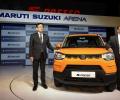
Maruti's strategy for the SUV segment is to arrest the decline in customers for entry level hatchbacks.

In his Marathi autobiography Lok Maze Saangati published in 2015, Pawar has lavished praise on Adani describing him as 'hard-working, simple, down to earth' and with ambition to make big in the infrastructure sector.
The country's largest carmaker Maruti Suzuki India will not "walk away" and fight to get back to 50 per cent market share in the domestic passenger vehicle segment, according to company Chairman R C Bhargava. The auto major, which is commemorating 40 years of operations, has seen its market share drop to 43.38 per cent in FY22 from a peak of 51.21 per cent in FY19. In order to get back its dominant leadership, the company plans to drive in models catering to both urban and smaller cities and rural areas.

They are recalling a total of about 3.4 million vehicles worldwide as a result of an airbag problem.

Tata Motors, India's largest electric passenger vehicle manufacturer, has signed an agreement with ride-hailing company Uber to supply 25,000 electric vehicles (EVs), the company said. The agreement is the largest EV commitment between an automotive manufacturer and a ride-sharing platform in India. Under the agreement, Uber will deploy Tata Motors' XPRES-T EVs by partnering fleet operators in Delhi National Capital Region, Mumbai, Kolkata, Chennai, Hyderabad, Bengaluru, and Ahmedabad.
Tata Motors, India's largest electric passenger vehicle manufacturer, has signed an agreement with ride-hailing company Uber to supply 25,000 electric vehicles (EVs), the company said. The agreement is the largest EV commitment between an automotive manufacturer and a ride-sharing platform in India. Under the agreement, Uber will deploy Tata Motors' XPRES-T EVs by partnering fleet operators in Delhi National Capital Region, Mumbai, Kolkata, Chennai, Hyderabad, Bengaluru, and Ahmedabad.

Maruti will launch its first electric vehicle (EV) in the next financial year (FY24), and will roll out six EVs in the country by FY30, the automaker's parent firm Suzuki said on Thursday.

Cars priced above Rs 25 lakh account for 1 per cent in India's 3 million-car market and the share has remained unchanged over the last five years.
The country's largest carmaker Maruti Suzuki India on Thursday reported 14 per cent increase in total wholesales at 159,044 units in November. The company had dispatched 139,184 units to dealers in November 2021, MSI said in a statement. Last month, the company's domestic sales rose 18 per cent to 139,306 units as against 117,791 units in November 2021, it added.

The country's largest carmaker Maruti Suzuki India (MSI) on Monday said it has increased prices of its entire product range, except Celerio, by up to 1.9 per cent with immediate effect. In a regulatory filing, the company noted that it has taken the decision to hike prices due to an increase in various input costs. The weighted average price rise in ex-showroom prices (New Delhi) across select models is 1.9 per cent, it added. This is MSI's third price hike this year.
Car sales in terms of numbers in India in the just-concluded financial year (2013-14) have gone down in over a decade, confirming once again the extent of the economic slowdown.

The country's largest carmaker Maruti Suzuki India (MSI) on Thursday said it is planning to increase vehicle prices from January next year to offset the impact of the rise in input costs. The price increase would vary from model to model, the auto major said, without sharing the details.

Supply chain constraints will keep plaguing automobile companies even though demand significantly improved resulting in a 13 per cent year-on-year (YoY) increase in sales in financial year 2021-22 (FY22). Executives at auto firms fear that the Russia-Ukraine war will further dent the sector's prospects of recovery as supply chains face more disruptions. "The visibility in the supply side is so hazy that it is difficult to give even one quarter projection. But all the parameters of demand like pending bookings and enquiries are increasing.
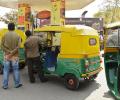
Amid a shift in mobility trends and people increasingly opting for less polluting energy sources, sales of compressed natural gas (CNG) vehicles increased more than 82 per cent in the past five years. A total of 729,902 CNG vehicles were sold in 2022-23 against 400,825 in 2017-18, according to VAHAN Dashboard. Though the increase in sales of CNG-powered vehicles has been significant, their share in overall vehicle sales remains minuscule as is the case with EVs.

The country's largest carmaker Maruti Suzuki India on Monday said it will hike prices across models from next month amid rising input costs. In a regulatory filing, the company said, ".... over the past year the cost of company's vehicles continue to be adversely impacted due to increase in various input costs." Hence, it has become imperative to pass on some impact of the additional cost to the customers through a price rise, it added.

Maruti Suzuki India will increase the prices of its vehicles 'substantially' from next month as it looks to offset the impact of rising input costs and make provisions to update the model range to conform to stricter emission norms which kick in from April 2023. In a regulatory filing on Friday, the country's largest carmaker said it continues to witness increased cost pressure driven by overall inflation and recent regulatory requirements. While the automaker makes maximum effort to reduce cost and partially offset the increase, it has become imperative to pass on some of the impact through a price increase, it added.

Manufacturers that mainly sell diesel cars like Mahindra & Mahindra, Tata Motors, Toyota, Mercedes, BMW and Volkswagen anticipate a significant fall in sales if the government accepts the Parikh committee's recommendation of a flat tax of Rs 80,000 on diesel cars, because of a widening cost differential with petrol variants.
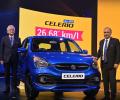
'It leads to more investment, more money put in R&D, expansion and modernisation.'
