
Hindustan Unilever Ltd on Friday reported a 1.08 per cent increase in consolidated net profit at Rs 2,508 crore in the third quarter ended December 2023. The company had posted a consolidated net profit of Rs 2,481 crore in the same quarter last fiscal, Hindustan Unilever Ltd (HUL) said in a regulatory filing. Its revenue from sales of products was marginally down to Rs 15,259 crore during the quarter.

UltraTech Cement's third quarter of financial year 2023-24 (Q3FY24) performance saw a combination of 6 per cent year-on-year (Y-o-Y) volume growth and 8 per cent revenue growth coupled with better realisations per tonne. The earnings before interest, taxes, depreciation, and amortisation (Ebitda) stood at Rs 3,250 crore and Ebitda per tonne was Rs 1,191. Profit after tax (PAT) was reported at Rs 1,780 crore. Other income dipped and interest costs rose.

'What will matter in 2024 from the market standpoint is the direction of interest rates globally, as well as in India.' 'The results of the general elections will also be keenly watched.'

Titan Company on November 21, became the second Tata group firm to join Rs 3 trillion market capitalisation (market cap) club after its shares hit a new high of Rs 3,400, up nearly 2 per cent on the BSE in Tuesday's intra-day trade. At 12:28 PM; with a market cap of Rs 301,847 crore (Rs 3.02 trillion) Titan stood at number 16th position in overall market cap ranking on the BSE listed companies, the exchange data shows. Titan overtook paint company Asian Paints, which has a market cap of Rs 300,579 crore, data shows.

Chinese fashion e-commerce platform Shein is expected to make a second entry into India and has tied up with Reliance Retail for this, according to a source in the know. The source said as part of the tie-up, Shein would source goods from India for its global operations. Also, the manufacturing of its products could happen in the country and they could be exported.

Tata Communications has seen analyst upgrades after reporting Q3FY24 results. The biggest factor is the visible signs of a turnaround in its new acquisition, Kaleyra. The consolidated revenue grew 16 per cent Q-o-Q to Rs 5,630 crore led by 15 per cent Q-o-Q improvement in the data segment.

State Bank of India's earnings growth may turn lacklustre in the near-term, warn analysts. This, they said, could be due to margin compression and likely lower fee income over the next one year. "While the cost of deposits is repricing sharply across the system, there will be relatively lower yield expansion going ahead as most of the back-book has been repriced and there is a high competitive pressure on yields.
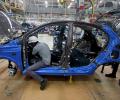
Automobile industry in India is going through a long-term structural slowdown as the compound annual growth rate (CAGR) across all major vehicle segments has witnessed a decline over the last three decades, as per industry body SIAM. The auto industry has been facing headwinds even before the COVID-19 pandemic derailed the entire sector last year, a research conducted by the Society of Indian Automobile Manufacturers (SIAM) has revealed. The study clearly shows that the pandemic is not the only reason for the auto sector slowdown, which is facing deeper structural issues that need attention, the industry body noted.

In the June quarter of FY24, 51 per cent of consumers who took small-ticket personal loans already had more than four credit products at the time of accessing yet another new loan, compared with just 17 per cent in the June quarter of FY20, points out Tamal Bandyopadhyay.
With the merger between HDFC Bank and HDFC Ltd complete, analysts said the next key monitorable for the Street would be successful resolution of merger-related hiccups, including employee-related churn and roll out of complete banking services across branches. At the bourses, they expect the stock to perform in-line with the benchmark indices in the near-term. "There's usually an initial period of consolidation after a merger as the entities work towards integration.

The duty hike on cigarettes by 16 per cent announced in the Union Budget 2023-24 would have a nominal impact of around 7-12 paise per stick across cigarette categories, according to experts. This upward revision in National Calamity Contingent Duty (NCCD) would have negligible impact on smokers and the companies could easily absorb the shock as it may not also have any resultant impact on margins, they said. Finance Minister Nirmala Sitharama in the Union Budget for 2023-24 on Wednesday proposed to revise and increase the duty on cigarettes to about 16 per cent.

Oil-to-telecom conglomerate Reliance Industries (RIL) has emerged as the country's largest wealth creator, adding a staggering Rs 9.6 trillion over the past five years, according to Motilal Oswal's 26th Annual Wealth Creation Study. In doing so, the Mukesh Ambani-led company has beaten its own record of Rs 5.6 trillion generated in 2014-19. The study covered financial year 2015-16 (FY16) to FY21 and ranks the top 100 companies in descending order of absolute wealth created, subject to the company's stock price outperforming the BSE Sensex. The firms were also ranked according to speed (price CAGR during the period).
Target prices around Rs 400 suggest a significant upside.

Rising penetration of trade generic medicines is eating into the value growth of the domestic pharmaceutical market, showed a recent analysis. According to a Kotak Institutional Equities analysis, 70-110 basis points (bps) annual dent is expected from trade generics and Jan Aushadhi on Indian Pharma Market (IPM) growth at least until FY27-28 (see chart). Trade generic medicines are those that are not pushed into the market through doctor promotions.

Shares of Reliance Industries (RIL) traded 2 per cent higher at Rs 2,310.10 on the BSE in intra-day trade in an otherwise volatile market after the company reported a 27.4 per cent year-on-year (YoY) growth in its consolidated net profit at Rs 17,394 crore for the September quarter (Q2FY24). While revenue growth of the company was flattish YoY at Rs 2.32 trillion, the profit rose on the back of operational improvement across most segments, especially higher profits in the O2C (oil-to-chemicals) and oil & gas businesses, as well as the retail business. "Strong operational and financial contribution from all business segments has helped Reliance deliver another quarter of robust growth," said Mukesh Ambani, chairman and managing director of the company.

Among index funds, the most popular products are funds tracking the Nifty 50 and Sensex, says Dwaipayan Bose, and explains the finer points of selecting the right index mutual fund.

While Emami is still struggling to push growth, given weak rural demand, the sale of the group's stake in AMRI Hospitals should ease investor concerns about stake pledges by promoters. It has also carried a series of stake acquisitions which should enable the expansion of its brand portfolio. The Q2 results are likely to see flat volumes and low revenue growth alongside some gross margin expansion.

SIP top-ups are especially beneficial for young investors, who may start with a small SIP installment and grow it over their working careers, says Dwaipayan Bose.

An interesting imaginary conversation between Kirtan A Shah and an investor about how investing in mutual funds is better than investing directly in stocks.

India is among the top three emerging markets in the wellness economy.

Crude and gas supply concerns have eased amid reports that Israel and Hamas have struck a peace deal. The International Energy Agency estimates oil demand may drop slightly in calendar 24 but Opec probably has enough pricing power to maintain $80/ barrel Brent prices. Russia's share of India's crude imports remained strong at about 35 per cent in September 2023.

They will not be followed by analysts and no fund manager can buy such small companies with low trading liquidity.
Large companies, those that are talked about in the media and tracked on social media, have already been discovered. They won't lead to extraordinary gains, Debashish Basu points out.

rediffGURU Ramalingam Kalirajan answers your personal finance queries.

'However, we have seen weakness in our active pharmaceutical ingredients business.'

Avenue Supermarts, the operator of DMart retail chain, reported good results for the July-September quarter (Q2FY24) with strong earnings before interest before interest, taxes and depreciation (Ebitda) and profit before tax (PBT) growth, but lower PAT due to higher tax incidence. The operating margin improved, and like-to-like store sales growth was strong. Average bill value also increased though this may be a seasonal effect to some extent. Analysts are assuming this means the slowdown in retail may have bottomed out.

Led by Tata Motors and Tata Consultancy Services (TCS), the combined revenue of the Tata group's listed firms crossed the Rs 10-trillion mark for the first time, in 2022-23. The group's 14 key listed companies in which Tata Sons holds a direct equity stake reported a combined revenue of Rs 10.07 trillion in FY23, up 15.3 per cent from Rs 8.73 trillion in FY22. The combined net profit of these companies was, however, down 10.6 per cent year-on-year (YoY) at Rs 66,670 crore in FY23, from a record high of Rs 74,540 crore in the previous financial year, when the profit had jumped 156 per cent YoY, aided by Tata Steel's strong showing.

Maruti Suzuki India (MSIL) has ambitious plans to increase capacity. It is also seeking shareholders' approval for a complex swap transaction, which would acquire Suzuki Motor Gujarat (SMG), a subsidiary of Suzuki Motor Corporation (SMC) through a preferential offer. SMC already holds 56.37 per cent of MSIL's equity.

Dwaipayan Bose on how index funds play a key role in the diversification of portfolios and help manage risks

It may be a little early to cheer the recovery in the fast-moving consumer goods (FMCG) space as a deceleration in discretionary demand, after the festival season, may offset fragile rural recovery, analysts have cautioned. "The overall demand environment for staples remains muted, while discretionary demand trends have seen some deceleration after the festival season. "We believe margins in staples have bottomed out, but we expect only a gradual uptick with the ongoing softening in raw material prices.
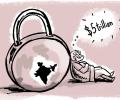
It would be a difficult task for the Indian economy to reach the $5-trillion mark a year before the International Monetary Fund (IMF) projection of 2026-27. Pankaj Chaudhary, minister of state for finance, said in the Rajya Sabha on Tuesday that the government is taking steps to make the country a $5-trillion economy at a date earlier than the IMF's projection. In that context, it would not be difficult to meet the projection in the third quarter of FY27.
Mutual funds focused on small-caps have emerged as the winner with a net inflow of close to Rs 11,000 crore in April-June quarter, as fund managers struggle to create alpha in the large-cap space, and the trend is expected to continue for some time. On the other hand, large-cap space, which is yet to pick up momentum, witnessed an outflow of Rs 3,360 crore during the quarter under review, data from the Association of Mutual Funds in India (Amfi) showed. Apart from the June quarter, small-cap funds logged an inflow of Rs 6,932 crore in three months that ended in March.

Billionaire Gautam Adani-led group's renewable energy firm on Thursday announced plans to raise Rs 12,300 crore through a share sale to investors as the group continues to build on a comeback strategy to emerge out of allegations of fraud levelled by a US short-seller. Adani Green Energy Ltd in a stock exchange filing said its board has approved raising up to Rs 12,300 crore through an issue of equity shares by way of qualified institutional placement (QIP). The funds are intended to be used for meeting capital needs of the company's expansion plans.

'Similar to the case of the digital payment system where the government created a public platform and others joined in, we are exploring a similar structure to create a PPP platform where the compute required for AI could be accessed by the small player.'

10 non-bank and non-finance stocks from the BSE500 Index universe that offer an optimal blend of low valuation, reasonably robust revenue and earnings growth in recent quarters, a strong balance sheet, and most importantly, positive cash flow from their operations.

HDFC Asset Management Company (HDFC AMC) reported a healthy profit after tax (PAT) of Rs 430 crore for the July-September quarter (Q2) of financial year 2023-24 (FY24). It rose 20.2 per cent year-on-year (Y-o-Y) and decreased 8.4 per cent quarter-on-quarter (Q-o-Q). This was driven by good equity returns, leading to a sequential improvement in revenue yields.

Two Adani group companies -- Adani Enterprises and Adani Transmission -- have uprooted the traditional leader Reliance Industries in annual wealth creation in 2022 so far, while the top 100 of them created a massive Rs 92.2 lakh crore of wealth, according to a report. However, Reliance Industries has smashed all records to emerge as the largest wealth creator during the five-year period ending March 2022, says the leading brokerage Motilal Oswal in its 27th annual wealth creation study. The Gautam Adani group companies have been rallying to dizzying heights in the year as the group snapped up many assets and diversified into newer areas.

Even as cyber threats continue to rise in India - the second-largest global active internet user base - the country is currently facing a big skill gap in the cybersecurity domain and represents just six per cent of global cybersecurity jobs, finds a report. As of May 2023, the industry had about 40,000 open opportunities, indicating the growing demand for skilled cybersecurity professionals. However, the demand-supply gap stood at 30 per cent, projecting a major skill challenge in the industry, finds the study by tech staffing firm TeamLease.
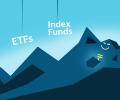
Dwaipayan Bose highlights the similarities and contrasts between ETFs and Index Funds.
Tata Consultancy Services (TCS) - the largest information technology (IT) services provider in India and the second-largest globally - recently set an ambitious goal of $50 billion in revenue by 2030. The growth required to reach this goal, however, is lower than the company's own standards. In the past decade, TCS revenues, or net sales in US dollar terms, have grown at a compound annual growth rate (CAGR) of 9.5 per cent, from $10.2 in 2011-12, to an expected $25.3 billion during 2021-22 (FY22), based on its revenue trend in the first nine months of FY22.

Richest Indian Gautam Adani's conglomerate has cited an improved net debt to operating profit ratio and more than halving of loans from public sector banks to allay concerns about it being overleveraged. In a 15-page note in response to CreditSights report calling the group overleveraged, it said companies in the group have consistently de-levered, with the net debt to Ebitda ratio declining to 3.2 times from 7.6 times in the last nine years. "The businesses operate on a simple yet robust and repeatable business model focused on development and origination, operations and management and capital management plan," the note, reviewed by PTI, said.
