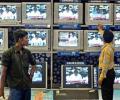
Bharti Airtel and Tata Group have terminated discussions for a merger of their direct-to-home (DTH) business, according to a Bombay Stock Exchange (BSE) filing on Saturday.

Bharti Airtel on Wednesday announced a new corporate structure to sharpen the company's focus on rapidly unfolding digital opportunities while enabling it to unlock value. The move comes at a time when digital is turning out to be a compelling proposition for players in the Indian market, where the use of smartphones and better broadband connectivity has spurred the adoption of a new range of services. Players are positioning themselves beyond the core telephony offerings, as they enhance digital engagement, build future streams of revenue and create brand differentiation, besides redefining themselves as a larger platform of digital services, say market watchers.

Bharti Airtel on Thursday said that Bharti Telecom and Singtel have mutually agreed to amend the existing shareholders' agreement to better align with business requirements and governance standards, and that as part of the changes, Singtel has relinquished "several key reserved rights".

Bharti Airtel on Monday reported a 168 per cent year-on-year rise in consolidated net profit to Rs 3,593 crore for the September quarter, and the company unveiled top-level changes, including Gopal Vittal moving into the role of executive vice chairman on January 1, 2026. India's second-largest telco - that competes with Reliance Jio and Vodafone Idea in the Indian telecom market - clocked quarterly revenues of Rs 41,473 crore, 12 per cent higher than the year-ago period, aided by strong momentum in India and growth in Africa.
Bharti has been expanding its spectrum portfolio and now owns 4G data across all 22 circles in India

Indian benchmark indices Sensex and Nifty experienced a decline due to renewed geopolitical concerns in the Strait of Hormuz, a strained US-Iran ceasefire, and the rupee hitting a record low against the US dollar.

Indian stock markets tumbled sharply with the Sensex falling 800 points and nearly 4 lakh crore wiped out in a single session. Here are the 6 key factors, including rupee weakness and global cues, behind the crash.
Indian equities on Dalal Street saw volatility as global market trends and weak rupee impacted investor sentiment. Track Sensex, Nifty50 movement and key market drivers for May 5, 2026.

Kotak Mahindra Bank to have a 19.9% stake in the proposed banking venture.

Bharti Airtel recently acquired a 100 per cent stake in Wireless Business Services, a company founded by US chipmaker Qualcomm. Subsequent to the acquisition, the company was renamed Airtel Broadband Services.

Indian benchmark indices Sensex and Nifty closed higher, with the Sensex climbing 355.90 points, driven by positive state election results and better-than-expected Q4 earnings, despite ongoing geopolitical concerns.

Bharti Airtel sees opportunity in raising tariff for data services as it feels that rich are paying less and poor are not required to pay anymore, a senior official of the company said. During the company's earnings call for the first quarter of the current fiscal, Bharti Airtel vice-chairman and MD Gopal Vittal said that the company has written to the government for a relief on adjusted gross revenue and has demanded that it should be given benefit at par with other telecom operator, without naming Vodafone Idea.
India's second-largest telecom service provider Bharti Airtel will call in March 2026 the final tranche of about Rs 15,741 crore from its 2021 rights issue of Rs 21,000 crore, proceeds from which will be used towards retiring majority of non-government-related debt.

Indian equity benchmarks Sensex and Nifty surged nearly 1 per cent, driven by strong earnings reports from FMCG and auto sectors, alongside a rally in Asian markets and signs of de-escalation in geopolitical tensions.

Indian stock markets experienced a second consecutive day of losses, with the Sensex tumbling 852 points, as crude oil prices surpassed USD 100 per barrel due to stalled US-Iran negotiations and escalating geopolitical tensions in West Asia.

Indian stock markets experienced a significant sell-off, with the Sensex tumbling over 1,300 points, driven by escalating crude oil prices due to US-Iran tensions and Prime Minister Narendra Modi's call for austerity measures, which amplified investor concerns about India's economic outlook.

Equity benchmark indices Sensex and Nifty tumbled in early trade on Monday, with the 30-share BSE Sensex falling 1,613.09 points and the 50-share NSE Nifty plunging 495 points, as the failure of US-Iran negotiations heightened concerns of a prolonged conflict driving crude oil prices sharply higher. Track Sensex, Nifty50 movement and key market drivers for April 13, 2026.

India's market landscape is undergoing significant shifts, with bank-backed brokerages potentially regaining dominance over discount platforms due to regulatory changes and increased taxes, while the IPO pipeline faces a slowdown amid heightened global volatility.
Indian benchmark stock indices, Sensex and Nifty, surged over 1 per cent, driven by optimism surrounding potential US-Iran peace talks and a significant drop in crude oil prices below the USD 100 per barrel mark. This de-escalation in geopolitical concerns and easing inflation pressures provided a substantial boost to investor sentiment.

Indian stock market benchmarks Sensex and Nifty rebounded by over 1% on Monday, driven by value-buying in banking stocks after a three-day slump. Key gainers included UltraTech Cement, HDFC Bank, and Mahindra & Mahindra.

Indian markets on Dalal Street rallied sharply as easing tensions in the US-Iran conflict and stable oil prices boosted sentiment. Track Nifty 50 and BSE Sensex performance and key global triggers.

Indian equity markets experienced a significant downturn as geopolitical tensions in West Asia, rising oil prices, and foreign fund outflows dampened investor confidence. The Sensex and Nifty both fell sharply in early trade, reflecting broader global market weakness.

The deal between Bharti group and Tata Teleservices is yet another example of how swiftly things can change in business.
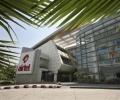
The sale proceeds will be fully utilised to repay debt at Bharti Telecom and will make the promoter holding firm a 'debt free company'.
Benchmark indices Sensex and Nifty experienced a significant decline, falling over 1 per cent due to foreign fund outflows and global uncertainties.

Indian equity markets experienced a volatile trading day, with the Sensex and Nifty closing almost flat. Market sentiment was influenced by global cues, US-Iran talks, and profit-booking activities.
Benchmark BSE Sensex fell 558 points on Thursday amid heavy selling in IT shares, as concerns over AI-led disruptions and waning hopes of a Fed rate cut after firm US economic data weighed on investor sentiment.
From the 30-Sensex firms, Adani Ports, HCL Tech, Power Grid, Trent, Bharat Electronics and Bharti Airtel were among the biggest laggards. However, Tata Steel, Asian Paints, Hindustan Unilever, and Eternal were among the gainers.
Benchmark indices Sensex and Nifty ended lower on Thursday, snapping a three-day rally, amid a weak trend in global stock markets.
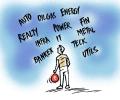
Among Sensex firms, Axis Bank tanked the most by 5.03 per cent. Eternal, HCL Tech, Bajaj Finserv, Tata Steel, UltraTech Cement and Bajaj Finance were also among the laggards. However, Titan, Bharti Airtel, Mahindra & Mahindra and Asian Paints were among the gainers.

Among Sensex firms, Sun Pharma, Tata Steel, Power Grid, Asian Paints, NTPC and Bharti Airtel were the biggest laggards. Tata Consultancy Services, Tech Mahindra, Infosys, Adani Ports, Axis Bank and HCL Tech were among the gainers.

India's biggest telecom players, Bharti Airtel and Reliance Industries-backed Jio Platforms, will soon bring billionaire Elon Musk-led SpaceX's Starlink satellite services to India. According to analysts, the move could boost India's tele density, especially in the rural areas, and may be an opportunity for investors to add the two stocks on dips for long-term gains
From the 30-Sensex firms, NTPC, ICICI Bank, Adani Ports, Bharti Airtel, Sun Pharma and Bajaj Finance were among the biggest laggards. However, Asian Paints, HCL Tech, Bharat Electronics and Reliance Industries were among the gainers.
Stock markets closed higher on Friday after the Reserve Bank of India kept its benchmark interest rate unchanged as expected and proposed allowing banks to lend to Real Estate Investment Trusts (REITs) with certain prudential safeguards to deepen the financing pool for the real estate sector.
Among Sensex firms, Infosys, Bharti Airtel, Adani Ports, Sun Pharma, Tech Mahindra, Eternal, Axis Bank and Maruti were the major laggards. However, ITC, UltraTech Cement, Tata Steel and HDFC Bank were among the gainers.
From the 30-Sensex firms, Tata Steel, Asian Paints, Trent, State Bank of India, Hindustan Unilever, UltraTech Cement, ICICI Bank and Bharti Airtel were among the gainers. On the other hand, Infosys, Bajaj Finance, Bharat Electronics, Larsen & Toubro and HDFC Bank were the laggards.
Tata Consultancy Services, Tech Mahindra, Infosys, HCL Tech, Bharti Airtel, Sun Pharma, Bharat Electronics and Trent were the major gainers among Sensex scrips. However, Maruti, Eternal, Kotak Mahindra Bank and Titan were among the laggards.

From the 30-Sensex firms, Trent, Infosys, Bharti Airtel, Tech Mahindra, Bharat Electronics and Maruti were among the biggest gainers. However, State Bank of India, Kotak Mahindra Bank, Larsen & Toubro and Titan were the laggards.
Among Sensex firms, Tata Steel, Eternal, UltraTech Cement, Larsen & Toubro, Maruti and Bharti Airtel were the major gainers. However, Hindustan Unilever, Sun Pharma, ITC and Asian Paints were among the laggards.
Among Sensex firms, Tech Mahindra, Infosys, Bajaj Finance, Bajaj Finserv, Eternal, Adani Ports, Hindustan Unilever and Bharat Electronics were the major laggards. However, Bharti Airtel, Axis Bank, Asian Paints and Titan were among the gainers.
 © 2026 Rediff.com - Advertise with us - Disclaimer - Privacy Policy - Sitemap - Feedback - About us - Terms of use - Grievances