
China's first moon rover is back to work after a "nap" and has succeeded in sending back the first images of the national flags on itself and the lander, space authorities said on Sunday.

China's first lunar rover on Saturday successfully landed on the moon, making the communist giant one of three world powers to make a "soft landing" as part of an ambitious programme that aims to put a Chinese astronaut on the moon.

The Chang'e-4 spacecraft scripted history on Thursday when it made the first-ever soft landing on the far side of the moon.

Three Chinese astronauts on Thursday entered the country's new space station after their spaceship successfully docked with it, just over seven hours after the launch from the Gobi Desert, in a major milestone for the Communist giant's space exploration plans and its bid to become a leading space power.

In the test, a space rocket boosted a hypersonic glide vehicle, one capable of carrying a nuclear device, which circled the globe before impacting.

China is all set to send on Thursday the first three crew members to its under-construction space station which is expected to be Beijing's eye in the sky and will rival the ageing International Space Station (ISS).
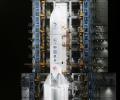
The debris from China's disintegrating Long March rocket entered the Earth's atmosphere on Sunday and reportedly fell into the Indian Ocean area close to the Maldives, the country's space agency said, ending an anxious week as people and the governments wondered where and when the space junk would fall.

Overall, the People's Liberation Army Air Force (PLAAF) has focused on building ground-based air defense networks and network-centric operations rather than trying to match the Indian Air Force (IAF) in terms of straight fighter numbers along the border. All air assets fall under the Western Theater Command of the PLA, the largest geographic region of China's five military theater commands.
