
Indian equity benchmark indices extended losses for a second consecutive session, with the Sensex dropping 143 points, driven by a sell-off in power, banking, and financial stocks, coupled with elevated crude oil prices and persistent FII selling.

Indian benchmark equity indices, Sensex and Nifty, ended sharply lower, with the Sensex tumbling 876.37 points and the Nifty dropping below 22,900, primarily due to a decline in private bank stocks like HDFC Bank and Axis Bank, alongside weak global market trends.

Indian benchmark indices Sensex and Nifty saw an early rebound, driven by strong performances from blue-chip HDFC Bank and major IT firms like HCL Tech, which reported a significant rise in net profit. Track Sensex, Nifty on October 13.

Indian benchmark indices Sensex and Nifty extended their rally for a second consecutive session, driven by a decline in Brent crude oil prices below USD 100 per barrel and strong buying in banking stocks and Reliance Industries.
Indian benchmark indices, Sensex and Nifty, extended their rally in early trade, driven by strong buying in bank stocks, Reliance Industries, and positive global cues, despite foreign institutional investors offloading equities.
Indian stock markets witnessed a significant rebound, with the Sensex rallying 1,109 points and the Nifty closing above 22,720, driven by strong performances in IT and financial sectors, a recovering rupee, and Finance Minister Nirmala Sitharaman's comments on long-term capital gains (LTCG) tax.
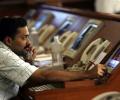
Indian benchmark indices, Sensex and Nifty, recovered early losses on Wednesday, driven by strong buying in IT stocks and HDFC Bank, sustaining the previous session's recovery despite FII outflows. Track Sensex, Nifty on October 14.
Indian benchmark equity indices, Sensex and Nifty, significantly recovered from sharp early losses, driven by buying in State Bank of India and Reliance Industries, alongside fresh foreign fund inflows, despite declines in Axis Bank and HDFC Bank.

Indian equity benchmarks Sensex and Nifty rallied up to 1 per cent in early trade, driven by strong performance in IT stocks, Reliance Industries, and favourable global market sentiment, rebounding from previous losses.

P V Sindhu and Lakshya Sen faced early exits at the Denmark Open badminton tournament on Tuesday, while Kidambi Srikanth and Tanvi Sharma secured hard-fought victories to advance to the second round. Sindhu lost to Yvonne Li, and Sen was defeated by Chou Tien Chen. Srikanth will face Alex Lanier, and Tanvi Sharma will play Yvonne Li next.

Indian benchmark indices Sensex and Nifty saw a sharp rebound in early trade, driven primarily by a rally in IT stocks and a decline in crude oil prices, even as global markets faced selling pressure due to US inflation concerns. Track Sensex and Nifty on

Indian benchmark equity indices, Sensex and Nifty, rebounded in early trade after a three-day slide, driven by strong buying in blue-chip bank stocks and a firm trend in global markets, supported by easing US bond yields and record foreign-currency deposit inflows.

Indian benchmark indices, Sensex and Nifty, experienced declines in early trading, primarily due to selling pressure on blue-chip HDFC Bank and ongoing geopolitical uncertainties.
Indian benchmark stock indices, Sensex and Nifty, rallied significantly, with Sensex jumping over 1,500 points and Nifty reaching a nearly three-week high, driven by strong buying in banking, IT, and Reliance Industries stocks, alongside easing crude oil prices.
Indian benchmark indices Sensex and Nifty saw a rebound in early trade, primarily driven by a more than 4 per cent surge in Tata Consultancy Services (TCS) shares following its robust Q2 net profit announcement. Track Sensex, nifty on October 9.

Coach Carlo Ancelotti is hopeful he will have Neymar available for more minutes in Monday's World Cup round of 32 fixture against Japan in Houston, and believes his Brazil side are ready for anything in what will be a tough knockout fixture.

Indian benchmark indices Sensex and Nifty experienced declines in early trade, ending a two-day rally, driven by a spike in Brent crude oil prices above USD 101 per barrel and investor caution ahead of the Reserve Bank of India's monetary policy decision. Track Sensex, Nifty on October 7.
Indian benchmark indices, Sensex and Nifty, experienced a sharp decline at the close of trade, with the Sensex dropping 539 points and the Nifty falling below 24,100, primarily due to selling pressure in HDFC Bank and ongoing geopolitical uncertainties.
Indian benchmark indices Sensex and Nifty saw a significant rebound in early trade, with the Sensex surging over 700 points, driven by a decline in crude oil prices, easing concerns over Federal Reserve tightening, and the appointment of Anup Bagchi as the new MD and CEO of HDFC Bank.
Indian stock markets closed lower, with the Sensex falling 429 points, after the Reserve Bank of India raised its benchmark interest rate for the first time in nearly four years, coupled with rising crude oil prices and persistent foreign fund outflows.

Indian benchmark indices Sensex and Nifty traded lower in early sessions due to profit-taking and significant foreign institutional investor (FII) outflows, despite strong performance from IT stocks like Tech Mahindra. Track Sensex, Nifty on October 16.
Indian benchmark stock indices, Sensex and Nifty, closed lower due to profit-taking, a spike in wholesale price-based inflation, and firm crude oil prices, despite some support from easing intraday crude oil prices and rupee appreciation.
Indian benchmark equity indices, Sensex and Nifty, closed higher on Monday, driven by softer-than-expected US jobs data which reduced expectations of aggressive monetary tightening by the US Federal Reserve, boosting risk appetite across emerging markets.
Indian benchmark indices, Sensex and Nifty, surged over 1 per cent, recovering from two days of losses, driven by a strong rally in IT stocks, particularly TCS, and a moderation in global crude oil prices.
Indian benchmark indices Sensex and Nifty experienced declines in early trade, influenced by the Reserve Bank of India's (RBI) recent repo rate hike and its signal for continued monetary tightening, coupled with rising crude oil prices and foreign fund outflows. Track Sensex, Nifty on October 8.
Indian benchmark indices Sensex and Nifty ended flat on Tuesday, with the Sensex dipping nearly 70 points, as investor sentiment turned cautious ahead of crucial global central bank policy meetings and a significant sell-off in Asian markets.
Indian equity benchmark indices Sensex and Nifty experienced a significant tumble in early trade, primarily driven by elevated crude oil prices due to ongoing West Asia uncertainty and substantial foreign fund outflows. Track Sensex, Nifty on September 29.

Indian equity markets, led by the Nifty 50, saw gains following a pullback in Brent crude prices towards $101-102 a barrel and weaker-than-anticipated US jobs data, which eased concerns about a Fed rate hike. However, analysts caution that markets are likely to remain volatile in the near term.
Indian benchmark indices Sensex and Nifty experienced a significant downturn in early trade, with the Sensex tanking 730 points, driven by surging crude oil prices, escalating geopolitical uncertainties, and a weak trend observed across Asian markets.

Indian IT stocks have experienced their most significant weekly surge in 18 years, with the Nifty IT index climbing 11.72 per cent, as a global sell-off in AI-linked equities redirected investor attention towards India's IT services sector. This shift aligns with a JP Morgan report identifying India as a 'natural AI hedge' due to its large, liquid market and strong domestic institutional investor base.

Indian benchmark indices Sensex and Nifty extended their losses for a third consecutive day, driven by firm crude oil prices, elevated global bond yields, and significant foreign fund outflows, making investors cautious.
Indian benchmark indices, Sensex and Nifty, saw early gains driven by strong buying in IT stocks like HCL Tech, Tech Mahindra, TCS, and Infosys, alongside a significant boost from HDFC Bank.

Indian benchmark indices Sensex and Nifty rebounded in early trade after two days of losses, driven by easing crude oil prices and strong buying in blue-chip IT stocks, despite continued global uncertainties. Track Sensex, Nifty on September 30.

Wipro reported a marginal 1.40 per cent decline in consolidated net profit to Rs 3,200.6 crore for the July-September quarter of FY27, despite a 9.1 per cent increase in revenue from operations to Rs 24,752.7 crore.

Defending champions India's women's cricket team is set to face Bangladesh in the Asian Games semifinal. With a dominant head-to-head record, India aims to continue their winning streak, while Bangladesh will rely on their spinners to challenge the strong Indian batting lineup for a spot in the final.
Indian benchmark indices, Sensex and Nifty, closed lower due to significant selling in HDFC Bank and Axis Bank shares, driven by margin-related concerns and escalating US-Iran tensions, which also pushed crude oil prices higher.
Indian benchmark indices, Sensex and Nifty, experienced a decline in early trade due to relentless foreign institutional investor (FII) outflows, although a drop in crude oil prices below USD 100 per barrel provided some cushioning. Track Sensex, Nifty on October 1.

A new report by FICCI, BCG, and IBA outlines that India's banking sector must grow significantly faster than nominal GDP to support a USD 30 trillion economy by 2047, requiring banking assets of USD 45 trillion. The report highlights the sector's current strength, challenges in digitisation, and the need to enhance resilience against fraud and cyber threats, proposing a 13-point agenda for stakeholders.

Jio Platforms (JPL) is preparing a capex-light strategy to commercially launch 6G services in the early 2030s through software upgrades, rather than fresh infrastructure investments, according to Akash Ambani, managing director of JPL.
Indian benchmark indices Sensex and Nifty rebounded on Wednesday, driven by value buying in banking stocks and select heavyweight counters, with the Sensex climbing 332.63 points and the Nifty ending above 23,200.
