
Small- and midcap stocks have delivered their biggest monthly rally in 12 years, but rising oil prices and global tensions could make the road ahead volatile.

The BSE Smallcap index hit an over eight-month low of 47,627.96, falling 3 per cent in Tuesday's intraday trade amid selling pressure due to ongoing tariff-related concerns and rising geopolitical tensions.

'The velocity of the market correction in September was so fierce that 9 stocks declined for every one that advanced,' reveals Samie Modak.

Despite geopolitical tensions and FII outflows, Indian small and midcap stocks have not only recovered losses but are also outperforming largecap indices, driven by attractive valuations, domestic institutional support, and a rebound in earnings.

Over 50 per cent, or 660 stocks, from the BSE 1000 index recorded negative returns during CY25.

Indian investors have seen their wealth erode by a staggering Rs 16.77 lakh crore over four trading sessions, as the markets faced deep losses driven by elevated crude oil prices, geopolitical tensions, persistent foreign fund outflows, and a record-low rupee.

'Defence, capital goods, engineering, capital market-related stocks, autos, and cement sectors are my bullish bets for Samvat 2082.'

The recent selloff in the Indian equity market has been far more painful for mid and smallcap stocks compared to largecap stocks. The benchmark BSE Sensex is now down 9.5 per cent from its record monthly closing of 84,300 at the end of September last year. In the same period, the BSE MidCap has lost 17 per cent of its value, while the BSE SmallCap has corrected by 17.1 per cent.
Indian benchmark indices Sensex and Nifty experienced declines due to a sharp rally in crude oil prices, continuous foreign fund outflows, and geopolitical uncertainties. Regulatory developments in the banking sector, particularly the implementation of the Expected Credit Loss (ECL) framework, also contributed to the selling pressure.

Indian investors have seen their wealth erode by a staggering Rs 48.29 lakh crore since the West Asia war began on February 28, leading to a significant downturn in the BSE Sensex and NSE Nifty, driven by geopolitical tensions and rising crude oil prices.
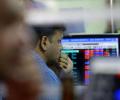
Benchmark BSE Sensex fell 558 points on Thursday amid heavy selling in IT shares, as concerns over AI-led disruptions and waning hopes of a Fed rate cut after firm US economic data weighed on investor sentiment.
Indian benchmark stock indices, Sensex and Nifty, closed nearly 1 per cent lower following the collapse of US-Iran negotiations, which heightened concerns of a prolonged conflict in West Asia and drove crude oil prices sharply higher.

This marks a rebound after more than two years of underperformance during a strong rally in smallcap stocks.

The BSE Sensex plummeted 1,236 points, wiping out nearly Rs 7 lakh crore in investor wealth, driven by escalating tensions between the US and Iran and subsequent market selloff.

Among Sensex firms, Tata Steel, Eternal, UltraTech Cement, Larsen & Toubro, Maruti and Bharti Airtel were the major gainers. However, Hindustan Unilever, Sun Pharma, ITC and Asian Paints were among the laggards.

The controlling shareholders of smaller and mid-sized companies are reducing their stakes at levels seldom seen since the 2008 global financial crisis. Over 20 per cent of companies listed on BSE MidCap and BSE SmallCap have seen a decline in promoter holdings for five consecutive quarters, reveals data from DSP Mutual Fund, shared with Business Standard. In the latest June quarter, the figure stood at 22.6 per cent.

Indian markets on Dalal Street rallied sharply as easing tensions in the US-Iran conflict and stable oil prices boosted sentiment. Track Nifty 50 and BSE Sensex performance and key global triggers.

Among the Sensex shares, Infosys, Tata Motors, Axis Bank, Adani Ports, Mahindra & Mahindra, HDFC Bank, Larsen & Toubro, Tata Steel, BEL and Power Grid were among the lead gainers. Kotak Mahindra Bank, ICICI Bank, Bharti Airtel, Asian Paints, Bajaj Finserv, and Titan were the among the laggards.

The 2025 contraction marks the steepest decline in both the number of billionaire promoters and their aggregate wealth since 2012.
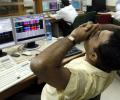
Indian equity investors experienced a significant loss of 16.32 lakh crore due to a two-day stock market decline fueled by escalating geopolitical tensions involving the US, Israel, and Iran.

The BSE Sensex and the Nifty 50 declined around 4.5 per cent each since the start of the West Asia conflict.

Market sentiment is likely to remain cautious as investors position themselves for the upcoming Union Budget and the US Fed's interest rate decision, where expectations are muted.

Indian equities on Dalal Street saw volatility as global market trends and fresh tariff concerns linked to Donald Trump impacted investor sentiment. Track Sensex, Nifty50 movement and key market drivers for Feb 24, 2026.
Equity benchmark indices Sensex and Nifty experienced a significant decline, primarily driven by a selloff in IT stocks due to concerns about AI disruption and renewed worries over global trade.

Stock markets closed higher for the second straight session on Tuesday, driven by gains in bank, IT and capital goods shares.

Among major Sensex gainers Bajaj Finserv rose the most by 1.42 per cent, Axis Bank gained 0.80 per cent, Infosys by 0.72 per cent, Mahindra & Mahindra by 0.60 per cent, Tata Motors by 0.55 per cent, Bajaj Finance by 0.53 per cent and Tata Steel by 0.52 per cent. Kotak Mahindra Bank, ICICI Bank, HCL Technologies, Bharti Airtel, Maruti Suzuki India, Trent Ltd and Tata Consultancy Services were the losers.
Among Sensex firms, Tata Consultancy Services, Tech Mahindra, Axis Bank, Bajaj Finance, Eternal, Infosys, Kotak Mahindra Bank and Bajaj Finserv were the major gainers. However, Tata Steel, Adani Ports, Power Grid and Titan were among the laggards.

Among Sensex firms, Trent, ICICI Bank, Tech Mahindra, Bajaj Finserv, Mahindra & Mahindra, Power Grid, Tata Consultancy Services and Bajaj Finance were the major laggards. However, Tata Steel, Larsen & Toubro, State Bank of India, Kotak Mahindra Bank were among the major gainers.
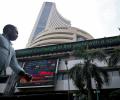
Benchmark stock indices Sensex and Nifty closed on a flat note in a choppy session on Wednesday as gains in PSU banks and auto shares were offset by losses in IT stocks.

Active equity mutual fund schemes have improved their showing across key categories over the past three months vis-a-vis their benchmarks.

The S&P BSE Midcap and the S&P BSE Smallcap indices have managed to stay afloat in a volatile January that saw the frontline indices hit their respective 52-week high levels and then slip. While the S&P BSE Sensex has lost over 2 per cent thus far in January, the S&P BSE Midcap and the S&P BSE Smallcap indices have gained nearly 2.5 per cent and 4 per cent, respectively during this period.

Small and midcaps are leading the charge in the latest market rebound. Since November 21, when the benchmark S&P BSE Sensex and the National Stock Exchange Nifty hit their recent lows and slipped into correction territory, the Nifty Smallcap 100 index has risen by 8 per cent, while the Nifty Midcap 100 has gained 5.7 per cent. Meanwhile, the Nifty 50 index has risen by 4.7 per cent during this period.
Among Sensex firms, Tata Steel, HCL Tech, UltraTech Cement, Bharat Electronics, Sun Pharma and Tata Consultancy Services were the major gainers. However, Axis Bank, Titan, Maruti and Tata Motors were among the laggards.
Among Sensex firms, Tata Motors rose the most by 3.5 per cent while Adani Ports gained 3.16 per cent. Reliance Industries rose by 2.82 per cent. Eternal, Tech Mahindra, Kotak Mahindra Bank, Hindustan Unilever and Maruti were also among the gainers. However, Bajaj Finserv, Power Grid, Mahindra & Mahindra and HCL Tech were among the laggards.

The strong domestic flow offset selling by foreign portfolio investors who pulled out $23.3 billion (Rs 2.03 trillion) from domestic equity markets in CY25.

After a strong run in the midcap and smallcap indices, which surged 46 per cent and 43 per cent, respectively, on the National Stock Exchange (NSE) during Samvat 2080, analysts suggest that the rally in these segments may pause to catch its breath in Samvat 2081.

Among Sensex firms, NTPC, Axis Bank, Power Grid, Bharti Airtel, Eternal and Sun Pharma were the major gainers. However, Infosys, Titan, UltraTech Cement and Hindustan Unilever were among the laggards.

The recent rally in small and midcap (SMID) stocks is not backed by fundamentals and is a case of irrational exuberance, analysts at Kotak Institutional Equities said in a recent report. The fundamentals of most of these companies have, in fact, worsened over the last few months, they noted. Yet, some analysts expect the bull run in these stocks to continue amid intermittent corrections.
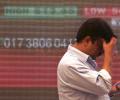
Investors' wealth eroded by Rs 5.98 lakh crore on Thursday, tracking weak trends in equities where the BSE Sensex tumbled 1 per cent. Benchmark indices Sensex and Nifty declined 1 per cent in tandem with weak global market trends amid growing tensions in the Middle East.

Dalal Street minnows stole the show in 2024, giving handsome returns to investors, helped by a largely optimistic trend in the stock market and impressive retail investors' participation. Analysts attributed the positive trend in the equity markets, where the benchmark indices shattered many records this year, to robust domestic liquidity, strong fundamentals of the Indian economy, and policy continuity.
 © 2026 Rediff.com - Advertise with us - Disclaimer - Privacy Policy - Sitemap - Feedback - About us - Terms of use - Grievances