
RBI Governor Sanjay Malhotra stated that the central bank is closely monitoring whether the supply shock from the West Asia conflict will lead to a generalised price rise, potentially necessitating monetary policy action.

Jewellery majors Titan Company and Kalyan Jewellers reported robust Q4 FY26 results, with Titan's consolidated revenue surging 81 per cent year-on-year, largely propelled by a sixfold increase in bullion and digital gold sales. Despite strong top-line growth, Titan's gross and operating profit margins faced pressure due to the higher share of lower-margin gold products and increased marketing expenditure.

India's leading passenger vehicle manufacturers are significantly increasing investments and factory capacities, alongside planning major product launches for FY27, driven by strong confidence in sustained domestic demand growth despite global geopolitical tensions and supply chain risks.

CRISIL Ratings predicts that the share of bank loans in NBFCs' overall borrowings will increase to 44-45 per cent by FY27, driven by elevated bond yields and softening bank lending rates.

SBI General Insurance aims to achieve a 10 per cent market share among private and standalone health insurers within approximately five years, up from its current 7.17 per cent, said Naveen Chandra Jha, managing director and chief executive officer, SBI General Insurance.

IT services giant Cognizant is embarking on a significant AI-led restructuring programme, Project Leap, involving an investment of up to $320 million, which will lead to workforce reductions across geographies and a strategic shift towards AI capabilities to boost productivity and margins.

Infosys shares experienced a significant drop, hitting a 52-week low, after the company announced its Q4FY26 results and provided a modest revenue growth guidance of 1.5-3.5 per cent in constant currency for FY27, falling below market expectations and raising concerns about AI-led deflation and margin pressures.

'If the war continue for a longer period of time, it is just a matter of time before the government will pass on some of the price increases.'

Most active traders prefer mobile applications that provide real-time alerts, including price targets -- functions that dealers once delivered through client calls.

Tata Steel reported a significant 124.9 per cent year-on-year increase in consolidated net profit to 2,925.74 crore for the fourth quarter of FY26, driven by higher volumes and an improved product mix in India, alongside planned cost reductions across its global operations.

Dabur India's shares rose 3.7 per cent after reporting in-line Q4FY26 results, driven by a healthy 10 per cent growth in its India business, despite some analysts remaining cautious about future execution.

Biocon is actively seeking in-licensing opportunities to expand its biosimilars portfolio, focusing on products that complement existing therapy areas, as the company shifts to a 'consolidate' phase with a strong emphasis on improving capacity utilisation, expanding margins, and driving return on capital employed.

Mahindra & Mahindra (M&M) is largely bullish among analysts following its Q4FY26 results, driven by strong SUV demand, a robust product pipeline, and improving growth visibility across segments, despite near-term margin pressures from rising commodity costs and potential weakness in the tractor cycle.

Mahindra & Mahindra Ltd reported a significant 48.5 per cent jump in consolidated profit after tax to Rs 5,259.91 crore in the March quarter, primarily attributed to strong performance in its auto and farm sectors, alongside ambitious plans for new SUV and EV launches.

Wipro reported Q4FY26 IT services revenue of $2.6 billion, a modest 0.2 per cent Q-o-Q constant currency growth, with adjusted operating profit margin beating estimates at 17.2 per cent. The company announced a significant share buyback of ~15,000 crore, but faces near-term growth challenges, particularly in the BFSI segment, and has issued a soft Q1FY27 revenue guidance.

The Indian banking system's net liquidity surplus has reached a four-year high of Rs 4.57 trillion, driven by maturing government securities, with further maturities expected to push the surplus to around 5 trillion.

Reliance Industries is expected to report largely flat performance for its fourth quarter (January-March, Q4) of FY26, with weakness in the oil-to-chemicals (O2C) business and muted retail growth likely to offset steady gains in the telecommunications segment.

Analysts have largely maintained a bullish outlook on HDFC Bank and ICICI Bank following their Q4FY26 results, though their perspectives on future growth drivers differ. HDFC Bank's near-term performance is tied to accelerating loan growth, while ICICI Bank is seen as a strong candidate for a valuation rerating.

Reserve Bank of India (RBI) Governor Sanjay Malhotra stated that preventing second-round effects of supply shocks, where inflation expectations rise due to prolonged disruptions, is the primary role of monetary policy. He also defended the RBI's foreign exchange market interventions, asserting it did not commit to an 'indefensible peg'.

Indian hotel companies are experiencing a sharp correction in share prices due to the Iran war and broader geopolitical tensions, leading analysts to cut operating profit expectations and valuations, despite structurally positive medium-term prospects.

Leading jewellery companies, Titan Company and Kalyan Jewellers India, have reported better-than-expected top-line growth in Q4 FY26, driven by robust same-store sales growth, higher average ticket sizes, and an improvement in buyer growth, signalling a strong recovery in demand.

HDFC Life Insurance reported a 4 per cent year-on-year increase in net profit to Rs 495.6 crore for Q4FY26, while its parent, HDFC Bank, announced a Rs 1,000 crore preferential share issuance to raise its stake to 50.5 per cent.

Infosys Q4 results beat estimates, but weak FY27 guidance triggers cautious brokerage outlook and target price cuts. Should investors worry?
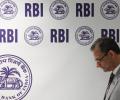
Uncertainties stemming from the West Asia crisis and its potential impact on inflation and economic growth were key factors in the Reserve Bank of India's Monetary Policy Committee (MPC) decision to maintain the status quo on interest rates, according to the recently released MPC meeting minutes.

The Reserve Bank of India (RBI) has opted to keep its key interest rates unchanged at 5.25%, anticipating a global economic recovery following a ceasefire in the US/Israel-Iran conflict, despite ongoing inflationary pressures and currency fluctuations.

Indian IT services companies are set to significantly increase their acquisition spending to $6.5-7 billion this year, up from $5 billion last year, as they seek to boost revenue and capabilities in areas like Cloud, data, enterprise platforms, and AI amidst a challenging economic environment.

S&P Global Ratings has increased India's GDP growth forecast for the next fiscal year to 7.1 per cent, citing private consumption, investment, and exports as key drivers. However, the agency also cautioned that the conflict in the Middle East could strain India's fiscal position due to higher energy prices.

Shrugging off concerns over the depreciation of rupee, the RBI has cut interest rate by 25 basis points to 5.25 per cent in a bid to further bolster economic growth, which rose to a six-quarter high of 8.2 per cent in the second quarter of the current financial year.

Brokerages were divided on Bajaj Finance after its 2025-26 (FY26) third-quarter (October-December/ Q3) results, with a few raising targets on valuation comfort, while others flagged concerns over the credit cost trajectory.

Fitch Ratings on Friday said persistently higher oil prices could cause India's retail inflation to rise faster than the expected gradual pace, and lead to a slowdown in economic growth in the first half of financial year 2026-27 (FY27).

Strong performance in the beauty and personal care (BPC) segment, margin gains, and expectations of a breakeven in the fashion business lifted sentiment for FSN E-Commerce Ventures (Nykaa). The consumer technology platform's stock rose 7.5 per cent on Friday, extending gains over the past week to more than 17 per cent. Most brokerages have upgraded the stock following its third-quarter (October-December/Q3) performance and higher profit expectations ahead.

'The government's decision to keep interest rates unchanged on small savings schemes will certainly constrain banks' ability to cut deposit rates further.'

A strong third-quarter (October-December/Q3) performance for 2025-26 (FY26) has helped the stock of India's largest listed pharmaceutical (pharma) company, Sun Pharmaceutical Industries, gain about 7 per cent since the start of February.

Weakness in the information technology (IT) sector hiring has weighed on Info Edge (India) over the past year, leading to a 13 per cent correction in the stock during this period. While the company's 2025-26 (FY26) third-quarter (October-December/Q3) performance showed a marginal improvement, brokerages believe the IT hiring outlook remains weak due to macroeconomic uncertainty in the US.

Shares of apparel retail major Trent fell over 8.6 per cent to ~4,048 apiece at the close of trade on Tuesday. Trading near its 52-week low, the stock has shed about 43 per cent over the past year. Sentiment around the Tata group company weakened after it reported lower than expected revenue for the third quarter (October-December/Q3) of 2025-26 (FY26). Brokerages expect the stock to remain under pressure in the near term.

India was being evaluated for a potential weight of around 1 per cent in the index, an allocation that could have translated into $25 billion of inflows, spread over roughly 10 months.

A pickup in freight rates, rising fleet utilisation and a long-awaited replacement cycle are breathing fresh life into India's commercial vehicle (CV) market, strengthening the investment case for Tata Motors' CV arm (TMCV). Despite a broadly steady December quarter (Q3) performance, brokerages remain divided on whether the upswing is strong enough to offset margin pressures.

The Securities and Exchange Board of India (Sebi) on Wednesday overhauled the cost framework for the 80 trillion domestic mutual fund (MF) industry, introducing a simplified structure aimed at improving transparency for investors while balancing the impact on asset managers.

After a 25 basis point rate cut in December, the RBI on Friday decided to pause on the policy rate front amid geopolitical uncertainties.

Banks are witnessing a surge in hiring for sales staff in secured segments such as home, vehicle and gold loans as compared to the recovery category, driven by a boost in business growth, and a host of regulatory measures aimed at improving ease of doing business, according to industry experts.
 © 2026 Rediff.com - Advertise with us - Disclaimer - Privacy Policy - Sitemap - Feedback - About us - Terms of use - Grievances