
Six months after its India debut, the Vietnamese automaker has overtaken established players such as Hyundai Motor, BMW, Kia, and Chinese EV major BYD.
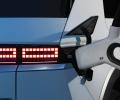
India may see its busiest EV festive season in 2025 with SUVs, luxury cars and scooters set to launch, but rare-earth supply bottlenecks risk delaying rollouts.
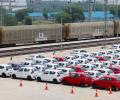
While GST on ICE vehicles was brought down significantly, for electric cars it remained at 5 per cent.
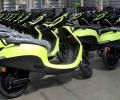
India's electric two-wheeler (e2W) manufacturers have urged the government to extend subsidies under the PM E-Drive (Electric Drive Revolution in Innovative Vehicle Enhancement) scheme beyond March 2026, cautioning that a withdrawal could slow near-term demand even as confidence in long-term electric mobility adoption remains intact.

Bajaj Auto is planning a slow, calibrated push to take the Chetak, its electric scooter, to more than 100 countries on the strength of its distributor network and market-specific localisation rather than an aggressive global rollout, reports Sohini Das.
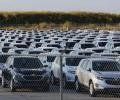
Automobile retail sales rose nearly 18 per cent year-on-year to over 27 lakh units in January, led by continued post-GST momentum, healthy rural cash flows on the back of harvest and weddings, and sustained demand visibility across freight, dealer's body FADA said on Tuesday.

With gains of over 28 per cent, Hero MotoCorp has emerged as the best-performing largecap automotive stock over the past three months. The rally has been driven by an improved outlook for the rural segment, higher demand during the ongoing festival season, and rising affordability following cuts in goods and services tax (GST) rates.

From EV bus expansion to airport-like terminals and rural connectivity, Uttar Pradesh is overhauling public transport to cut pollution and ensure every village has modern, affordable travel, reports Siddharth Kalhans.
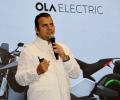
Why has the shift from ICE to electric slowed down despite initial enthusiasm?

Honda Motorcycle and Scooter India (HMSI) on Wednesday forayed into the fast-growing domestic electric mobility market with the introduction of e-scooters, ACTIVA e: and QC1, with swappable and fixed batteries. With this, the Japanese two-wheeler maker will now be competing with other legacy players such as Bajaj Auto, Hero MotoCorp, TVS Group as well as pure EV players like Ather and Ola, who already have a good presence in the segment, which is growing at 34 per cent year-on-year.

Automobile retail sales across the domestic market witnessed a 21 per cent year-on-year increase in the 42-day festive season led by record registrations of passenger vehicles and two-wheelers aided by GST rejig enabled drop in prices across segments, dealer' body FADA said on Friday.
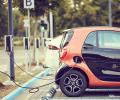
Lithium-ion cells, primarily imported from China, are likely to become cheaper following punitive tariffs imposed by the US on Chinese battery cells.
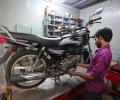
Hero MotoCorp (HMCL) saw strong volume performance in the first quarter of the current financial year (Q1FY25), but margins disappointed due to weak spare part sales and negative electric vehicle (EV) margins. The company hopes for a strong festive season due to better rural sentiment. Revenue grew 16 per cent year-on-year (Y-o-Y) to Rs 10,140 crore, operating profit was up 21 per cent to Rs 1,460 crore, and adjusted net profit grew 19 per cent Y-o-Y to Rs 1,120 crore.
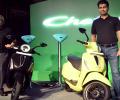
The two-wheeler giant had only 14 per cent of the electric two-wheeler market in May this year, but its 26.8 per cent in December

The growing rift between MSIL and rival automakers has complicated the government's efforts to finalise the CAFE norms.

From the customer point of view too, LFP batteries are safer and offer a longer life.
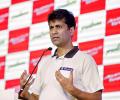
Bajaj Auto is gearing up to launch clean-energy vehicles including another motorcycle powered by compressed natural gas (CNG), showcase ethanol-powered motorcycles and three-wheelers next month, as well as launch a new Chetak platform early next year, as it closes in on hitting 100,000 monthly sales from clean-energy vehicles this festival season. In an interview with CNBC-TV18, Bajaj Auto managing director Rajiv Bajaj said these initiatives were part of the firm's broader goal to achieve monthly sales of 100,000 clean-energy vehicles this festival season.
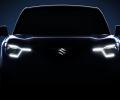
However, the company has not provided a timeline for the launch of the small electric car.
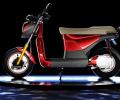
Smaller players manufacturing electric two-wheelers (E2Ws) are unlikely to raise prices of their models initially in 2024 in order to ensure volumes do not drop. The prices of E2Ws range from Rs 90,000 to Rs 1 lakh, the players being Lohia Auto, Godawari Electric, Emobi, etc. As India's E2W sector gears up to go past one million in 2024, manufacturers are likely to maintain price stability, underpinned by strategic independence from subsidies under Faster Adoption and Manufacturing of Electric (and Hybrid) Vehicles II (FAME II), localisation efforts, sustainability initiatives, and a focus on affordability.
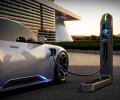
When it comes to electric cars, the electric dream is turning out to be a six-letter word starting with f, ending with y, and having antas in between, notes Suveen Sinha.

Ola Electric, India's largest maker of electric scooters, launched its most affordable ride on Tuesday, in an attempt to woo more customers and expand its electric two-wheeler lineup.
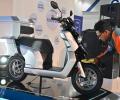
India's electric two-wheeler (E2W) sector is expected to cross the one million mark in 2024 fuelled by rising demand, increased production, and affordability, industry experts said, even as several original equipment makers are expanding their penetration to rural areas. Improved battery technology and innovative features are also likely to fuel growth, they said. "E2W sales will breach the 1-million mark in 2024 as the demand for electric two-wheelers is expected to continue growing due to factors such as environmental awareness, government incentives, and improvements in technology," Hyder Khan, chief executive officer (CEO), Godawari Electric Motors, said.

The car was expected to have a price tag of Rs 10 lakh and launch was slated for this June.
 © 2026 Rediff.com - Advertise with us - Disclaimer - Privacy Policy - Sitemap - Feedback - About us - Terms of use - Grievances