
Serum Institute of India plans to make 300 million doses of AZD1222 by December, and will begin phase-2 trials soon. It has also tied up with Novavax for development and commercialisation of its candidate.

'It is admitted that the AZ vaccine can, in very rare cases, cause TTS.'
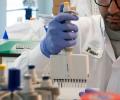
The phase 3 trial is being implemented as part of Operation Warp Speed, a multi-agency collaboration led by the US Health and Human Services, which aims at accelerating the development and manufacturing of medical countermeasures for COVID-19 and delivering 300 million doses of an effective vaccine by January 2021.
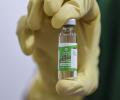
The Oxford/AstraZeneca vaccine is also being produced as part of a tie-up by the Serum Institute of India.

AstraZeneca and the University of Oxford, as the trial sponsor, said that they cannot disclose further medical information but confirmed that independent investigations concluded that the trials were safe to restart.
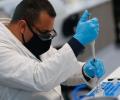
'Once DCGI will give us the permission to restart the trials in India, we will resume the trials,' Serum Institute of India (SII) said in a statement.

The UK's National Health Service was already lining up thousands of medics and volunteers to be ready to deliver jabs up and down the country.
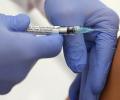
The vaccine, ChAdOx1 nCoV-19 and also known as AZD1222, is considered among the most advanced in the worldwide hunt for a viable vaccine against the novel coronavirus.

The nature of the adverse reaction and when the development took place were not initially clear, although the participant is expected to recover, said an individual familiar with the matter.
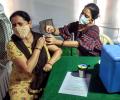
So far, no other vaccine has been approved globally for children below 12 years. Sohini Das reports.

The institute expects to complete both, phase-2 and 3 trials in India by the end of this year.
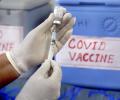
The Covishield maker's forte throughout the past half a century has been a combination of affordable vaccines and high volumes. Its tetanus, diphtheria and measles vaccines are known throughout the world, reports Sohini Das.
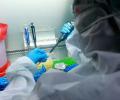
The results show they induced strong antibody and T-cell immune responses for up to 56 days after they were given. T-cells are crucial for maintaining protection against the virus for years.
The Medicines and Healthcare Regulatory Agency, which had been formally tasked by the UK government last month with the process of clearance after the jab emerged "safe and effective" against the novel coronavirus in human trials, is expected to authorise the vaccine by December 28 or 29 after the final data is provided on Monday, 'The Daily Telegraph' quoted senior government sources as indicating.
A team at Bristol University used recently developed techniques to validate that the vaccine accurately follows the genetic instructions programmed into it by the Oxford University team.

Serum Institute is investing $200 million to create capacities for the COVID-19 vaccine. Sohini Das profiles its 39-year-old CEO.

Pune's Serum Institute of India, the world's largest vaccine maker by volume, is placing its bets on the Oxford-AstraZeneca vaccine candidate AZD1222 with CEO Adar Poonawalla stating he would start manufacturing at personal risk.
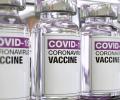
However, in two different dose regimens, the vaccine's efficacy was 90 per cent in one and 62 per cent in the other.
