
Meesho, a value-commerce platform targeting middle- and lower-income geographies, is poised for significant growth driven by its asset-light model and low fulfilment costs, but faces intense competition from e-commerce giants and high valuations.

Eternal's quick commerce platform, Blinkit, significantly outperformed in Q1 FY27, with net order value (NOV) rising 19.1 per cent quarter-on-quarter, indicating strong market share gains driven by increased monthly transacting users and transaction frequency.

As the quick commerce (qcom) race hots up, a new model - vertical qcom - is gaining investor attention. Unlike horizontal players such as Blinkit, Zepto, and Swiggy Instamart, which stock everything from groceries to gifts and gadgets, vertical platforms focus on depth over breadth.

Growth accelerated for Zomato operator Eternal in the second quarter of financial year 2026 (Q2FY26). Zomato's business to commerce (B2C) operations delivered a strong 57 per cent year-on-year (Y-o-Y) rise in net order value (NOV) to Rs 23,164 crore while consolidated revenue soared 183 per cent Y-o-Y (90 per cent Q-o-Q) to Rs 13,590 crore during the period, with like-for-like (LFL) growth of 65 per cent, and acceleration in the quick commerce (QC) segment, which recorded NOV growth of 137 per cent Y-o-Y (27 per cent Q-o-Q).

Competition in the fast-growing quick commerce sector is heating up as Swiggy Instamart faces a tough challenge in narrowing the gap with Blinkit, which currently dominates the market. In the second quarter (Q2) of 2024-25 (FY25), Instamart's gross order value (GOV) rose by 42.1 per cent quarter-on-quarter (Q-o-Q) and 75.5 per cent year-on-year (Y-o-Y), reaching Rs 3,382 crore.

For food aggregator platform Swiggy, quick commerce (qcom) is proving to be a better growth opportunity than food delivery. Its qcom arm Instamart is rapidly outpacing its core food delivery vertical across several key financial metrics, the company's recently filed draft red herring prospectus (DRHP) shows.

Eternal (formerly known as Zomato) reported a net profit of Rs 39 crore for the fourth quarter of FY25, down 77.7 per cent year-on-year from Rs 175 crore in the same period a year ago. On a sequential basis, profit was also down 33.8 per cent from Rs 59 crore in the preceding quarter (Q3FY25).

After making the model work in metro cities, players in the quick commerce sector are rapidly expanding their footprint into smaller tier 2 cities and markets beyond that ahead of the festival season.

'Domestic investors are opening up to the idea of high-growth Internet companies as a pool of value creation.' 'They like the execution that they see with Zepto, and for us, that is the most important factor.'

The fresh meat and seafood delivery startup Licious plans to set up 500 stores nationwide within the next five years as part of an omnichannel strategy. The aim is to attract new users in the offline channel and encourage them to transact online as well. The move would also help the company in its efforts to achieve profitability and go for an initial public offering (IPO) in the next 24 months, according to the sources.

Brokerages have maintained their ratings and target prices on FSN E-Commerce Ventures, the parent company of Nykaa, after the fashion and beauty online retailer posted in-line numbers during the October-December quarter (Q3) of financial year 2023-24 (FY24). They have, however, cut earnings before interest, tax, depreciation, and amortisation (Ebitda) estimates after weak demand weighed across line items in Q3. "While revenue growth was healthy at 22 per cent year-on-year (Y-o-Y), gross margins declined 90 basis points (bps), weighed by higher discounting in own brands and lower ad income.

"It went up to 20-odd per cent in 2019 and to 25 per cent a year later. "That's when we decided to pull the plug; it was not sustainable for our business," says Chadha. Madison & Pike, instead, turned to Mumbai-based start-up Thrive, which provides third-party delivery services to restaurants at a much lower commission - three to five per cent.
Key drivers of profitability for Zomato has not witnessed remarkable growth, the management believes the venture will turn profitable in the long term.

Quick commerce is proving to be a solid business proposition, with companies like Zomato's Blinkit and Y Combinator-backed Zepto recently registering growth, charting paths to profitability. Blinkit logged its highest gross order value (GOV) and customer transactions in June and July, showing a positive contribution for the first time in the quarter ended June 2023. Deepinder Goyal, Zomato's co-founder and chief executive officer (CEO), predicted that Blinkit would deliver more value to shareholders than the core food delivery business in the next decade.
In the April-June quarter (Q1) of 2023-24 (FY24), growth in sales of FSN E-Commerce Ventures (the parent company of Nykaa) decelerated to 24 per cent year-on-year (Y-o-Y), and 9 per cent quarter-on-quarter (Q-o-Q), compared with 34 per cent in the previous quarter, due to a decline in the beauty & personal care (BPC) and fashion division's gross merchandise value (GMV). But Nykaa claimed it gained market share in both divisions. The earnings before interest, taxes, depreciation, and amortisation (Ebitda) margin of 5.2 per cent expanded 120 basis points (bps) from a year earlier.

After new-age tech companies reported better-than-expected June quarter (Q1FY23) results, analysts said it will be a long road to recovery for their respective businesses and the stock prices. Moreover, brokerages differ on whether it is the right time to own these stocks. The common thread, however, that runs across most brokerages is Zomato, where they suggest buying the stock with the one-year target price ranging between Rs 60 - 115, translating into an upside of around 9 - 109 per cent from the current levels. The company's gross order value (GOV) of food delivery jumped 10 per cent quarter-on-quarter (QoQ) and 42 per cent year-on-year (YoY) in Q1, aided largely by growth in volume, and mild growth in average order value (AOV) at 1-2 per cent. The company also broke even on an adjusted Ebitda basis during the quarter.

Meesho has emerged as the second-largest player by order share in this year's festive sales till now, surpassing Amazon, while Flipkart Group platforms topped the market in both orders and gross merchandise value (GMV), according to according to a report by consultancy firm Redseer. It said Flipkart Group maintained its leadership position with a 62 per cent market share in terms of GMV during the first week of the festive season, followed by Amazon which had 26 per cent share, while the remaining 12 per cent was distributed among other e-commerce players. In terms of order volume, Flipkart Group again leads the market with about 49 per cent share and SoftBank-backed Meesho ranks second with about 21 per cent order share, according to Redseer.
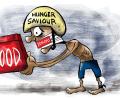
Given that there has been no negative news flow around Zomato, analysts believe it's time to lap up the shares at lower levels.

Competitive video gaming, dubbed esports, is appearing for the first time at a major multi-sport event.
