
CRAs are getting more business than they were getting a year ago. This could indicate expectations that investment demand will rise in the mid-term, says Devangshu Datta.

The Sensex ended in red on domestic concerns.

There are glaring anomalies with Indian data and that could lead to wrong policy prescriptions.

Sectorwise, oil & gas and BFSI (banking, financial services and insurance) witnessed the maximum year-on-year growths of 27 per cent and 17 per cent in December 2014.

Sales of diesel-powered utility vehicles have been declining in the past six months as the differential between petrol and diesel prices narrowed.
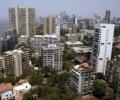
The average price increase was 10 per cent in mid-end properties, high-end properties grew 12 per cent.
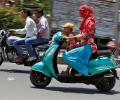
Dealers attribute the sluggishness in sales to distress in rural India as well as tepid sentiment in urban markets.

The domestic aviation industry is expected to report a net loss of Rs 25,000-26,000 crore this fiscal with elevated jet fuel prices and fare caps continuing to pose a major challenge for the airlines' profitability, domestic rating agency ICRA Ltd said on Thursday. The domestic airlines, however, are likely to post a reduced net loss of Rs 14,000-16,000 crore in the next financial year on the back of a "notable recovery" in air passenger traffic and lower level of debt, ICRA said. The ratings agency also estimates that the industry will require an additional funding in the range of Rs 20,000-22,000 crore during FY22-FY24.

The earnings are, however, expected to be down around 2 per cent on a sequential basis due to pent-up demand getting exhausted and the adverse impact of rising metals and energy prices on consumer goods and manufacturing companies.

Infosys on Thursday cut its full-year revenue outlook in dollar terms by about 3 per cent because of mounting economic uncertainty in the euro zone, a move that did not go down well with investors.

Market breadth was negative, 1528 stocks declined for 704 stocks which advanced.

Markets gave up most of the gains made in previous session as traders' dumped frontline IT shares after Infosys reported 17% jump in net profit y-o-y, trailing street expectations.

Historically, the IIP performance has shown little or no correlation to corporate performances.
FMCG: Cut in excise duty on baby, clinical diapers, adult diapers and sanitary napkins.

This is the BJP's first full-year Budget.
The whole price index, used to measure rise in prices of a range of products in a consumer basket, stood at 9.06 per cent in May.
Bharti Airtel reported a 47 per cent year-on-year rise in consolidated revenues at Rs 15,215 crore (Rs 152.15 billion) in the September quarter.

Election results on Friday will determine the strength of the ruling coalition party Congress which will also determine market direction.

India is unlikely to see a repeat of the 2021 energy crisis this festive season as coal-fired power stations across the country have comfortable levels of the fuel stock to meet electricity demand of the world's fastest expanding major economy.

The Nifty opened on a firm note and moved between 5,913 and 5,866 as investors awaited TCS and Reliance Industries results.
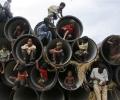
India's first quarter GDP growth print was 7.9 per cent y-o-y, primarily led by urban consumption demand
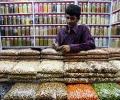
Improvements in industrial activity and services sector mainly seems to have boosted GDP growth.

Dealers have stocked up vehicles in the run-up to a price hike, which is expected to be announced by leading players some time this month.

India's likely medium-term potential growth will almost certainly be markedly lower than that experienced in pre-pandemic years, warns Shankar Acharya, former chief economic advisor to the Government of India.

The domestic passenger traffic in July 2021 was 51 lakh, ICRA said in a release. Domestic passenger traffic on a year-on-year basis, however, spiked around 131 per cent over August 2020 traffic of 28.3 lakh, it said. The ratings agency said despite the continued recovery in the previous month, there is continued stress on demand, driven largely by the second wave of the pandemic, limiting travel to only necessary travel.
Recovery seen in Q4, companies continue to focus on enhancing cash flow
Seeks 100% depreciation on hardware and peripherals, exemption of customs duty on goods imported by ISP, seeks measures to increase penetration.

Investors are already factoring in the impact. The IT Index on the BSE exchange dipped 2.5 per cent, with Infosys, Wipro and TCS showing a decline.

There cannot be value in every stock, whether large cap or otherwise. Thus buying a stock cheap does not always translate into value buying

The double-digit growth in itself is eye-popping, given the FMCG sector has seen low single-digit volume growth in recent times.
The hotel industry seeks infrastructure status and tax breaks, considering the huge investments required to meet the growing demand, especially in the NCR region for upcoming Common Wealth Games.

The net sales growth declines 4.4% in September quarter, the second worst in eight years.

While hotels and FMCG saw weak top line growth, most segments witnessed Ebit margin contraction.

Meesho has emerged as the second-largest player by order share in this year's festive sales till now, surpassing Amazon, while Flipkart Group platforms topped the market in both orders and gross merchandise value (GMV), according to according to a report by consultancy firm Redseer. It said Flipkart Group maintained its leadership position with a 62 per cent market share in terms of GMV during the first week of the festive season, followed by Amazon which had 26 per cent share, while the remaining 12 per cent was distributed among other e-commerce players. In terms of order volume, Flipkart Group again leads the market with about 49 per cent share and SoftBank-backed Meesho ranks second with about 21 per cent order share, according to Redseer.
The India information technology industry, including exports and domestic market and semiconductor industry, is gaining traction despite challenges, said Azim H Premji, chairman, Wipro, at the third Freescale Technology Forum in Bangalore on Monday.
Tata Consultancy Services on Monday announced the results for Q2 FY08. The net profit is up 22.8 per cent at Rs 1252 crore (Rs 12.52 billion).
The IIP data would be released on March 12 for the period of January 2009. Since October, RBI also has infused over Rs 4,00,000 crore (Rs 4,000 billion) by reducing ratios and short-term borrowing and lending rates.
The growth of the agriculture, forestry and fishing sectors fell to minus 2.2 per cent in the third quarter of this fiscal compared with 6.9 per cent in the year-ago period. Goldman's projection about the farm sector's growth in 2008-09 coincides with the estimate of a 2.6 per cent expansion rate by the Central Statistical Organisation.

Experts expect a net loss of Rs 26.7 billion for IndiGo and Rs 10.1 billion for SpiceJet in Q1FY21 driven by low traffic volume, low fleet utilisation and poor coverage of fixed costs.

Riding on the rising price scenario, the sugar sector can hardly expect any benefit from the Union Budget 2010-11.
 © 2026 Rediff.com - Advertise with us - Disclaimer - Privacy Policy - Sitemap - Feedback - About us - Terms of use - Grievances