The Reserve Bank on Monday said asset quality of banks improved further and their gross non-performing assets (GNPA) or bad loans ratio declined to a 12-year low of 2.6 per cent in September 2024 on the back of falling slippages and steady credit demand. The RBI also flagged concern over a sharp rise in write-offs, especially among private sector banks (PVBs), which could be partly masking worsening asset quality in unsecured lending segment and dilution in underwriting standards.

Domestic rating agency Icra on Wednesday said India's real GDP growth for the September quarter is likely to decline to 6.5 per cent due to heavy rains and weaker corporate performance. The agency, however, maintained its FY25 growth estimate at 7 per cent on expectations of a pick up in economic activity in the second half of the fiscal.

From its highs over the past month, the stock of Procter & Gamble Hygiene and Healthcare fell 7 per cent before recovering this week. The stock has been an underperformer over the last year and has traded flat over this period.
Despite a largely stable December quarter, investors booked profit in shares of IndusInd Bank (IIB) as an increase in slippages took them by surprise. Analysts, on their part, believe investors may, now, wait for actual delivery on slippage decline, potentially limiting near-term upside. "The management has indicated that corporate slippages (from legacy stressed book) have ended and inch up in consumer finance slippages was more one-off, and should meaningfully improve Q4FY24 onwards.

Households may be feeling the pinch of higher inflation but corporate India is enjoying record high margins and profits. The combined quarterly net profit of listed companies scaled a new high in the April-June 2023 quarter owing to a sharp rise in operating and net profit. The expansion in margins more than compensated for the slowdown in revenue growth, which slipped into single digits in Q1FY24 after a gap of nine quarters.

The third quarter (Q3) of 2023-24 (FY24) has proven to be pivotal, witnessing some startups turning profitable and others enhancing their performance as their businesses finally begin to deliver. Startups like Delhivery, Zomato, PolicyBazaar, Mamaearth, and Nykaa have either become profitable or improved their profit margins in Q3FY24. A renewed focus on profitability, supported by operational efficiencies, expense rein-in, and robust demand during the festival season, has empowered companies to strengthen their performance.

Nearly one in two luxury cars sold in India in the first three months of 2024 was a Mercedes Benz, which achieved its best ever quarter (January-March), selling 5,412 units, up 15 per cent year-on-year (Y-o-Y) from 4,697 units in the previous year.

The majority of crypto investors in the country have invested in mainstream virtual digital assets (VDAs) such as Bitcoins, altcoins like Dogecoin, Shiba Inu, and Ethereum, followed by non-fungible tokens (NFTs) and stablecoins, a compilation of year-end reports of crypto majors CoinDCX and CoinSwitch revealed. The crypto exchange platform CoinDCX reported that 14.6 per cent of total investments on its platform were allocated to Bitcoin, while CoinSwitch saw the share of the VDA at 7 per cent.

If growth reverts to the pre-Covid level, a lot of people may have to temper their rosy optimism, points out Debashis Basu.

About 99,165 electric cars were sold in India in 2024, but electric car penetration -- share of electric car sales in total sales -- was just about 2.5 per cent.

Industry experts believe that this deal will positively impact the Indian film industry, which is struggling with fewer movie releases.

Automobile, apparel and electronics are among sectors that see a sales boost during the festival season, a time when investors expect gains in related stocks. This year could be different: Analysts have factored in all positives and do not expect such stocks to deliver lucrative returns. "Indian households spend across sectors like automobiles, consumer durables, and consumer staples during the festival season.

India's smartphone shipment grew by 11.5 per cent in the first quarter of calendar year (CY) 2024 on a year-on-year basis to 34 million units. This is the third consecutive quarter of growth in shipments, International Data Corporation's (IDC) Worldwide Quarterly Mobile Phone Tracker said.

The Reserve Bank India's (RBI's) decision to ban the onboarding of new accounts on the "bob World" mobile digital platform led to a selloff in the Bank of Baroda (BoB) stock. The stock of the public sector bank dropped by around 3 per cent. The central bank cited "material supervisory concerns"; news reports claimed mobile numbers were randomly linked to accounts to purportedly inflate registrations on bob World.

The stock of Godrej Consumer Products Limited (GCPL) fell about 3.7 per cent in trade after its Q3FY24 earnings disappointed brokerages and led to downgrades. Further, the stock, after a 15 per cent run-up over the past month prior to Monday's correction, had already factored in the upside from the business front. Its peer in the consumer space, Marico, too, saw a 4 per cent drop in its stock price.

Even as the slowdown in the information technology (IT) services sector deepens, banking, financial services and insurance (BFSI), as well as oil and gas companies, emerge as the primary drivers of corporate earnings in the country. The IT services sector's share in corporate earnings declined to a five-year low of 17.4 per cent in the second quarter (Q2) of 2023-24 (FY24), whereas banks and finance companies accounted for 46.5 per cent, and oil and gas firms contributed 16.8 per cent. At their peak, IT services firms like Tata Consultancy Services (TCS), Infosys, HCLTech, and Wipro represented just over a third of the combined net profit of all listed companies in the Business Standard sample.

Bajaj Auto, India's leading two-wheeler (2W) and three-wheeler (3W) maker, is scaling up its wholly owned finance subsidiary, Bajaj Auto Credit Ltd (BACL), with an investment of more than Rs 3,000 crore planned over the next two financial years, company's managing director Rajiv Bajaj said. BACL has already started commercial operations, Bajaj recently said on the sidelines of the group's CSR identity event. According to rating agency CRISIL, BACL's operations began on January 1 after receiving its licence from the Reserve Bank of India (RBI) in August last year.

India's steel market is out of step with global trends. Global demand is weak with China at a huge supply surplus to its domestic demand, pushing down global steel prices. India's domestic demand for steel is strong, given the continuing infrastructure push and is likely to accelerate as urbanisation improves, and the auto sector continues to grow alongside the infrastructure push.

'Currently, EVs are about 30-50 per cent more expensive than ICE vehicles. I believe the inflection point for EVs will come when this price gap narrows to 20-25 per cent. That's when people will start coming in.'
On the exports front, Bajaj is under pressure in Bangladesh and Africa. On the domestic front, it could ride improvement in rural demand and new launches but it also has to cope with competitive intensity and a high base. The management projects 7-8 per cent volume growth in domestic 2W in financial year 2025 (FY25) with moderation in H2FY25 due to a high base Y-o-Y.

Latest GDP growth numbers a one-off development and not the beginning of a trend, says CEA V Anantha Nageswaran.

Investors shunned shares of Bajaj Finance on Friday, a day after the non-banking financial company (NBFC) reported a sharp contraction in its net interest margin (NIM) for the March quarter of the financial year 2023-24 (Q4FY24). The losses accounted for a fifth of the benchmark S&P BSE Sensex's 609-point loss. Most brokerages have tamed their earnings expectations for the next couple of quarters, after the management said it expected the pressure on NIMs to continue in the near term.

India's corporate sector, including public sector enterprises (PSEs), continues to go slow on investments and capital expenditure (capex). According to data from Motilal Oswal Financial Services (MOFSL), corporate investments declined for the second consecutive quarter in the April-June period (first quarter, or Q1) of 2023-24 (FY24). After a contraction of 0.5 per cent year-on-year (Y-o-Y) in the 2022-23 (FY23) January-March quarter, corporate investments likely fell 6.2 per cent Y-o-Y in Q1FY24, write Nikhil Gupta and Tanisha Ladhaa of MOFSL in their recent report on corporate investments.

A grooming branch network for servicing HNIs is a stepping stone for a full-fledged wealth management business.

'Higher interest rates make gold less attractive as it doesn't generate yield.' 'However, with rates set to fall, the tables are turning for gold.'

The hospitality industry has seen plenty of interest since the catastrophic impact of the pandemic, which led to losses in FY21. The hotel industry market cap has more than tripled since 2019 on the combination of a strong earnings rebound and positive surprises, as well as three recent listings. The industry has good tailwinds. The anticipation is, demand for rooms will outrun supply for a few years despite capacity expansions.

India's three-wheeler exports, which have been on a downhill trajectory over the past few years, are showing no signs of recovery in FY25, with key markets like Sri Lanka, Bangladesh, Nigeria, and Egypt witnessing subdued demand. In May, the country's exports plummeted 11.3 per cent year-on-year (Y-o-Y).

Maruti recorded a 13.12% year-on-year surge in average revenue earned per car in 2023 compared to M&M's 7.56%, Hyundai's 6.76% and Tata Motors' 1.88%.

The Q1FY24 earnings season has started on a dismal note for corporate India. The early-bird companies' revenue growth has been at a 10-quarter low, while the combined earnings of non-BFSI (banking, financial services, and insurance) companies seem to have hit the ceiling. The numbers suggest corporate India is entirely dependent on BFSI companies and the IT services sector to drive growth in revenue and profit while other sectors are showing signs of stagnation.

ICICI Lombard General Insurance Company reported financial improvement and optimistic commentary in Q4FY24. It reported 17 per cent year-on-year (YoY) growth in Gross Written Premium (GWP) and 115 bps improvement in the Combined Ratio (COR) in FY24, and improved COR guidance with COR going from 104.5 per cent in FY23 to 103.3 per cent in FY24, 102.4 per cent in FY25 and 102.0 per cent in FY26.

The news of Dixon Technologies (India)'s tie-up with HP in addition to its existing Lenovo and Acer partnerships has led to a 5 per cent stock uptick since the start of the week. Dixon can target roughly 60 per cent of India's addressable IT hardware market with these contracts. Dixon targets Rs 48,000 crore in revenue from IT hardware under the PLI scheme over the next six years.

Amid slowing volume sales among India's major automakers, Toyota Kirloskar Motor (TKM) has defied the trend with strong growth, driven by demand for hybrid vehicles and a reliable product line up. The company expects this momentum to continue in 2025. "The overall response to our cars has been fabulous. So, we foresee the same momentum in 2025 as well," Sabari Manohar, vice-president, sales-service-used car business, TKM, said.

However, while Splendor's annual sales surged 31.7 per cent to 3.638 million units between 2019 and 2024, Hero's other models suffered sharp drops.

The stock of State Bank of India (SBI) may re-rate soon, believe analysts, if the lender manages to safeguard its net interest margin (NIM) going ahead. This, along with controlled credit costs, should aid the outlook of the stock which has been underperforming the markets for some time now. "We believe delivery of growth on guided lines, sustenance of NIMs near current levels, and controlled asset quality parameters aiding controlled credit costs should lead to strong profitability and drive re-rating of the stock," said analysts at JM Financial.

Despite steady loan growth, the banking sector is expected to report subdued margins in the quarter ending June 2024 (Q1FY25), driven by high demand for deposits amidst tight liquidity conditions. However, according to Bloomberg analysts, listed banks are forecasted to see a 14.5 per cent year-on-year (Y-o-Y) increase in net profit. Estimates showed that banks' net interest income (NII), and revenues from interest minus interest expenses might grow 11.9 per cent Y-o-Y.
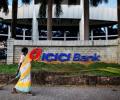
An in-line ICICI Bank result for the quarter ended March 31, 2024, has led to analysts raising target price and earnings per share (EPS) forecast on the stock. ICICI Bank, they said, appeared least vulnerable to regulatory action on its digital offerings or for risk monitoring lapses.

The India personal computer (PC) market shipment, inclusive of desktops, notebooks, and workstations, dropped by an overall 30.1 per cent in the first quarter of CY2023 over the previous year, to only 2.99 million units, according to the latest data from the International Data Corporation (IDC) Worldwide Quarterly Personal Computing Device Tracker released on Tuesday. In Q1CY23, while the demand for desktops was positive, the notebook category witnessed another weak quarter as it declined by 40.8 per cent year-on-year (y-o-y). The consumer segment declined by 36.1 per cent y-o-y primarily due to slowing demand and weak market sentiment.

Fresh meat and seafood delivery unicorn Licious is intensifying its talent acquisition endeavours as it pursues profitability and readies for an initial public offering (IPO) within the next 24 months. Delightful Gourmet, Licious' parent company, has named 39-year-old Karishma Gupta as its new chief financial officer (CFO). Her appointment aligns with Licious' drive for profitable growth through an omnichannel strategy.

Maruti Suzuki India (MSIL) will hold discussions with the Centre and state governments on how the production of compressed biogas (CBG), which can be used in vehicles that run on compressed natural gas (CNG), can be expanded in the country, its majority shareholder Suzuki Motor Corporation (SMC) said. The demand for CNG vehicles has been rising significantly in the country. MSIL sold 145,000 CNG vehicles in the first quarter of 2024-25, marking a 28.3 per cent year-on-year (Y-o-Y) growth.
Profits of India's top listed companies have been growing at a faster pace than those of their American peers, but when it comes to revenue growth, the order has reversed recently. The combined net profit of the S&P 500 companies was up 14.1 per cent year-on-year (Y-o-Y) during the trailing 12 months (TTM) ended December 2023, as against 17.4 per cent profit growth logged by the BSE 500 companies in the same period. This is the second consecutive year of faster profit growth for the BSE 500 companies.
 © 2026 Rediff.com - Advertise with us - Disclaimer - Privacy Policy - Sitemap - Feedback - About us - Terms of use - Grievances