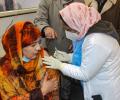
The second dose of anti-coronavirus vaccine will be administered to healthcare workers from February 13, the Centre said on Thursday, highlighting that 45 per cent of them have been inoculated so far.
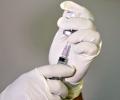
In a letter to all states and Union territories, the ministry highlighted that under the emergency use authorisation, coronavirus vaccination is indicated only for 18 years and above. If required, COVID-19 vaccine and other vaccines should be separated by an interval of at least 14 days.
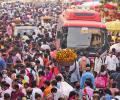
Cautioning that the country is passing through a phase when there are festivals and potential gatherings, he said this is a critical phase as the virus can spread again.

Those intending to undertake international travel for education purposes, joining employment and as part of the Indian contingent to the Tokyo Olympics will be allowed to take the second dose of Covid vaccine Covishield prior to the prescribed time interval of 84 days after the first dose.

The Union health ministry said in a statement on Monday that over 23,000 adverse events have been reported since the vaccination drive involving Covishield and Covaxin vaccines started in the country and of these 700 cases were reported to be serious.

Sputnik V is the third vaccine India has given the go-ahead to after 'Covishield', developed by Oxford University and AstraZeneca and 'Covaxin', the indigenous vaccine manufactured by Bharat Biotech. Covishield is manufactured by the Serum Institute of India.
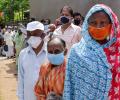
These 51 cases were detected from over 45,000 samples sequenced so far in the country.
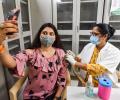
Vaccines Covishield and Covaxin work against SARS-CoV-2 variants Alpha, Beta, Gamma and Delta, while effectiveness tests against the Delta Plus variant is ongoing, the government said.

In a tweet, Prime Minister Narendra Modi said India is deeply honoured to be a 'long-trusted' partner in meeting the healthcare needs of the global community and that supplies of the vaccines to several countries will commence on Wednesday, and more will follow in the days ahead.

The fact sheet also asked people to inform the vaccinator or a supervising official about their medical condition before taking the vaccine.

As India launches the world's most ambitious and biggest vaccination drive against COVID-19, the country will encounter the formidable challenge of rapidly scaling up distribution of the vaccines to secure immunity for its entire population, two prominent Indian scientists at World Health Organisation have said.
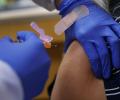
The global trials were halted after a study participant suffered a 'potentially unexplained illness, reports Sohini Das.

Some states have flagged the shortage of vaccines and expressed their inability to start vaccination of people above 18 years from Saturday

22 cases of the Delta Plus variant of the coronavirus have been detected in India, with 16 of them being reported from Maharashtra and the remaining from Madhya Pradesh and Kerala, the government said.

Apart from the 1.1 crore doses of Covishield being procured from the Serum Institute of India, 55 lakh doses of indigenously developed Covaxin were being obtained from Bharat Biotech, Union Health Secretary Rajesh Bhushan said at a press conference.

Union Health Minister Harsh Vardhan on Friday said the COVID-19 vaccination drive will be extended in the coming days and asserted that there should not be any misconceptions about the two Indian vaccines being administered in the country.

The Hyderabad-based Bharat Biotech has fixed the price of its COVID-19 vaccine, Covaxin, at Rs 600 per dose for state governments and at Rs 1,200 per dose for private hospitals. The Pune-based Serum Institute of India, the world's largest vaccine maker in terms of volume, has announced a price of Rs 400 per dose for its COVID-19 vaccine, 'Covishield', for state governments and Rs 600 per dose for private hospitals.
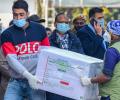
Each vaccination session will cater to a maximum of 100 beneficiaries and the Union Health Ministry has advised states not to organise 'unreasonable numbers of vaccination per site per day'.

The Pune-based vaccine major has entered into a collaboration with the University of Oxford and AstraZeneca to manufacture the vaccine.
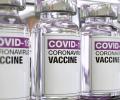
As for Bharat Biotech, the Subject Expert Committee (SEC) on COVID-19 of the CDSCO asked the firm to expedite volunteer recruitment for the ongoing clinical trial and said it may conduct interim efficacy analysis for further consideration of restricted emergency use approval for its vaccine Covaxin, they stated.

Serum Institute of India CEO Aadar Poonawalla has said that the production of Covid-19 vaccine Covishield is in full swing in Pune and he will review the operations once he is back in the country in a few days. Poonawalla is currently in the UK to meet his family members.
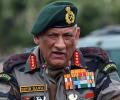
The Padma Bhushan was conferred on 17 personalities including N Chandrasekharan, chairman of Tata Sons, Krishna and Suchita Ella of Bharat Biotech, Cyrus Poonawalla, Satya Nadella, chairman of Microsoft, Sunder Pichai, chairman of Google.
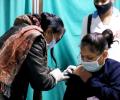
'Ideally, the efficacy data of all the trials should be there in the public domain, and as soon as possible.' 'It is difficult to understand the reason behind the authorisation.'

Private hospitals can charge up to Rs 250 per dose of COVID-19 vaccine, official sources said on Saturday as India prepares to vaccinate people aged above 60 years and those over 45 with comorbidities from March 1.

India has airlifted more than 6 million COVID-19 doses to nine countries in Phase-I under its initiative termed "Vaccine Maitri".

A total of 3,006 session sites across all states and union territories will be virtually connected during the launch at 10.30 am by Prime Minister Narendra Modi and around 100 beneficiaries will be vaccinated at each session site.
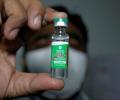
Prior to the beginning of the nationwide vaccination drive against Covid-19 in India on January 16, the Pune-based Serum Institute of India has issued a factsheet to answer frequently asked questions that vaccine beneficiaries might have.

The Oxford vaccine, which also has a tie-up with the Serum Institute of India, was first administered to Brian Pinker, an 82-year-old Oxford-born dialysis patient. Pinker is among the first to be vaccinated by the Oxford University Hospital's (OUH) chief nurse, hailed as a major milestone in the phased vaccination programme being undertaken by the National Health Service (NHS).

Senior Congress leader Anand Sharma on Sunday raised concerns over India's drugs regulator granting permission for restricted use of Bharat Biotech's COVID-19 vaccine and asked the government to explain why mandatory protocols and verification of data has been dispensed with.

The next phase of the COVID-19 vaccination drive for people above 60 years and those aged 45 and above with comorbidities will begin from March 1 and registration on the Co-WIN2.0 portal will open at 9 am on Monday.

For vaccination, online registration is mandatory. Thereafter, eligible beneficiaries will be informed on their registered mobile number about the nearest vaccination facility, and the date and time of vaccination.
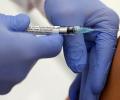
With final preparations underway and the vaccine set to arrive in the national capital in the next couple of days, Rohit Datta, who was the first person to be diagnosed with coronavirus infection on March 1, said "it feels surreal".
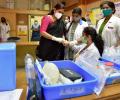
The first nationwide mock drill was held on January 2 which, the health ministry said, helped to iron out any glitches in the final execution and further refinement of the operational procedures.

'When there is so much anxiety, the Government of India should assure people on the vaccine issue and help the states demanding more supply that they will be provided the required quantities.' 'Any Centre-state conflict at this point of time is counter-productive and enhances people's anxieties that should be avoided.'

Easing restrictions, all private hospitals were on Tuesday allowed to give the vaccines if they adhere to the laid down norms, while the 9 am to 5 pm timing was also done away with.
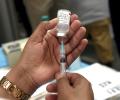
The second phase of Covid-19 vaccination in India will begin from March ,1 in which people above 60 years of age and those above 45 years of age with comorbidities will be vaccinated, Union Minister Prakash Javadekar said on Wednesday.
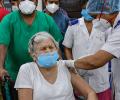
Addressing a press conference, NITI Aayog member (Health) V K Paul said concerns about adverse effects and serious problems post immunisation, as of now, seem to be unfounded, negligible and insignificant, and stressed that both the vaccines -- Covishield and Covaxin -- are safe.

Modi urged the country to show patience during the vaccination drive as it had shown till now in fighting the pandemic.

Communications between the USTR and the world's most powerful pharmaceutical and trade lobbying groups reveal that many raised concerns about India's push to exempt Covid vaccines from intellectual property.
What the UK is getting out of the Serum Institute is what India is losing. And the responsibility of the Indian State ought to have been to dictate where Serum Institute's vaccine doses should go, argues Ambassador M K Bhadrakumar.
 © 2026 Rediff.com - Investor Information - Advertise with us - Disclaimer - Privacy Policy - Sitemap - Feedback - About us - Terms of use - Grievances