
As markets complete the first half of the calendar year 2022 (CY22) with a fall of around 9 per cent, the interest-rate hike trajectory by global central banks, paired with the conundrum of inflation and growth, will move the needle for the market, observe experts. Here's a quick rundown on what they'll react to over the next six months.


'Yet the market didn't do all that badly because it was cushioned by domestic inflows.'

The sharp correction in equity markets has taken a toll on mid-and-small cap stocks that have underperformed their large-cap peers. Thus far in calendar year 2022 (CY22), the mid-and-small cap indexes on the BSE have slipped over 8 per cent and 7 per cent respectively, as compared to a fall of around 6 per cent in the S&P BSE Sensex. While investors dumped mid-and small-cap stocks as the markets remained choppy over the past few weeks, analysts still expect these two segments to see good investor interest from a medium-to-long term perspective.

Continuing their massive selling spree for the ninth consecutive month, foreign investors dumped Indian shares worth Rs 50,203 crore in June -- the highest net outflow in over two years -- amid aggressive rate hike by the US Federal Reserve, elevated inflation and relatively higher valuation of domestic equities. Foreign portfolio investors (FPIs) have now pulled out around Rs 2.2 lakh crore from domestic equities in the first six months of 2022 -- the highest-ever net withdrawal by them. Before that, FPIs withdrew Rs 52,987 crore in the entire 2008, data with depositories showed.

India has been relatively insulated from the severe headwinds in the West. However, with a third of the global economy expected to slip into recession in calendar year 2023, the impact will strongly be felt on India's exports and trade economy, leading economists said in a panel discussion at the Business Standard BFSI Insight Summit in Mumbai on Wednesday. The panel comprised former Reserve Bank of India executive director and former Monetary Policy Committee member Mridul Saggar, State Bank of India Chief Economic Advisor Soumya Kanti Ghosh, Citibank India Chief Economist Samiran Chakraborty, ICRA Chief Economist Aditi Nayar, and IndusInd Bank Chief Economist Gaurav Kapoor. The topic of the panel discussion was No recession in sight: Is India decoupled from developed economies?
Analysts believe that investors should look at stocks that hit 52-week lows only if they have a dividend paying track record, are debt-free and have sound fundamentals.

Gold prices are struggling and are down 18 per cent from their March highs. But stock prices have fallen even more. As a result, the precious metal has begun to outperform equities - both in the domestic market and international markets. Gold prices are up 2.6 per cent in the domestic market in the current calendar year (CY22) so far, according to the World Gold Council (WGC), compared to a 1.7 per cent decline in the Sensex year-to-date (YTD).
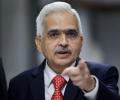
Reserve Bank Governor Shaktikanta Das on Wednesday said underlying economic activity in India continues to be strong, but external factors will cause some "dent" to the economy. Speaking at the BFSI Insight Summit 2022 organised by Business Standard, Das said the RBI tracks 70 fast moving indicators and most of them are in the "green box". It is the external sector, mired by a fear of recession or clear visibility about slowing growth in a large part of the world, where the challenges lie, he said, adding that the impact of external demand will "dent" the economy.

'India seems to be on a relatively better wicket compared to other emerging markets.'

The market capitalisation of BSE-listed companies reached an all-time high of Rs 261.73 lakh crore on Thursday, helped by a massive rally in the equities where the benchmark Sensex zoomed 958 points to end at a fresh lifetime peak. The 30-share BSE benchmark jumped 958.03 points or 1.63 per cent to settle at its new closing peak of 59,885.36. During the day, it gained 1,029.92 points to touch an intra-day record high of 59,957.25.

Infosys was the top gainer in the Sensex pack, rising over 2 per cent, followed by Bajaj Finance, HCL Tech, Tata Steel, Tech Mahindra and NTPC. On the other hand, Maruti, Sun Pharma, HUL and ITC were among the laggards. Nifty rose 122.15 points to 17,343.55.

The number of draft red herring prospectuses (DRHPs) filed with the markets regulator - Securities and Exchange Board of India (Sebi) - jumped nearly fivefold to 145 in 2021-22 (FY22), compared with just 30 in the preceding financial year (2020-21, or FY21). This was on account of companies rushing to take advantage of a favourable market sentiment towards initial public offerings (IPOs), triggered by an influx of new investors, surge in the secondary market, and encouraging performance of newly listed stocks. In fact, DRHPs filed in FY22 was 4x the previous 10-year average and the highest since 2007-08, according to primary market tracker PRIME Database.

Despite its recent underperformance, gold must be a part of your portfolio.

Experts say companies wanting to launch IPOs will have to scale back their expectations given the fall in valuations.
Equity investors became poorer by over Rs 8 lakh crore in five days of market plunge. The BSE benchmark has lost 2,062.99 points or 4 per cent in five trading sessions. On Thursday, the 30-share BSE benchmark tanked 585.10 points or 1.17 per cent to close at 49,216.52. Following the bearish trend, the market capitalisation of BSE-listed companies declined by Rs 804,216.71 crore to Rs 2,01,22,436.75 crore in five days.

'It will be best for investors to have a systematic investment plan in mid-cap and small-cap funds with a three-/five-year horizon.'

Just because India has outperformed the US markets in a short recent period, it does not mean that this is based on fundamental reasons that are here to stay, points out Debashis Basu.

This is the first hike in about a decade, signaling a recovery.
Hero MotoCorp was the top gainer in the Sensex pack, spurting 4.46 per cent. IndusInd Bank, Tata Motors, Vedanta, SBI, M&M, Sun Pharma, Tata Steel, HDFC and HDFC Bank too rose up to 3.63 per cent.

The US Fed interest rate decision, domestic macroeconomic data announcements and ongoing quarterly earnings are some of the major factors that will drive the stock markets in a holiday-shortened week, analysts said. Besides, monthly auto sales numbers and the LIC IPO will also remain in focus, they added. Equity markets will remain closed on Tuesday for Id-Ul-Fitr (Ramzan Id). "The market is likely to kick off this week on a sombre note after a sharp fall in the US market then the focus will shift to the outcome of the US FOMC meeting, which is crucial amid record inflation and growth worries.

Yes Bank was the biggest gainer in the Sensex pack, rallying 10.94 per cent. Other gainers included Sun Pharma, IndusInd Bank, L&T, ICICI Bank, Maruti, Bajaj Auto, Tata Motors and ONGC, rallying up to 4.01 per cent.

'At current valuations, we believe large-caps offer better downside support.' 'Hence, we are suggesting a small tilt towards them.'

'The minimum holding period for equities should be three years.' 'Try goal-based investing.' 'Link your equity portfolios to specific goals such as retirement, purchase of a house or car...'

HCL Tech was the top loser in the Sensex pack, skidding over 4 per cent, followed by Tech Mahindra Dr Reddy's, Wipro, TCS, Titan and Infosys. NSE Nifty plunged 167.80 points to 17,110.15.

Investors continue to back-up equity mutual funds in June as such schemes attracted a net inflow of Rs 15,498 crore on strong flows from systematic investment plans despite volatility in the stock market and relentless selling by Foreign Portfolio Investors (FPIs). This also marked the 16th straight month of positive inflow in equity schemes. Inflows into equity mutual funds in June was lower compared to the net inflow of Rs 18,529 crore seen in May, data from the Association of Mutual Funds in India (AMFI) showed on Friday.

Brokers said investor sentiment turned choppy on selling by foreign institutional investors ahead of the September month derivatives expiry on Thursday.
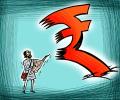
Indian rupee, which earlier this week touched an all-time low, is likely to remain under pressure and may test new levels as a fallout of the US Federal Reserve indicating more interest rate hikes, experts said. The aggressive rate hikes will dampen demand and increase the possibility of a recession in the US. This could accelerate the pace of capital outflows, weaken the rupee and raise the threat of imported inflation.

'Recent underperformance notwithstanding, equities should constitute a major part of investors' financial portfolio.'

And there have been months when flows have exceeded $3 billion.
The 50-share NSE Nifty closed lower by 19.25 points, or 0.19 per cent at 10,121.90

Fears that FIIs would curtail their investments in emerging markets following the Fed's tapering plan hurt sentiment.

At interactions last week with senior officials from the Reserve Bank of India, select banks gave feedback on two key bond market concerns, namely, recent volatility in the rupee-dollar exchange rate and heavy losses incurred on floating rate government bonds due to a demand-supply mismatch, sources told Business Standard. The discussions were held ahead of the RBI's next monetary policy statement, scheduled on August 5. Indian banks are large holders of government securities because of a regulatory mandate to set aside a certain percentage of deposits in sovereign bonds.

Shaktikanta Das is a master of the finest balancing act who listens to all but takes his own decisions, discovers Tamal Bandyopadhyay.
The 30-share Sensex ended 684 points higher at 20,647 and the 50-share Nifty added 216 points at 6,116 levels.

Equities went into a tailspin on Wednesday after the Reserve Bank surprised the market with a mid-cycle rate hike in a bid to tame soaring inflation.

Equity markets will look for directions from global trends, ongoing quarterly earnings and investment patterns of foreign institutional investors (FIIs) in a holiday-shortened week ahead and may encounter volatility amid the scheduled monthly derivatives expiry, according to analysts. Equity markets will remain closed on Wednesday on account of 'Republic Day'. "This week is a holiday-shortened one and it's going to be critical due to the list of events and data that are lined up.

The faster-than-expected rise in interest rates by the US Federal Reserve (US Fed) shook global financial markets in early 2022. And now the ongoing war between Russia and Ukraine has lifted commodity prices, with Brent crude oil hitting a 14-year high of $139 a barrel in intraday trade. All these developments have sent the equity markets across the world into a tailspin.

Investments by private equity and venture capital funds doubled to a record high of $9.5 billion in July mainly driven by higher investor interest in the e-commerce sector, a report said on Monday. Private equity (PE) and venture capital (VC) investments stood at $4.1 billion in the year-ago period. The activity was higher by 77 per cent when compared to June's $5.4 billion, the report on monthly PE/VC investment activity by industry lobby IVCA and consultancy firm EY said.

Tech Mahindra was the top gainer in the Sensex pack, rising around 2 per cent, followed by Bharti Airtel, Maruti, ICICI Bank, SBI, HDFC Bank, Asian Paints and Reliance Industries.
 © 2026 Rediff.com - Advertise with us - Disclaimer - Privacy Policy - Sitemap - Feedback - About us - Terms of use - Grievances