
Foreign investors have pulled out Rs 22,420 crore from the Indian equity market so far this month, owing to high domestic stock valuations, increasing allocations to China, and the rising US dollar as well as Treasury yields. With this sell-off, Foreign Portfolio Investors (FPIs) have recorded a total outflow of Rs 15,827 crore in 2024 so far. As liquidity tightens, FPI inflows are expected to remain subdued in the short term.

The index could be vulnerable to a bigger fall given the present market dynamics.

Widespread use of crypto assets, including stablecoins, can have a negative impact on the macroeconomic and financial stability of a country, the Reserve Bank of India (RBI) said on Monday. In its Financial Stability Report (FSR), the banking regulator highlighted that excessive use of crypto assets can reduce effectiveness of monetary policy, worsen fiscal risks, circumvent capital flow management measures, divert resources available for financing the real economy and threaten global financial stability.

From the 30-share blue-chip pack, Zomato cracked nearly 7 per cent. Power Grid, Adani Ports, Tata Steel, NTPC, Tata Motors, Tech Mahindra, Mahindra & Mahindra, Asian Paints, Sun Pharma and UltraTech Cement were the other major laggards. In contrast, Axis Bank, Hindustan Unilever, Tata Consultancy Services and IndusInd Bank were the gainers.
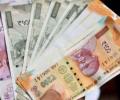
The rupee extended its losses and slipped 12 paise to 77.74 against the US dollar in early trade on Thursday, weighed down by a muted trend in domestic equities and unabated foreign fund outflows. At the interbank foreign exchange, the rupee opened at 77.72 against the American dollar, then lost ground to quote at 77.74, registering a fall of 12 paise from the last close. On Wednesday, the rupee declined by 1?7 paise to close at its fresh lifetime low of 77.6?1 against the US dollar.

After a brutal selloff since October, foreign portfolio investor (FPI) flows for the year-to-date (YTD) in 2024 have turned negative. In early September, YTD FPI investments peaked at a record Rs 22,000 crore ($2.6 billion). This wave of selling has also pulled down benchmark indices, with the Nifty's YTD returns declining to 11 per cent from their high of 21 per cent in September.

Equity markets this week will take cues from global trends, trading activity of foreign investors and quarterly earnings, with TCS kick-starting the results calendar on Thursday, analysts said.

'Growth, liquidity and deposit mobilisation are likely to be discussed during the interaction.'

Russian shipments averaged 1.67 million barrels per day in January compared to 1.48 million bpd in December and 1.53 million bpd a year earlier.

Macroeconomic data announcements, trading activity of foreign investors and global trends will guide equity market movement this week, which would also mark the beginning of the new calendar year and month, analysts said.

The rupee has depreciated by 0.6 per cent so far in the current financial year.

In the shadows of a sliding rupee, India's knitwear hub Tiruppur is weaving a success story. While the domestic currency edges closer to the 86 mark against the US dollar, triggering concerns for many sectors, this textile town in Tamil Nadu is finding opportunity in adversity: Between April and December alone, Tiruppur's exports reached Rs 26,000 crore, almost eclipsing last financial year's total of Rs 30,690 crore.

'2025 is the year to build a portfolio for the future. Focus this year should be on valuations and visible growth.'

Invest with a 5 to 7 year horizon so that you are able to ride out price volatility and benefit from the long-term trends of demand and macroeconomic shifts.

The rupee on Thursday closed at its all-time low of 78.32 (provisional) against the US dollar as strong American currency and persistent foreign fund outflows weighed on investor sentiments. At the interbank foreign exchange market, the local currency opened at 78.26 and finally settled at its all-time low 78.32, unchanged from its previous close. On Wednesday, the rupee declined by 19 paise to settle at an all-time low level of 78.32 against the US dollar.

Overall, volume growth is likely to be in the range of 3-8 per cent for two-wheelers and 5-7 per cent for passenger vehicles owing to healthy demand from urban and rural areas and pending order books.

From the 30-share Sensex pack, Tata Consultancy Services, Infosys, NTPC, HCL Technologies, Axis Bank, Tech Mahindra, Bajaj Finserv, Sun Pharma, IndusInd Bank and Reliance Industries were the major laggards. Tata Steel, Hindustan Unilever, Mahindra & Mahindra, Nestle and State Bank of India were among the gainers.

The 16th Brics Summit beginning Tuesday in Kazan, Russia, is expected to see more focus on creating a sharper energy policy for Brics that ensures closer partnership among members in both energy security and energy transition, official sources said. The same is expected to be a part of the Kazan declaration, currently being negotiated, they added.

The rupee appreciated 6 paise to 78.27 against the US dollar in opening trade on Monday as heavy buying in domestic equities and weakness in the greenback strengthened investor sentiment. However, elevated crude prices and persistent foreign fund outflows restricted the rupee's gain, forex dealers said. At the interbank foreign exchange, the rupee opened sharply up at 78.24 against the US dollar, then inched lower to quote 78.27, registering a gain of 6 paise over the last close.

Gold prices slumped for the second straight session by Rs 1,150 to Rs 78,350 per 10 grams in the national capital on Monday on frantic selling by stockists and retailers, the All India Sarafa Association said. The precious metal of 99.9 per cent purity closed at Rs 79,500 per 10 grams on Friday.

The rupee fell by 49 paise to close at 81.89 (provisional) against the US dollar on Monday as heavy selling pressure in the domestic equities and a spike in crude oil prices weighed on the local unit.

Global brokerage firm CLSA has reversed its early tactical shift from Indian equities to Chinese stocks, and has decided to raise India allocation while cutting exposure to China. In its report titled 'Pouncing Tiger, Prevaricating Dragon', CLSA cited challenges facing Chinese markets in the aftermath of Donald Trump's victory in the US elections as the reason for the move. "Misfortune can happen in threes. So it has played out for Chinese equities over the past week.

US President-elect Donald Trump's pledge to impose high tariffs on three of its trading partners, including China will provide huge export opportunities for India and the domestic industry should prepare itself to tap into that, Niti Aayog CEO BVR Subrahmanyam said on Wednesday. Trump last week vowed to introduce 25 per cent tariffs (or customs duty) on imports from Mexico and Canada and an additional 10 per cent on China.

'Market corrections are a natural part of investing, so it's essential to remain focused on long-term financial goals.'

Amid mounting inflationary pressures, escalating material costs, and rising operational expenses, luxury carmakers Mercedes-Benz India and BMW India have announced price increases of up to 3 per cent on their entire model ranges effective from January 1, 2025. Mercedes-Benz India will revise ex-showroom prices by Rs 2 lakh to Rs 9 lakh, depending on the model. This adjustment will impact vehicles such as the GLC SUV and the high-end Mercedes-Maybach S 680 limousine.

Small and midcaps are leading the charge in the latest market rebound. Since November 21, when the benchmark S&P BSE Sensex and the National Stock Exchange Nifty hit their recent lows and slipped into correction territory, the Nifty Smallcap 100 index has risen by 8 per cent, while the Nifty Midcap 100 has gained 5.7 per cent. Meanwhile, the Nifty 50 index has risen by 4.7 per cent during this period.

India's foreign exchange reserves fell for the fourth consecutive week after reaching an all-time high last month. In the week ending October 25, the forex reserves declined by $3.46 billion to $684.80 billion, according to data released by the Reserve Bank of India (RBI) on Friday. In the three preceding weeks, reserves dropped by $3.7 billion, $10.7 billion, and $2.16 billion, respectively, the data showed.

The rupee weakened by 14 paise to close at a new lifetime low of 79.59 against the US dollar on Tuesday as a strong greenback overseas and persistent foreign fund outflows continued to weigh on investor sentiment. This comes a day after the RBI announced measures for international trade settlement in rupees. At the interbank forex market, the local unit opened weak at 79.55 against the greenback and witnessed an intra-day high of 79.53 and a low of 79.66.

Tata Steel, Bajaj Finance, Mahindra & Mahindra, JSW Steel, NTPC, Adani Ports, Bajaj Finserv and Larsen & Toubro were also among the laggards. However, Power Grid, HCL Technologies, Infosys, Tech Mahindra, Tata Consultancy Services and ICICI Bank were among the gainers.

Global factors and FII activity will dictate trends in domestic equity markets this week while assembly poll results of Maharashtra and Jharkhand may impact stocks on Monday, say analysts. Stock markets witnessed a spirited recovery on Friday with benchmark Sensex and Nifty notching the best single-day gains in more than five months and offering relief after weeks of correction.

The rupee declined by 10 paise to close at 79.23 (provisional) against the US dollar on Friday, tracking the strength of the American currency in the overseas market. At the interbank foreign exchange market, the local currency opened at 79.20 and finally ended at 79.23, down 10 paise over its previous close of 79.13. "Gains for the currency were short-lived even after RBI announced forex related measures. "Pound held on to its gains after Boris Johnson said he was quitting as prime minister following a rush of ministerial resignations and calls for him to go," said Gaurang Somaiya, Forex & Bullion Analyst, Motilal Oswal Financial Services.

Apart from the emotional value attached to buying gold, the yellow metal offers protection against inflation, interest rate spikes, currency and geopolitical risks, says Anamika Pareek.

The sharp pullback in mid and smallcap stocks signals a cooling-off period in segments that previously attracted considerable investor interest.
The Reserve Bank of India (RBI) was a net seller of the US dollar in August, reversing its net buying position from July. During the current financial year up to August, the central bank had sold a net $1.11 billion. The RBI sold a net total of $6.49 billion worth of the foreign currency in August, according to the central bank's monthly bulletin.

The Indian markets have delivered high long-term returns, second only to the US.

The rupee depreciated 22 paise to a record low of 78.59 against the US dollar in opening trade on Tuesday as persistent foreign funds outflows weighed on investor sentiments. At the interbank foreign exchange, the rupee opened on a weak note at 78.53 against the American dollar, then lost ground to quote at 78.59 -- its all-time low level, registering a fall of 22 paise from the last close. On Monday, the rupee declined by 4 paise to close at its life-time low of 78.37 against the US dollar.

'India's fundamentals are a lot better (than those of other emerging market economies).' 'India will suffer (witness a fall in its stock market) what I call the second order effect.' 'And the second order will happen when these funds (belonging to macro and hedge fund investors and which have leveraged Japanese yen-carry trades), because they lose money elsewhere as lot of their positions were financed by borrowing Japanese yen, will have to book profits in investment destinations where they are making money, including in markets like India.' 'They (these investors) will have to effectively sell in countries like India and which is the consequence (the crash in equity markets) that Indian markets might see.'

The exodus of foreign investments from Indian equity markets continued unabated, with FPIs pulling out nearly Rs 20,000 crore in the last five trading sessions on higher valuations of domestic stocks and shifting their allocation to China. As a result, foreign portfolio investors (FPIs) have turned net sellers in the equity market, with total outflows reaching Rs 13,401 crore for 2024 so far. Going ahead, the FPI selling trend is likely to continue in the near term till data indicate the piossibility of a trend reversal.
The rupee depreciated 7 paise to an all-time low of 80.05 against the US dollar in early trade on Tuesday tracking the strength of the American currency and firm crude oil prices. At the interbank foreign exchange, the rupee opened at 80 against the American dollar, then lost ground to quote at 80.05, registering a fall of 7 paise from the last close. In initial trade, the local unit also touched 79.90 against the American currency.

Gold, a safe-haven bet, is likely to continue its record-smashing journey in the New Year, rising to Rs 85,000 per 10 grams and even Rs 90,000 level in domestic markets if geopolitical tensions and global economic uncertainties continue.
 © 2026 Rediff.com - Investor Information - Advertise with us - Disclaimer - Privacy Policy - Sitemap - Feedback - About us - Terms of use - Grievances