
UK's Crown Prosecution Service will be arguing the case against Mallya on behalf of the Indian government.

A UK court on Monday ruled that Sanjay Bhandari, an accused middleman and consultant in arms deals, can be extradited to India to face charges of tax evasion and money laundering.

Nirav, 48, appeared before the Westminster magistrates' court via videolink from his London prison for a routine "call-over" remand hearing.

In the 25-page defence evidence affidavit, which was served to the UK Crown Prosecution Service, Mallya is learnt to have alleged that his was a case of "political vendetta" and "loss-making business".

Vijay Mallya has applied to Home Secretary Priti Patel for "another route" to be able to stay in the UK, the liquor tycoon's barrister representing him in bankruptcy proceedings in the High Court of London confirmed during a remote hearing on Friday. The 65-year-old businessman, whose legal challenge to the Indian government's extradition request was turned down at the Supreme Court level in the UK last year, remains in Britain on bail until Patel signs off on the order for him to be extradited to India to face charges of fraud and money laundering related to the now-defunct Kingfisher Airlines. The UK Home Office has so far only confirmed on background that a confidential legal process remains ongoing before the extradition order can be executed.

Nirav Modi, the fugitive diamond merchant wanted in India to face charges of fraud and money laundering in the estimated $2-billion Punjab National Bank (PNB) scam case, has lodged his appeal against extradition from the UK and the case will be heard at the high court in London on December 14. The 50-year-old jeweller, who remains behind bars at Wandsworth Prison in south-west London since his arrest in March 2019, was granted permission to appeal against the Westminster Magistrates' Court extradition order on mental health and human rights grounds. High court judge Martin Chamberlain had ruled on August 9 that arguments presented by Modi's legal team concerning his "severe depression" and "high risk of suicide" were arguable at a substantial hearing.

Westminster magistrates' court judge Nina Tempia confirmed that Modi's extradition trial is scheduled between May 11 and 15 next year and that he must re-appear via videolink every 28 days for "call-over hearings" until the case management for the trial kicks in from February next year.

The 48-year-old, who has been lodged at Wandsworth prison in south-west London, appeared via videolink from prison before district judge David Robinson. "I am told that your case is proceeding in accordance with the directions for a final hearing on 11 May," the judge told Modi, as he set the next 28-day remand hearing via videolink for February 27. Modi's extradition trial is scheduled for five days starting May 11, with the case management hearings in the case set to begin once all the evidence has been handed in to the court for the trial.

The High Court in London on Tuesday began hearing Nirav Modi's appeal on the grounds of his mental health against extradition to India to face charges of fraud and money laundering, amounting to an estimated $2 billion in the Punjab National Bank (PNB) loan scam case. Lord Justice Jeremy Stuart-Smith and Justice Robert Jay presided over the hearing at the Royal Courts of Justice to determine whether District Judge Sam Goozee's February ruling in favour of extradition was incorrect to overlook the diamond merchant's "high risk of suicide". The court heard of an additional assurance from the Indian authorities on November 13, which reiterates previous commitments of adequate specialist medical care and an ambulance at hand were Nirav to be extradited to Mumbai.

Modi is subject to two sets of criminal proceedings, the first brought by the CBI relating to a large-scale fraud said to have been committed upon PNB and the ED case, relating to the laundering of the proceeds of that fraud.
In a major blow to Nirav Modi, a bankruptcy court in the US has rejected a petition of the fugitive diamond merchant and two of his associates, seeking dismissal of fraud allegations against them by the trustee of three companies they previously owned indirectly.
Modi appeared for his regular 28-day "call-over" appearance from London's Wandsworth prison at Westminster magistrates' court, where judge Gareth Branston reconfirmed that his extradition trial will begin on May 11 next year and will last five days.

In her judgment handed down at the Royal Courts of Justice in London, Justice Ingrid Simler concluded there were "substantial grounds" to believe that Modi would fail to surrender as he does possess the means to "abscond".

The leave to appeal to the Supreme Court is on a point of law of general public importance, which according to experts is a very high threshold that is not often met.
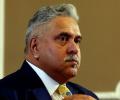
The next hearing to assess the progress in the case will be held at Westminster Magistrates' Court on September 14.

Union Home Secretary Rajiv Mehrishi raised the issue of early completion of the extradition process of Mallya, during his talks in New Delhi with his UK counterpart Patsy Wilkinson, the second permanent secretary in the British home office.

If the absconding jeweller is traced in Britain, the extradition request to the UK government could follow a similar course as the case of embattled liquor tycoon Vijay Mallya

Modi wanted in India for an alleged Rs 13,500 crore Punjab National Bank fraud arrived in London earlier this year on an Indian passport.
Justice Ingrid Simler at the Royal Courts of Justice in London concluded the hearing and said as the matter was of "some importance", she would take some time to consider it and hand down her ruling on Wednesday.
In her judgment handed down at the Royal Courts of Justice in London, Justice Ingrid Simler concluded there are "substantial grounds" to believe that the 48-year-old fugitive diamantaire would fail to surrender as he does possess the means to "abscond".

The UK Crown Prosecution Service said Mallya's appeal to certify a point of law was rejected on all three counts, of hearing oral submissions, grant a certificate on the questions as drafted, and grant permission to appeal to the Supreme Court.

Britain has ordered extradition of one of the main Naval war room leak accused Ravi Shankaran to India to face trial, a move that may expedite court proceedings pending for several months.
 © 2026 Rediff.com - Investor Information - Advertise with us - Disclaimer - Privacy Policy - Sitemap - Feedback - About us - Terms of use - Grievances