
The US' move to raise the tariff on most Indian goods to 50 per cent could drag India's GDP growth for FY26 by 35 to 60 basis points, according to various economists. One basis point (bp) is equal to 0.01 per cent.

Analysts are divided on their retail price inflation forecast, with some saying the first quarter numbers will overshoot the RBI target by as much as 60 bps while others are softer in their estimate. Consumer price inflation retreated from its 15-month peak of 7.4 per cent in July to 6.8 per cent in August, much lower than the market expectations, despite vegetable prices remaining elevated at 26.1 per cent. Food inflation eased to 9.9 per cent from 11.5 per cent, led by some cooling of inflation in vegetables, cereals, pulses and milk.
The economy is likely to register a 9.5 per cent growth this fiscal over 7.3 per cent contraction last year, as the ongoing recovery is faster and more credible than earlier foreseen, according to a foreign brokerage report. It will gather more momentum in the second half of the current fiscal, but will slow down to 7.7 per cent next financial year, it added. The government has budgeted for a 10.5 per cent growth this fiscal, but the Reserve Bank has scaled it down to 9.5 per cent.

The government's move to freely supply coronavirus vaccines to the states for universal inoculation and extend free rations to help the poor tide over the pandemic will only add an additional 40 bps of GDP to fiscal deficit, says a report, which also called for more transparent vaccine distribution plan for efficient vaccine allocation to the states.

Lockdowns imposed by the states in April and May to contain the second wave of the deadly COVID-19 pandemic has likely led to the economy contracting 12 per cent in the June quarter as against 23.9 per cent contraction in the same quarter in 2020, says a brokerage report. The economy had its worst contraction on record in FY21 at 7.3 per cent as the 2.5 months of unplanned lockdown announced by the centre with just a four-hour notice had crippled the economy in the first quarter with a massive 23.9 per cent contraction, which improved to -17.5 per cent in the second quarter.

As COVID-19 infections spike in the country resulting in restrictions in various states and impacting the fragile recovery, many economists are expecting RBI to delay the policy normalisation move, which is expected in the February review. The country has reported a single-day rise of 58,097 new Covid-19 cases as of Wednesday morning--the highest in around 199 days -- of which 2,135 are Omicron cases and later in the day, the first confirmed Omicron-related death has also been reported. Maharashtra recorded the maximum number of 653 Omicron cases followed by Delhi at 464, Kerala 185, Rajasthan 174, Gujarat 154 and Tamil Nadu 121 cases, taking the total tally of cases to 3,50,18,358.

What is more worrying, according to the report, is the fact that in over 20 per cent of the topic caseload districts where the second has ebbed, the third wave has set in firmly, which was only 5 per cent a month ago.

Citing the massive surge in Omicron infections and the resultant impact on overall economic activities in the March quarter, Swiss brokerage UBS Securities has revised downwards its India's growth forecast for the current financial year to 9.1 per cent from 9.5 per cent earlier. However, UBS Securities does not see the third wave impact extending to the next financial year as it has revised upwards its real GDP forecast to 8.2 per cent, up from 7.7 per cent earlier, expecting the real GDP growth to remain well above the historical average. The World Bank pegs it at 8.3 per cent, unchanged from its June assessment, saying the recovery is not broad-based yet.
Arguing that the recent elevation in retail inflation is not structural but supply-driven and therefore potentially transitory, a foreign brokerage report has forecast that the benign interest rate regime will continue at least until next June. The assessment comes a day ahead of the third bimonthly monetary policy review on Friday wherein it's widely expected that the monetary authority will leave the key rates unchanged at 4 per cent even though the consumer prices have been on remaining above 6 per cent since May and crude prices have been north of $70 a barrel for months.

While some argue there is more upside left, others suggest valuations might have run up far ahead of fundamentals.

Citing faster-than-expected recovery, rising consumer confidence and the resultant spending spike, Swiss brokerage UBS Securities has revised upwards its growth forecast for the current fiscal to 9.5 per cent from 8.9 per cent in September. The brokerage also sees the economy clipping at 7.7 per cent in FY23 but moderating to 6 per cent in FY24, as it expects the benefit of the low-interest rate regime to end by the end of FY23, and it sees the central bank hiking policy rates by 50 bps in the second half of the next fiscal. The Reserve Bank also forecasts 9.5 per cent GDP growth this fiscal while the average projection ranges from 8.5 to 10 per cent.

A more proactive government and some level of fiscal discipline are needed to sustain the current rally, says Suresh Mahadevan, managing director and head of equities, UBS Securities (India).

The trend in corporate earnings suggests that index earnings could fall to the levels last seen in early 2014.

After unseasonal rains, supply disruptions and pandemic-induced woes pushed retail inflation well over the Reserve Bank's comfort zone in 2020, the scenario is likely to stay that way at least in the short term as economic recovery slowly gains foothold. For most part of this year, pricier food items pushed the retail inflation, based on Consumer Price Index (CPI), higher in the range of 6.58-7.61 per cent, except for March when the reading was 5.91 per cent. Experts believe retail inflation is likely to average around 6.3 per cent this fiscal and mostly will remain sticky going forward owing to pick-up in demand across sectors.

The IPO of state-owned steel maker RINL is scheduled to hit the markets in the current fiscal, and the Cabinet has already accorded its approval for the stake sale.

This is the biggest IPO in the Indian market since Bharti Infratel's over Rs 4,000 crore public offer in December 2012.

IndiGo has a fleet of 98 aircraft and about 75 of them are on operating lease.

The company will finalise the final pricing for allotment of shares later.
Top no-frills carrier IndiGo on Tuesday approached capital markets regulator Sebi with Initial Public Offer.

The next 12 months will be quite challenging marked by uncertain political events and evolving macroeconomic scenario
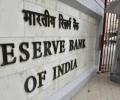
RBI is committed to bringing down retail inflation to eight per cent by January 2015 and six per cent by January 2016.

Rupee, bonds may see knee-jerk reaction, as Urjit Patel is considered an inflation warrior
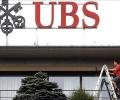
UBS India, the domestic franchise of Swiss banking major UBS Group which last month surrendered its banking licence, has started laying off around 50 people, who are affected by the decision.
 © 2026 Rediff.com - Investor Information - Advertise with us - Disclaimer - Privacy Policy - Sitemap - Feedback - About us - Terms of use - Grievances