
India's Ministry of Electronics and Information Technology (MeitY) has sought an explanation from WhatsApp regarding its username feature, citing concerns over potential cybercrime facilitation. Concurrently, the ministry is investigating reported data leak allegations involving Tata Electronics, a key supplier for Apple's iPhone components in India. MeitY is also exploring techno-legal solutions for VPNs to address challenges posed by unregistered providers operating from outside India.

Tata Electronics has surpassed Taiwanese giant Foxconn in assembling iPhones for export from India during the FY22-FY26 PLI scheme period, with exports valued at $26.3 billion compared to Foxconn's $25.6 billion.

Three contract workers tragically died from asphyxiation while cleaning a wastewater treatment tank at a Nalco Water facility within a Tata Electronics factory in Hosur, Tamil Nadu. The plant manufactures components for Apple iPhones. An inquiry has been launched into the safety regulations breach, and both Nalco Water and Apple are reportedly investigating the incident.

The November 26 Tata Sons board meeting is expected to discuss the company's stock exchange listing -- a subject that turned the boardroom into a battleground barely two months ago on September 17.

Tata Sons Chairman N Chandrasekaran views the group's investment in semiconductors not as a short-term financial play, but as a critical long-term commitment to India's growth and self-reliance in a sector vital for domestic consumption and global supply chains.

N Chandrasekaran and Noel Tata are expected to attend the Tata Steel board meeting on November 7 to approve Q2 results and the Tata Sons board meeting in the second half of November.

Seven of them posted losses, led by Air India, with their combined net loss widening to Rs 31,823 crore in FY26 from Rs 17,553 crore a year earlier and Rs 1,555 crore in FY20.

A source said the "intention of finding a resolution" on thorny issues appeared to be missing at the meeting between the two Tata leaders held at Noel Tata's residence.

His remarks come amid a debate over whether Tata Sons, the holding company of India's largest conglomerate Tata group, is required to go public.

Should the Tata Sons board heed the views of its majority shareholder? asks Laveesh Bhandari.

India is making a significant push to establish itself as a global semiconductor manufacturing hub, driven by strategic investments and policy support. The upcoming SEMICON India 2026 event will showcase the country's advancements and ambitions in this critical industry, which underpins virtually all modern electronic devices and has faced global supply chain vulnerabilities.

Holding-company discounts and losses at key unlisted ventures could weigh on Tata Sons' IPO valuation, though its diversified portfolio may still command a premium.

Tata Sons has the balance sheet to support them, for now.

Listing, according to Noel Tata, will fundamentally change how the company and the group have been working over the past 150 years.

Tata Trusts, the majority shareholders of Tata Sons, have proposed merging two operating companies, Tata Electronics Systems Solutions Pvt Ltd (TESS) and Tata Consulting Engineers (TCE), with Tata Sons. This restructuring aims to shed Tata Sons' classification as a non-banking financial company (NBFC) and a core investment company (CIC), thereby allowing it to retain its status as an unlisted private company and resolve ongoing disputes regarding its future ownership.

Tata Trusts Vice-Chairmen Venu Srinivasan and Vijay Singh challenge a proposed reorganisation of Tata Sons, alleging a lack of trustee consultation and raising concerns about its regulatory and financial implications.

India is strategically positioned to develop a robust domestic semiconductor ecosystem, driven by increasing electronics consumption, strong government support through incentives, and a global shift in supply chains. Boston Consulting Group Managing Director Ankush Wadhera highlights India's potential as a safe haven for investments, with the AI boom further fuelling demand for advanced chips. The nation aims to expand its capabilities across the entire semiconductor value chain, attracting significant global and domestic investments.

Chandra's tenure also saw a big jump in Tata Sons' other income, such as brand fee from group companies, treasury gains, and other non-recurring income.

Electronics manufacturing leader Foxconn has injected USD 37.2 million into its Indian subsidiary, Foxconn Hon Hai Technology India Mega Development Private Limited, increasing its stake to nearly 100 per cent. This investment reinforces Foxconn's commitment to iPhone manufacturing in India.
Electronics manufacturing leader Foxconn has injected USD 37.2 million into its Indian subsidiary, Foxconn Hon Hai Technology India Mega Development Private Limited, increasing its stake to nearly 100 per cent. This investment reinforces Foxconn's commitment to iPhone manufacturing in India.

Natarajan Chandrasekaran, credited with stabilising Tata Sons after a boardroom coup and overseeing significant expansion, has announced his resignation as chairman, capping a nearly decade-long tenure marked by both successes and escalating tensions with the group's controlling charitable trusts.

The much-awaited board meeting of Tata Sons did not discuss listing of the holding company or a third term for Chairman N Chandrasekaran.

Tata Steel more than doubled its Indian capacity through acquisitions and expansion, strengthening cash generation as it pursued a costly restructuring of its European operations.

Apple Inc, which had planned to shift only 10 per cent of its global production base from China to India with respect to iPhones at the end of FY26, is currently churning out one out of every four iPhones in the world from India.

Netrasemi, an Indian semiconductor start-up, has announced that its flagship AI chipset, A2000, has achieved silicon bringup and is preparing for commercial production this year. The A2000 SoC, supported by Zoho and the government's DLI programme, will enable smart vision and real-time video analytics for smart cameras and edge AI platforms.

Tata Sons' unlisted ventures, including Air India, Tata Digital, and Tata Electronics, reported combined net losses of approximately 25,568.8 crore in FY25, a 58.3 per cent increase from the previous year, despite Tata Sons itself remaining profitable for over a decade.

Apple CEO Tim Cook's strategic pivot, from initial rejections to local partnerships and leveraging government policies like PLI, transformed India into a major iPhone manufacturing and export hub, now accounting for one in every four iPhones assembled globally.

Among the fastest-growing companies by revenue were Tata Electronics, which posted a staggering 3,173% CAGR, followed by Tata Passenger Electric Mobility at 904% and JSW One Platforms at 522%.
US-based chip maker Intel has signed an agreement with Tata Group to manufacture and assemble semiconductors in India for the local market, the Indian conglomerate said on Monday.
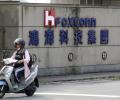
A day after news emerged that Foxconn Technology Group was "forced" by Beijing to send back its Chinese engineers and technicians from its Tamil Nadu plant, sources indicate that the global electronics giant has already drawn up an alternative plan to rescue its India iPhone 17 production by bringing in experts from mainly Taiwan and the US.

India has become Apple's main export hub to the US, which consumes over $40 billion worth of iPhones annually.

Japan is expected to increase its investment target in India from the earlier 5 trillion yen ($34 billion) to almost 10 trillion yen.

India's smartphone exports have set a new benchmark, surging past the $2 billion mark in October - the highest monthly total ever recorded. This milestone, according to estimates from the Indian Cellular and Electronics Association (ICEA), an industry body representing both global and domestic mobile device manufacturers, underscores the country's growing prominence in global mobile supply chains.
'The facility works on Apple's iPhone and everything is damaged -- CNC machines, computers and CCTVs worth crores.'

Apple Inc's iPhones assembled in India achieved market revenues of Rs 162,000 crore. Tata Steel's revenue for the same period was Rs 162,324 crore.

Corporate India is embarking on an ambitious investment drive, with capital expenditure (capex) expected to double to $850 billion over the next five years, according to a report by S&P Global Ratings. Indian power & transmission, airlines, and green hydrogen sectors would spearhead the spending, the report said.
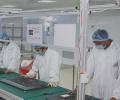
Leading home-grown companies - Dixon Technologies (India), Amber Enterprises India, Tata Electronics, Chennai-based Munoth Industries, and Murugappa Group - along with global majors such as Japan's TDK Corporation, Taiwan's Hon Hai Technology Group (Foxconn), Austria's AT&S Austria Technologie & Systemtechnik AG (AT&S AG), and Japan's Murata Manufacturing Co, among others, have expressed initial interest in participating in the Rs 22,919 crore production-linked incentive (PLI) scheme cleared by the Union Cabinet, according to those privy to stakeholder discussions with the government.

US President Donald Trump on Thursday said he has asked Apple CEO Tim Cook to stop producing iPhones in India, and rather make them in the US.

The Tamil Nadu government on Tuesday cleared the Rs 13,180 crore project by Yuzhan Technology, part of Taiwan's Foxconn Group, at Kancheepuram. The unit is reportedly expected to assemble smartphone display modules, which will be one of the first such units to cater to Apple's growing presence in the country. The unit is expected to generate at least 14,000 jobs. Of the 14 existing manufacturing units in the Apple supply chain, seven are based in Tamil Nadu.

Tata Electronics' Rs 91,000 crore semiconductor fab in Dholera, Gujarat, in partnership with PSMC, will generate over 20,000 direct and indirect skilled jobs in the region and construction of the mega unit is expected to begin this year, according to a statement on Thursday. The planned unit - India's first commercial fab, marks Tata Electronics' entry into the global semiconductor industry. Tata Electronics said it is "proud to lead India's entry into global semiconductor fabrication".
