
Kotak Mahindra Bank was the biggest loser in the Sensex pack, sliding 2.68 per cent, followed by Tech Mahindra, Mahindra & Mahindra, Axis Bank, Hindustan Unilever, Tata Motors, Tata Consultancy Services, Bajaj Finserv, Bajaj Finance, Nestle and Titan. In contrast, NTPC, Power Grid, Larsen & Toubro, HDFC, Reliance and HDFC Bank were the gainers.

Investors' wealth climbed Rs 3.20 lakh crore as markets staged a smart comeback on Wednesday after falling in the last eight trading sessions. The BSE Sensex rallied 448.96 points or 0.76 per cent to settle at 59,411.08. During the day, it jumped 513.33 points or 0.87 per cent to 59,475.45.

The gauge for the performance of informational technology (IT) stocks soared nearly 5 per cent-most in nearly three years-as growth worries eased following a robust order book posted by bellwether Tata Consultancy Services (TCS). The Nifty IT index rose 4.5 per cent to close at 30,945. This was the biggest single-day gain since September 14, 2020. Industry titan TCS' shares rose 5 per cent to Rs 3,509.
India now has three companies in the global top 100 list in terms of market value: Reliance Industries (RIL) ranks 72, Tata Consultancy Services (TCS) is at 86 and HDFC Bank at 99.

The Street shrugged off a muted first quarter of financial year 2023-24 (Q1FY24) and a cautious near-term outlook by India's largest information technology (IT) services company, Tata Consultancy Services (TCS). The stock was the top Nifty50 and Sensex gainer on Thursday, rising 2.5 per cent, as investors took comfort from a robust order book and an encouraging pipeline. Like its larger peer, HCL Technologies' (HCL Tech), too fell short of the Street's expectations on the revenue and margin fronts given cuts in discretionary expenditure.

Corporate earnings got a big boost from the fall in commodity and energy prices in July-September 2023 (Q2FY24) despite a slowdown in revenue growth during the quarter. The combined net profits of 3,123 firms that have declared their results so far were up 38 per cent year-on-year (Y-o-Y) to Rs 3.07 trillion in Q2FY24, up from Rs 2.24 trillion a year ago. Earnings were, however, down 3.5 per cent on a sequential basis from Rs 3.18 trillion in April-June (Q1) FY24.

Tata Consultancy Services (TCS) on Wednesday reported a 12.2 per cent rise in its consolidated net profit to Rs 9,769 crore for the December 2021 quarter, and announced Rs 18,000-crore buyback offer for its shareholders at Rs 4,500 per scrip. The country's largest software services firm had logged a net profit of Rs 8,701 crore in the year-ago period. Revenue of the Mumbai-based firm grew 16.3 per cent in the quarter under review to Rs 48,885 crore from Rs 42,015 crore in the corresponding period last fiscal, TCS said in a regulatory filing.
Equity investors became richer by Rs 5.66 lakh crore as markets bounced back sharply on Tuesday following a recovery in global equities. The 30-share BSE Sensex jumped 1,276.66 points or 2.25 per cent to settle at 58,065.47 points. During the day, it zoomed 1,311.13 points or 2.30 per cent to 58,099.94 points. The market capitalisation of BSE-listed firms climbed Rs 566,318.84 crore to Rs 273,92,739.78 crore.

The country's largest insurer LIC is the fifth most valuable company in the country with a market capitalisation of about Rs 5.54 lakh crore. Life Insurance Corporation (LIC) made a tepid stock market debut on Tuesday following a mega IPO which fetched Rs 20,557 crore to the exchequer. The shares listed on stock exchanges at over 8 per cent discount over its issue price of Rs 949 apiece.

In a memorable year for the equity market, Dalal Street investors added a whopping Rs 81.90 lakh crore to their wealth in 2023 as a raft of positive factors powered a stellar rally in stocks. Experts said India's strong macroeconomic fundamentals, political stability owing to the BJP's success in recent elections in three significant states, optimistic corporate earnings outlook, signals from the US Federal Reserve about three prospective rate cuts next year and heavy retail investors participation played a major role in fuelling the stock market rally in 2023. In the year 2023, the 30-share BSE Sensex jumped 11,399.52 points or 18.73 per cent.

Trouble started brewing after Cognizant announced that Ravi Kumar, former Infosys president, would take over as the Nasdaq-listed company's CEO.

Equity benchmarks eked out marginal gains to settle in the positive zone after swinging between gains and losses during the session on Wednesday amid weakness in global bourses. In a trade marked with highs and lows, the 30-share BSE Sensex climbed 54.13 points or 0.09 per cent to settle at 59,085.43. During the day, it hit a high of 59,170.87 and a low of 58,760.09. Similarly, the broader NSE Nifty went up by 27.45 points or 0.16 per cent to 17,604.95.

Equity benchmark index Sensex buckled under selling pressure for the second straight session to close below the 65k mark on Friday, as investors offloaded IT, teck and metal stocks amid a bearish global trend. Besides, fresh foreign fund outflows also hit investor sentiments, traders said. In a volatile trade, the 30-share BSE Sensex declined 202.36 points or 0.31 per cent to settle at 64,948.66.

Benchmark BSE Sensex and Nifty snapped their two-day losing streak to close nearly half a per cent higher on Tuesday following gains in banking, metal and auto stocks. The 30-share BSE Sensex climbed 257.43 points or 0.44 per cent to settle at 59,031.30. During the day, it hit a high of 59,199.11 and a low of 58,172.48.

Nine of the 10 most valued firms together added over Rs 2.12 lakh crore in their market valuation last week, with HDFC Bank and TCS emerging as the lead gainers. Last week, the 30-share BSE benchmark jumped 844.68 points or 1.38 per cent. The stock markets were closed on Tuesday for Guru Nanak Jayanti.

From the Sensex pack, Infosys, HCL Technologies, Infosys, NTPC, Mahindra & Mahindra, Tata Consultancy Services, Nestle, Tech Mahindra and Bajaj Finance were the major gainers. Power Grid, Larsen & Toubro, Maruti, Titan, HDFC Bank, Wipro, HDFC and ITC were among the laggards.
India's largest IT services firm Tata Consultancy Services (TCS) on Friday reported a 5.2 per cent year-on-year rise in consolidated net profit to Rs 9,478 crore for the first quarter ended June 30. The consolidated revenue from operations increased 16.2 per cent year-on-year to Rs 52,758 crore in the first quarter of FY23. TCS has declared an interim dividend of Rs 8 per equity share of Re 1 each.

'Why should we disclose classified information to satisfy those who doubt our Hydrogen Bomb capability?'

Benchmark indices fell over 1 per cent each on Monday in sync with weak global markets and a sharp fall in IT stocks. The BSE benchmark Sensex tanked 861.25 points or 1.46 per cent to settle at 57,972.62. During the day, it tumbled 1,466.4 points or 2.49 per cent to 57,367.47. Similarly, the NSE Nifty fell 246 points or 1.4 per cent to 17,312.90.

Morgan Stanley has increased the target prices of certain information technology (IT) stocks by as much as 29 per cent, anticipating an improvement in earnings in the near future. Within the IT and engineering research and development (ER&D) services sector, it is now more optimistic about growth and margin estimates for 2024-25 (FY25).

Kotak Mahindra Bank was the biggest loser from the Sensex pack, skidding 1.83 per cent, followed by Axis Bank, NTPC, Hindustan Unilever, ICICI Bank, Bharti Airtel, Reliance Industries, HCL Technologies, IndusInd Bank and Nestle. In contrast, Bajaj Finance, Bajaj Finserv, Tech Mahindra, Tata Consultancy Services, Titan, Infosys, HDFC Bank, HDFC and ITC were the gainers.

'A cutback in hiring and compensation growth by IT companies will have a significant impact on consumer demand, especially in the urban sector of the economy.'

The first-quarter performance of top IT services players, as well as mid-cap firms, has been subdued, reflecting macro uncertainties. The numbers of the top four firms show several misses, hinting at difficult times ahead. One mismatch is the total contract value (TCV) signed by the firms and the revenue growth registered.
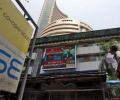
Equity benchmark indices Sensex and Nifty buckled under selling pressure after a nine-session rally on Monday, as massive sell-off in IT, tech and telecom counters unnerved investors.
Benchmark equity indices Sensex and Nifty ticked higher for the ninth straight session on Thursday, buoyed by fag-end buying in banking, financial and realty stocks amid encouraging domestic retail inflation data. Weak trends in IT counters and fall in the overnight US equity markets triggered by fresh concerns over recession, however, put a check on market's uptrend. In a largely subdued session, the 30-share BSE Sensex went up marginally by 38.23 points or 0.06 per cent to settle at 60,431.

Even as the slowdown in the information technology (IT) services sector deepens, banking, financial services and insurance (BFSI), as well as oil and gas companies, emerge as the primary drivers of corporate earnings in the country. The IT services sector's share in corporate earnings declined to a five-year low of 17.4 per cent in the second quarter (Q2) of 2023-24 (FY24), whereas banks and finance companies accounted for 46.5 per cent, and oil and gas firms contributed 16.8 per cent. At their peak, IT services firms like Tata Consultancy Services (TCS), Infosys, HCLTech, and Wipro represented just over a third of the combined net profit of all listed companies in the Business Standard sample.

'I am confident that TCS's best years are ahead,' outgoing CEO tells staff in farewell email.
With Housing Development Finance Corporation's (HDFC's) merger with HDFC Bank becoming effective on July 1, the merged entity is set to become the top weight in the benchmarks S&P BSE Sensex and the National Stock Exchange Nifty indices, dislodging the country's most valuable company, Reliance Industries (RIL), from its perch. HDFC will stop trading after July 13. At present, RIL has a weighting of close to 12 per cent in the Sensex and 10.3 per cent in the broad-based Nifty. Meanwhile, HDFC Bank and HDFC have weights of 9.9 per cent and 6.8 per cent in the Sensex and 8.8 per cent and 6 per cent in the Nifty, respectively.

Six of the top-10 most valued domestic firms added Rs 91,629.38 crore cumulatively in market valuation last week, with ICICI Bank and Tata Consultancy Services clocking maximum gains. During the last week, which was holiday-truncated, the Sensex rallied 929.83 points or 2.10 per cent. The list of gainers had Reliance Industries Ltd (RIL), Tata Consultancy Services (TCS), Hindustan Unilever Ltd (HUL), Infosys, ICICI Bank and Bharti Airtel.

TCS became a slow-moving giant and lost some of its sheen to competitors -- both big and small. Even as TCS remains the primary cash cow of Tata Group, its revenue and profit growth have slowed considerably.

From the Sensex pack, Tata Motors, Sun Pharma, Wipro, Tata Consultancy Services, UltraTech Cement, Tech Mahindra, Bajaj Finserv, HCL Technologies, Infosys and IndusInd Bank were the major laggards. NTPC, Power Grid, Reliance Industries, Tata Steel, HDFC and HDFC Bank were the major winners.
Among the Sensex firms, HCL Technologies fell the most by 2.4 per cent. IndusInd Bank (2.35 per cent), Infosys (2.28 per cent), Wipro (1.8 per cent), NTPC (1.71 per cent), Asian Paints (1.7 per cent), Tata Consultancy Services (1.36 per cent),Tech Mahindra (1.03 per cent) and SBI (1 per cent) were among the major laggards.
India's largest IT services player Tata Consultancy Services (TCS) saw its $2 billion, 10-year deal with Transamerica Life Insurance Company come to an end even before the period was over. Transamerica is the subsidiary of American arm of Dutch insurer Aegon NV. This is not the first time such a long-term deal has been called off. Earlier this year, UK's National Employment Savings Trust (NEST), ended a $1.8-billion deal with French IT services player Atos.

Investors' wealth fell by Rs 2.39 lakh crore on Monday in line with a weak trend in the global equity markets. The BSE Sensex tanked 861.25 points or 1.46 per cent to settle at 57,972.62. During the day, it tumbled 1,466.4 points or 2.49 per cent to 57,367.47.

Indian IT services companies have seen several CEO changes that have, over the past few months, led to some crucial exits at the mid-senior level in a trend that is likely to continue. According to a recent Motilal Oswal report, "Movement of mid-to-senior leadership at IT services firms is a reality, partially on account of multiple CEO-level changes.

Its Board has declared a second interim dividend of Rs 5 and a special dividend of Rs 40 per equity share of Re 1 each of the company.
'The impact of CEO transition is fairly even for stocks, with about half (53 per cent) of the events not producing any change in the relative performance of the stock.'

Benchmark BSE Sensex rose by over 379 points on Tuesday as gains in oil & gas, banking and auto shares helped the barometer continue winning run for the third straight session. The 30-share BSE benchmark index advanced 379.43 points or 0.64 per cent to settle at 59,842.21. During the day, it jumped 460.25 points or 0.77 per cent to 59,923.03. The broader NSE Nifty climbed 127.10 points or 0.72 per cent to 17,825.25 as 42 of its constituents advanced.
The combined market valuation of six of the 10 most valued companies surged by Rs 1,56,247.35 crore last week, with Reliance Industries Ltd (RIL) emerging as the biggest gainer. While RIL, Tata Consultancy Services (TCS), HDFC Bank, ICICI Bank, HDFC and Bajaj Finance saw gains in their market capitalisation (m-cap) in the holiday-shortened week, Infosys, HUL and LIC suffered losses. Stock markets were closed on Tuesday on account of Muharram.
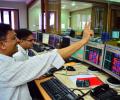
ITC was the biggest gainer in the Sensex pack, rising nearly 3 per cent, followed by Kotak Mahindra Bank, ICICI Bank, Maruti, Bharti Airtel, State Bank of India, Sun Pharmaceutical Industries, Axis Bank, Reliance Industries, Hindustan Unilever and JSW Steel. On the other hand, Infosys, UltraTech Cement, HCL Technologies, Bajaj Finserv, Larsen & Toubro, Titan, Tata Consultancy Services and Wipro were the laggards.
