
'If we are to be a contributor to the economy, we have to reduce carbon and imports.' 'We will achieve both -- that's our target.'

'Bharat has been leading, but it cannot carry India as the bulk of the sales come from India in terms of volume and profitability.'

Haven't they heard about the 'Tale of Two Brothers'? asks Suveen Sinha.

The country's largest carmaker Maruti Suzuki India will not "walk away" and fight to get back to 50 per cent market share in the domestic passenger vehicle segment, according to company Chairman R C Bhargava. The auto major, which is commemorating 40 years of operations, has seen its market share drop to 43.38 per cent in FY22 from a peak of 51.21 per cent in FY19. In order to get back its dominant leadership, the company plans to drive in models catering to both urban and smaller cities and rural areas.


The country's largest carmaker Maruti Suzuki India on Monday said it has hiked prices of hatchback Swift and CNG variants of other models by up to Rs 15,000. The price change for Swift and all CNG variants is owing to an increase in various input costs, Maruti Suzuki India said in a regulatory filing.

With Maruti Suzuki refusing to go back on the plan, these investors have approached the Securities and Exchange Board of India, which is examining the possibility of taking action under Section 11 of the Sebi Act.

Maruti Suzuki India (MSIL) does not anticipate growth in the small car segment because people continue to find these vehicles unaffordable, chairman R C Bhargava said on Wednesday. He said the market had clearly shifted towards the sport utility vehicle (SUV) segment and the company will go in the same direction. The domestic sales of utility vehicles jumped in India by 34.54 per cent to about 2 million units in FY23.

Investors' wealth climbed Rs 3.20 lakh crore as markets staged a smart comeback on Wednesday after falling in the last eight trading sessions. The BSE Sensex rallied 448.96 points or 0.76 per cent to settle at 59,411.08. During the day, it jumped 513.33 points or 0.87 per cent to 59,475.45.
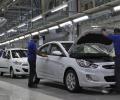
Automakers Maruti Suzuki, Tata Motors, Mahindra & Mahindra and Kia reported robust growth in their vehicle dispatches in the domestic market for August buoyed by festive demand and easing of semiconductor shortage woes. Other manufacturers like Hyundai, Toyota and Skoda also reported growth in wholesales in August as compared with the same month last year. The country's largest automaker Maruti Suzuki India said its domestic passenger vehicle dispatches increased by 30 per cent to 134,166 units in August as compared with 103,187 units in the year-ago month.

Passenger vehicle exports from India increased 43 per cent in FY22, with Maruti Suzuki India leading the segment with dispatches of over 2.3 lakh units, as per the latest data by industry body SIAM. The total passenger vehicle (PV) exports stood at 5,77,875 units in 2021-22 fiscal, as compared to 4,04,397 units in 2020-21. Passenger car shipments saw 42 per cent growth at 3,74,986 units, while utility vehicle exports rose 46 per cent at 2,01,036 units during the last fiscal, the data by the Society of Indian Automobile Manufacturers (SIAM) showed.

Equity markets opened the trade on a lower note on Monday, extending the previous day's fall, with the Sensex tanking 785 points in early trade, mirroring an extremely weak trend in Asian markets. Also, unabated foreign fund outflows and selling in index majors Reliance Industries, Infosys and TCS added to the weak sentiment. The BSE benchmark Sensex was trading 785 points lower at 56,412.14. The NSE Nifty declined 243.35 points to 16,928.60

MSI sold 3,21,898 units of vehicles during Q2, a growth of 16.80 per cent, compared with 2,75,586 units in the corresponding year-ago period.

Indian automakers dispatched nearly 2.92 lakh passenger vehicles, the highest ever for February so far, driven by strong demand for cars and utility vehicles, industry body SIAM said on Friday. The total passenger vehicle dispatches from companies to dealers last month increased 11 per cent to 2,91,928 units from 2,62,984 units in February 2022. Passenger car sales rose to 1,42,201 units in February against 1,33,572 units in the year-ago period.

Dealers across brands are slashing prices by Rs 20,000 to over Rs 1 lakh, depending on the car model.
Domestic passenger vehicle (PV) sales saw a significant growth in October due to increased availability of semiconductor chips and rising consumer confidence. The sales figures during the month - which coincided with the first post-Covid festival season - released by the top ten carmakers saw a jump of 30.7 per cent to 322,885 units in October. Auto companies count wholesales - units dispatched to dealers - as sales.

The country's largest carmaker Maruti Suzuki India on Tuesday said its models Swift, Baleno, WagonR, Alto and Dzire have emerged as best selling cars in 2020-21 and the top five models have come from its stable for the fourth consecutive year. Swift with over 1.72 lakh units was at the number one position followed by Baleno with 1.63 lakh units, the company said in a statement. Maruti Suzuki India's (MSI) tall boy WagonR was in the third spot with 1.60 lakh units while Alto and Dzire were at fourth and fifth with 1.59 lakh units and 1.28 lakh units respectively, it added.

Toyota Kirloskar Motor on Tuesday said it is recalling around 994 units of its recently launched mid-sized sports utility vehicle Urban Cruiser Hyryder to fix a faulty seat belt part. In a statement, the company said it has initiated a voluntary recall campaign for certain Urban Cruiser Hyryder units to investigate for a possible issue with front seat belt shoulder height adjuster plate assembly. Around 994 vehicles of the specified models may have been impacted by this concern, Toyota Kirloskar Motor (TKM) said in a statement.

Seven years after it announced Nexa, there's no mistaking the seriousness with which Maruti wants the segment to grow, says Pavan Lall.
Automotive retail sales saw a 14 per cent rise in March on a year-on-year (YoY) basis, according to data released by the Federation of Automobile Dealers Associations (FADA). For the whole of financial year 2022-23 (FY23), sales grew 21 per cent YoY. For both March and the financial year, all categories, except for tractors, and including two-wheelers, three-wheelers, passenger vehicles (PVs), and commercial vehicles (CVs), posted double-digit growth. However, the total retail sales of 22.1 million for the financial year were still 12 per cent lower than the pre-Covid (FY20) level of 25 million, owing to an 18 per cent dip in the two-wheeler segment.

Alto, the Maruti brand synonymous with small cars, introduced the new generation K10 on Thursday, aiming to consolidate its position further amid shrinking demand for hatchbacks. With prices starting at Rs 399,000 and going up to Rs 533,500 (for manual transmission), the new model claims fuel efficiency of 24.90 km per litre. The Japanese car maker, which has been selling 100 Altos every hour for the last 22 years, had discontinued the model in February 2020.

Equity benchmarks ended lower on Thursday as a fag-end sell-off wiped out early gains, with IT and bank stocks playing spoilsport amid monthly derivatives expiry. After remaining in the positive territory for most part of the trade, the BSE Sensex suddenly came under selling pressure during the last half-hour of the session, declining 310.71 points or 0.53 per cent to settle at 58,774.72. During the day, it hit a high of 59,484.35 and a low of 58,666.41.

Equity benchmarks ended higher on Friday helped by buying in index major Reliance Industries along with fresh foreign fund inflows. Extending its previous day's rally, the 30-share BSE benchmark climbed 203.01 points or 0.34 per cent to settle at 59,959.85. During the day, it jumped 376.33 points or 0.62 per cent to 60,133.17.

Mirabai Chanu's Asian Championship campaign did not go as per plan as she faltered in snatch and chose not to make her last two clean and jerk attempts to finish sixth.

From the Sensex pack, State Bank of India, Axis Bank, IndusInd Bank, Tech Mahindra, HCL Technologies, Tata Consultancy Services, Maruti Suzuki, Tata Steel and Tata Motors were the major gainers. Power Grid and HDFC Bank were the laggards from the pack.
Domestic passenger vehicle sales could touch a record level of nearly 40 lakh units this year on strong demand and companies finding ways to enhance production despite semiconductor shortage, a senior Maruti Suzuki India official said on Monday. Even as the chip shortage issue has improved compared to a year back, the industry is estimated to have a pending order of around 7.5 lakh units of passenger vehicles with Maruti Suzuki India (MSI) alone having around 4.18 lakh units, company senior executive officer, marketing and sales, Shashank Srivastava told PTI. "I think it would be slightly below 4 million (units mark).
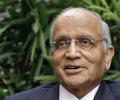
The regulatory burden is the highest on small cars, a key segment of the Indian automobile industry and having a uniform tax structure across all segments of vehicles will not augur well for the sector growth, according to Maruti Suzuki India chairman RC Bhargava. He also said India's economic growth rate could be higher if the manufacturing sector grows fast, which 'unfortunately' has remained a laggard despite the best efforts of the Narendra Modi-led government at the Centre due to implementation gaps at the ground level. "The burden of regulatory changes on the small cars is far higher than the regulatory burden on big cars and that is changing the whole market behaviour.

Corporate India continues to be generous in rewarding its shareholders with big dividend payouts. This is especially true for shareholders of companies such as Tata Consultancy Services (TCS), Hindustan Zinc (HZL), and Coal India (CIL) which are seen as cash cows of large business groups and the government. Boosted by a big payout by these three companies, the combined equity dividend payout by listed companies was up 38 per cent year-on-year (YoY) to a record high of Rs 2.27 trillion in 2022-23 (FY23), compared with Rs 1.65 trillion in 2021-22 (FY22).

Equity benchmarks Sensex and Nifty on Thursday gave up all early gains to settle lower as surging oil prices amid the ongoing conflict between Russia and Ukraine hit investor sentiment. The 30-share BSE Sensex started the trade on a higher note and jumped 527.72 points in morning deals to a high of 55,996.62. However, during the afternoon trade it surrendered all its early gains and finished at 55,102.68, lower by 366.22 points or 0.66 per cent.

Equity benchmarks staged a comeback during the fag-end of trade on Wednesday, with the Sensex climbing over 214 points amid continuous foreign fund inflows and a largely positive trend in global markets. Buying in IT counters and Reliance Industries added to the momentum. In a volatile session, the 30-share BSE benchmark ended 214.17 points or 0.37 per cent higher at 58,350.53.

Major carmakers, including Maruti Suzuki, Hyundai, Tata Motors on Friday reported growth in their passenger vehicle sales in June as semiconductor shortage woes showed gradual signs of easing out. Other manufacturers, Kia India, MG Motor India and Skoda Auto India also reported robust sales growth last month. Maruti Suzuki India (MSI) reported 5.7 per cent increase in total wholesales at 1,55,857 units in June as compared to 1,47,368 units to dealers in June 2021.

The country's largest carmaker Maruti Suzuki India is neither shifting investments nor jobs from Haryana to Gujarat by shifting production of its compact sedan Dzire, company chairman RC Bhargava said on Tuesday. The company is maximising the efficiency of production at its two plants at Haryana and the parent Suzuki's Gujarat plant, keeping in mind the demand of its multiple models.

Top firms get GST notices on credit claims on Friday; replies sought within hours.

Benchmark Sensex trimmed early gains to close marginally higher while Nifty settled flat in choppy trade on Tuesday as gains in auto shares were offset by selling pressure in banking and energy shares. The 30-share BSE barometer closed marginally up by 37.08 points or 0.06 per cent to 60,978.75 with 15 of its stocks ending in green and the rest in red. The index opened higher and gained over 300 points to a high of 61,266.06 in early trade.

Titan, Maruti Suzuki India, Asian Paints, Mahindra & Mahindra and Hindustan Unilever Limited were the biggest drags on the Sensex, tumbling up to 5.05 per cent. In contrast, ITC, Dr Reddy's Laboratories, Tech Mahindra and UltraTech Cement were among the gainers.
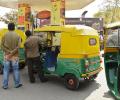
Amid a shift in mobility trends and people increasingly opting for less polluting energy sources, sales of compressed natural gas (CNG) vehicles increased more than 82 per cent in the past five years. A total of 729,902 CNG vehicles were sold in 2022-23 against 400,825 in 2017-18, according to VAHAN Dashboard. Though the increase in sales of CNG-powered vehicles has been significant, their share in overall vehicle sales remains minuscule as is the case with EVs.
The country's largest carmaker Maruti Suzuki India on Thursday reported 14 per cent increase in total wholesales at 159,044 units in November. The company had dispatched 139,184 units to dealers in November 2021, MSI said in a statement. Last month, the company's domestic sales rose 18 per cent to 139,306 units as against 117,791 units in November 2021, it added.

From the 30-share pack, Titan, Tech Mahindra, Maruti Suzuki India, Wipro, Nestle India, TCS, Larsen & Toubro, HCL Technologies, Tata Steel and HDFC Bank were among the major laggards. NSE Nifty declined 69.75 points to settle at 17,153.

Benchmark stock indices Sensex and Nifty closed with losses in highly volatile trade on Thursday as banking and financial stocks retreated amid a weak trend in global equity markets. The 30-share BSE Sensex declined 89.14 points or 0.15 per cent to settle at 57,595.68. During the day, it touched a low of 57,138.51 and a high of 57,827.99. The broader NSE Nifty dipped 22.90 points or 0.13 per cent to settle at 17,222.75.

Paring its early gains, benchmark BSE Sensex fell by 304 points on Wednesday as investors booked profit after recent gains amid concerns over inflation and supply constraints. Despite a firm start, the 30-share BSE barometer declined by 304.48 points or 0.53 per cent to settle at 57,684.82. During the day, it tanked 420.71 points or 0.72 per cent to 57,568.59.
 © 2026 Rediff.com - Advertise with us - Disclaimer - Privacy Policy - Sitemap - Feedback - About us - Terms of use - Grievances