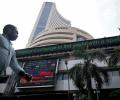
Benchmark stock indices Sensex and Nifty closed on a flat note in a choppy session on Wednesday as gains in PSU banks and auto shares were offset by losses in IT stocks.

Stock markets closed higher for the second straight session on Tuesday, driven by gains in bank, IT and capital goods shares.

Stock market is gearing up for an eventful week ahead where key triggers such as quarterly earnings from corporates, the US Fed interest rate decision and the upcoming Union Budget for 2026-27 would grab the limelight, analysts said.

Maruti Suzuki India on Wednesday said its consolidated net profit increased by 16 per cent to Rs 3,727 crore for the third quarter ended December 31, 2024. The auto major had reported a net profit of Rs 3,207 crore in the October-December period of last fiscal.

Companies with "gas guzzlers" are trying to set up the wrong narrative against small cars getting relaxation in the proposed corporate average fuel efficiency (CAFE-III) norms on the basis of weight, Maruti Suzuki senior executive officer corporate affairs Rahul Bharti said on Monday, bringing to the fore deep division among carmakers regarding the upcoming rules.

Toyota's first standalone electric SUV, the Urban Cruiser Ebella, delivers strong range and performance with premium quality, but rear space and features could have been better, says Somnath Chatterjee.

Mexico on Thursday imposed a tariff of up to 50 per cent on imports from its non-preferential trade partners, including India, a move that might hit New Delhi's annual $5.75 billion shipments to its third-largest car export market.

Toyota on January 20, 2026, officially entered India's mass electric vehicle segment with the maiden launch of the Toyota Urban Cruiser Ebella in Mumbai.

'If the targets become unscientific and unjust, Then, just to meet CAFE-III regulation, a small car -- which produces a very low absolute carbon dioxide -- will have to be discontinued.'
The January-March quarter (Q4) results for 2024-25 (FY25) from the country's largest passenger vehicle (PV) maker, Maruti Suzuki India (MSIL), were a mixed bag, with revenues broadly in line but operating profit missing Street expectations. Given cost pressures, margins at the operating level were the lowest in the past seven quarters.

Car market leader Maruti Suzuki India cut production of its passenger cars by 16 per cent last month but increased those of utility vehicles by 33 per cent compared to October 2023, according to a regulatory filing by the company. Its passenger cars production stood at 89,174 units last month against 1,06,190 units in October 2023, down 16 per cent, Maruti Suzuki India said in the filing.

With demand continuing to be strong post the festive season, leading automakers, Maruti Suzuki, Tata Motors and Mahindra & Mahindra, saw robust growth in sales in November as compared to the same month last year. Maruti Suzuki India reported the best-ever total sales, including exports, last month at 229,021 units, a year-on-year growth of 26 per cent as compared to November last year.

Indian automakers are reviving legacy nameplates to leverage brand recall and stand out in a crowded market, as classic badges like Sierra, Safari, Baleno and Scorpio return to attract buyers.

Mahindra and Mahindra (M&M) recorded the sharpest acceleration among large players, with EV retail jumping to 33,513 units from 7,139 units, an almost 5-fold jump, aided by strong demand for new launches.

A deep split has emerged within India's auto industry over the proposed CAFE exemption for small cars, with only Maruti Suzuki and Renault backing the move in the final SIAM vote.

Maruti Suzuki India is targeting markets like UAE, Saudi Arabia, Chile, Mexico and other Latin American countries with its upcoming new version of compact sedan Dzire to accelerate exports as it eyes over 3 lakh units of overseas shipments this fiscal, a senior company official said on Wednesday. In the domestic market, the company hopes to enhance its share in the sedan market amid the passenger vehicles market shifting towards SUVs (Sports Utility Vehicles), with the new Dzire which is slated for launch next week. "We have been growing (exports) at a rate of about 11.9 per cent in the first seven months of the financial year and we hope to continue on that momentum.
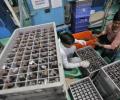
The automobile and auto-ancillary sector is expected to show strong Q3FY26 results, aided by festival-led demand, rationalisation in goods and services tax (GST) rates for select categories of vehicles, easing interest rates, and improving rural sentiment.

In October, small car wholesales of the auto industry -- excluding Tata Motors -- went up by 8.4 per cent Y-o-Y to 116,601 units, the data showed. However, the utility vehicle (UV) segment which includes sports utility vehicles (SUVs) as well as multi-purpose vehicles (MPVs), saw a bigger growth in October.

'The market is still very bullish. The demand is so strong that for eight models, we have no units in our factories to dispatch to dealers,' said Partho Banerjee, senior executive officer, marketing & sales, Maruti Suzuki India (MSIL).
President Droupadi Murmu on Saturday approved 139 Padma awards including seven Padma Vibhushans, 19 Padma Bhushans and 113 Padma Shris.

'In the January-August period, the share of hatchback in the overall PV industry sales was about 22.4 per cent. In the September-October period, the share of hatchbacks has come down to 20.4 per cent. In just October, their share was just 20 per cent. This is simple wholesale data from industry body SIAM.'

Since the Indian government reduced GST on small cars on September 22, the small car segment's share in Maruti's overall sales has risen to more than 25 per cent, up from 16.6 per cent earlier in FY26.
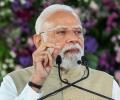
A day before US President Donald Trump's additional 25 per cent tariff kicks in, Prime Minister Narendra Modi on Tuesday made a vehement pitch for swadeshi and Make in India that should help create jobs in the country.

Starting January, the market is expected to welcome models like the Tata Punch 2025 which is expected to be around 6 lakh, Mahindra BE 07 EV around 29 lakh, Maruti WagonR Electric around 8.5 lakh, Toyota 3-Row SUV around 14 lakh, and Volkswagen Tera to be around 8 lakh.

Network scale seen as central to tapping smaller markets.

Passenger vehicle dispatches from companies to dealers increased 19 per cent year-on-year in November as demand remained robust post festive period, industry body SIAM said on Friday.

Car market leader Maruti Suzuki India on Thursday said it will hike prices by up to Rs 32,500 across various models from February 1 to partially offset the rise in input costs. Due to rising input costs and operational expenses, the company plans to increase car prices, starting February 1, 2025, Maruti Suzuki India said in a regulatory filing.

Almost 30 per cent of Maruti's auto-component exports are to the US, and about half of that is facing a duty of 25 per cent and the other half 50 per cent.

All three Bharti group companies outperformed in CY25 but the biggest gain came from Bharti Airtel, the flagship.

In absolute terms, both types of cars must cut emissions by about 28-29 g/km. But in percentage terms, the lighter 900-kg car must reduce emissions by 27 per cent, while the 1,500-kg car needs a 22 per cent cut. And the target becomes progressively stringent for both -- but, once again, the tightening is sharper for the 900-kg car than for the 1500-kg car.
Maruti Suzuki, India's largest producer of small cars, stands to benefit the most.

Maruti Suzuki's e-Vitara marks its high-stakes EV debut with strong export ambitions, lifting its stock even as analysts caution over pricing and fierce competition.

Among the Sensex constituents, Eternal, Tata Steel, Kotak Mahindra Bank, UltraTech Cement, Maruti Suzuki India, Sun Pharmaceuticals, Tech Mahindra, HDFC Bank, Tata Motors Passenger Vehicles, Infosys, Trent, Mahindra & Mahindra, Reliance Industries and HCL Technologies were the gainers. However, Asian Paints, Bharti Airtel, Bajaj Finance, PowerGrid, Axis Bank, ICICI Bank and Titan were among the laggards.

Maruti takes a leap in terms of technology with features like ADAS, a 360-degree camera, ventilated seats, a powered tailgate, audio system with Dolby Atmos and much more.

Maruti Suzuki India on Tuesday reported an 18 per cent year-on-year dip in consolidated net profit at Rs 3,102 crore for the second quarter ended September hit by the withdrawal of indexation benefit and change in the tax rate on long term capital gains on debt mutual funds. The country's largest carmaker had posted a net profit of Rs 3,786 crore in the July-September quarter of last fiscal.

The new Seltos has grown in size with a length of 4460mm and that's 95mm longer!

Top carmakers led by Maruti Suzuki, Mahindra & Mahindra, Tata Motors Passenger Vehicles and Kia India on Saturday reported record sales in the domestic market riding on festive demand boosted by GST rate cut. Other manufacturers such as Skoda Auto India and Toyota Kirloskar Motor also posted impressive growth in sales in October.

Among the Sensex constituents, Asian Paints, Tech Mahindra, HCL Technologies, Tata Steel, Maruti Suzuki India, Sun Pharmaceuticals, Tata Consultancy Services, ICICI Bank, Bajaj Finance, UltraTech Cement, Mahindra & Mahindra and Tata Motors Passenger Vehicles were the laggards. However, Eternal, Titan, Adani Ports, Bharat Electronics Ltd, State Bank of India, Bajaj Finserv, NTPC and Bharti Airtel were among the gainers.

From the Sensex pack, Eternal, Maruti Suzuki India, Kotak Mahindra Bank, Mahindra & Mahindra, Tech Mahindra, Titan, HDFC Bank, PowerGrid, Bajaj Finserv, HCL Technologies, Bajaj Finance and Larsen & Toubro were among the gainers. On the other hand, Tata Motors Passenger Vehicles, Asian Paints, UltraTech Cement, Bharat Electronics Ltd, Tata Steel, Adani Ports, Hindustan Unilever, ITC, Tata Consultancy Services and Reliance Industries were the only laggards.

After a record-breaking year, India's automobile industry is entering 2026 on a relatively strong footing, with sales growth expected in the 6-8 per cent range. The outlook is underpinned by policy support, including GST rationalisation, easing monetary conditions, and income tax relief, which together are likely to improve affordability and sustain consumer demand across vehicle segments.
