
Sun Pharmaceutical Industries reported a 27 per cent year-on-year increase in consolidated net profit to 2,894.7 crore for Q1FY27, with revenue growing 10 per cent to 15,299.8 crore, driven by strong performance in India and innovative medicines.
Sun Pharmaceutical Industries Ltd has announced its acquisition of US-based Organon & Co in an all-cash deal valued at an enterprise valuation of USD 11.75 billion, aiming to become a top 25 global pharmaceutical company.

Indian companies' overseas expansion plans are holding strong despite geopolitical tensions in West Asia, driven by structural factors like supply-chain diversification, free trade agreements, and market expansion, according to Ajay Sharma, managing director and head of banking at HSBC India.
Sun Pharmaceutical Industries' acquisition of US-based Organon & Co. for $11.75 billion, the largest overseas acquisition by an Indian pharma company, has been met with mixed reactions from brokerages, who see strategic entry into women's health and biosimilars but also flag potential integration challenges and debt concerns.

Companies are investing heavily in complex injectables, respiratory therapies and biosimilars to improve margins and diversify portfolios.
Sun Pharmaceutical Industries reported strong consolidated numbers for Q4 FY26, with net profit rising 26 per cent year-on-year to 2,714 crore, despite continued weakness in its US generics business. Growth in innovative medicines and increased R&D investments are helping to offset these pressures.

Indian foreign direct investment (FDI) in the United States has reached approximately USD 16.4 billion, supporting around 70,800 jobs and contributing significantly to research and development, according to US Deputy Undersecretary Brandon Remington.

Indian pharmaceutical companies are strategically increasing investments in the US market, focusing on specialty drugs, complex generics, respiratory products, and local manufacturing, despite a nearly 10 per cent fall in exports to the US in FY26 due to pricing pressure and competition in traditional generics.

Indian benchmark stock indices Sensex and Nifty rebounded nearly 1 per cent, snapping a three-day decline, driven by rallies in Reliance Industries and Sun Pharma, alongside positive global market trends and easing geopolitical tensions.

Sun Pharmaceutical Industries' Executive Chairman Dilip Shanghvi described the USD 11.75 billion acquisition of US-based Organon & Co as both a "happy" and "bit anxious" moment, acknowledging the significant debt required to fund the large transaction.

Karan Adani of Adani Ports & Special Economic Zone emerged as the top absolute value creator, adding Rs 2.67 trillion as the company's mcap rose from Rs 42,149 crore in March 2020 to Rs 3.09 trillion in March 2026 (7.3x) -- the largest rupee addition on the list.

Artificial intelligence (AI) is no longer a side conversation for Indian pharma. It is fast becoming central to how drugs will be discovered, made, and supplied. Along with that shift comes a sharper focus on innovation, on the one hand, and quality and trust, on the other.
A strong third-quarter (October-December/Q3) performance for 2025-26 (FY26) has helped the stock of India's largest listed pharmaceutical (pharma) company, Sun Pharmaceutical Industries, gain about 7 per cent since the start of February.

In November, six primary market issuances accounted for more than 13,000 crore of net equity investments by MFs.
The US Food and Drug Administration (USFDA) recorded a significant decline in serious regulatory findings at Indian drug manufacturing facilities between January and December 2025. Data reveals that 'official action indicated' (OAI) cases - the most severe classification - nearly halved over the past year.

At the heart of this debate is Section 3(d) of the Patents Act, a safeguard designed to prevent drugmakers from extending monopoly protection through trivial modifications to existing medicines.

The 2025 contraction marks the steepest decline in both the number of billionaire promoters and their aggregate wealth since 2012.
Sun Pharmaceutical Industries on Wednesday posted a 2.56 per cent increase in its consolidated net profit to Rs 3,118 crore for the second quarter ended September 30, aided by robust sales in India and emerging markets. The Mumbai-based drug major reported a net profit of Rs 3,040 crore for the July-September quarter of the last fiscal.
Concerns over weakening demand for Indian pharmaceutical (pharma) drugs in the US - their largest export market - have weighed heavily on investor sentiment this year. While the Nifty 50 has gained 6.02 per cent year - to - date (as on September 15), the Nifty Pharma index has declined 5.18 per cent, National Stock Exchange data shows.

Tata Sons, now debt-free, has asked the RBI to drop its 'upper-layer NBFC' tag and allow it to stay private.

Stock markets will be mainly driven by quarterly earnings by corporates, foreign fund flows and global trends this week, analysts said.
Sun Pharmaceutical Industries stock ended 2.15 per cent higher on Friday after zooming by almost 5 per cent in the morning trade on the back of an announcement that a court ruling has cleared the deck for the India's largest pharmaceutical company to launch its alopecia drug Leqselvi in the United States.
Despite a healthy performance in the fourth quarter of 2024-25 (Q4FY25), the stock of India's largest listed pharma company, Sun Pharmaceutical Industries (Sun Pharma), was under pressure on Friday due to a muted guidance. The company has guided for a high single-digit revenue growth for FY26, which is below what the Street was working with.
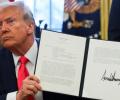
Industry insiders in India warn that any such move in the pharmaceutical sector could be counterproductive for the US as it may face increased drug shortages if tariffs are imposed on such imports.
Indian pharmaceutical companies may have units abroad as part of "distributed manufacturing" across various locations, according to industry veterans. This may come about over the next five to 10 years.
After falling 17 per cent since the start of the year to its March lows, the stock of the country's largest pharmaceutical (pharma) company, Sun Pharmaceutical Industries, has clawed back nearly half of those losses. Recent acquisitions, a favourable court ruling in the case of the hair loss drug Leqselvi, an edge over peers owing to its specialty portfolio, and a diversified global presence have supported the recovery.

Indian drugmakers supply 47 per cent of the generic medicine requirements in the US, and tariffs would have increased prices in the US domestic market for patients, who are already dealing with drug shortages.

Enhertu currently costs around Rs 1.6 lakh per 100-milligram injection.
Around six weeks ago, Sun Pharmaceutical Industries, India's largest drugmaker, suffered a setback, which led to a selloff in the share. The US District Court of New Jersey granted Incyte's request for a preliminary injunction against Sun Pharma's launch of Leqselvi, a drug that treats alopecia.

The collective wealth of the 100 richest went past $1 trillion for the first time.

Indian pharmaceutical companies are stepping up their efforts to combat the problem of counterfeit drugs, employing a variety of strategies, from packaging innovations to engaging private investigation agencies. The stakes are high, as counterfeit medicines not only harm consumers but also tarnish the reputation of leading brands.
Analysts are expecting pharmaceutical companies to post sales growth of 10-11 per cent in the second quarter this financial year while the Ebitda (earnings before interest, tax, depreciation, and amortisation) margins are anticipated to improve by about 110 basis points. Ebitda improvement will be led by lower input costs because prices of active pharmaceutical ingredients (APIs) are 5-15 per cent lower year-on-year (Y-o-Y). Axis Capital said sales growth would be around 10 per cent, of which growth in the India market would be 11 per cent or so.

Amit A Shah holds a stake in 180 listed entities, according to data disclosed in his election affidavit.
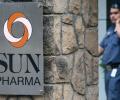
Drug major Sun Pharma is recalling over 34,000 bottles of a generic medication, used to treat high blood pressure, in the US market due to failed dissolution testing. As per the US Food and Drug Administration's Enforcement Report, the US-based arm of Sun Pharmaceutical Industries is recalling lots of Diltiazem Hydrochloride extended-release capsules which are used to treat angina, high blood pressure and some types of irregular heartbeats.

'That is a significant milestone for us and something we aspired for.'
Sun Pharmaceutical Industries reported a 34 per cent year-on-year (Y-o-Y) jump in net profit to Rs 2,654.6 crore in Q4FY24.
Sun Pharmaceutical Industries Ltd on Thursday said its Halol facility in Gujarat has been listed under import alert by the USFDA with products manufactured at the unit now are subject to refusal of admission in the US market. The development follows an inspection of the facility by the US Food and Drug Administration (USFDA) from April 26 to May 9, 2022. "We now wish to inform you that the company has received a communication from the USFDA stating that the facility has been listed under Import Alert," Sun Pharma said in a regulatory filing.
Traction for its specialty portfolio, a strong showing in the domestic market, and better regulatory compliance are positives for the country's largest pharmaceutical (pharma) company, Sun Pharmaceutical Industries. Given the triggers, some brokerages have increased their earnings per share estimates and target price for 2024-25 (FY25). This should sustain the momentum for the stock, which has been one of the major pharma gainers in 2023-24 (FY24), rising 57 per cent. It is currently trading at Rs 1,547 per share.

The top 300 pharmaceutical brands in the country will now bear a quick response (QR) code on their packaging to rein in spurious drugs and ensure better traceability.

Investors' wealth on Friday tumbled by over Rs 4.65 lakh crore as markets suffered a heavy selloff following weak global trends and continued selling by foreign institutional investors. The 30-share BSE benchmark Sensex plunged 889.40 points or 1.54 per cent to close at 57,011.74. During the day, it tumbled 950.16 points to 56,950.98. The market capitalisation of BSE-listed companies declined by Rs 465,570.82 crore to Rs 2,59,37,277.66 crore amid weak sentiments.
