
"Instead of talking about war, we must increase trade many fold, we should have common goals for space, energy and food security. India and China should protect the supply chain. Like securing Malacca Straits from pirates on the high seas. Both countries should jointly find ways to use high technology for poverty reduction. And evolve a consensus on environment and terrorism-related issues."

'Border disputes cannot be solved by resorting to border conflicts. Only by mutual consensus, and a spirit of give-and-take, can we arrive at a long-lasting solution,' says Professor Wang Dehua, ahead of Prime Minister Manmohan Singh's visit to China next week.' Exclusive to Rediff.com

'Most Chinese are out of the shadow of the 1962 border conflict. They are thinking of how to make money and not about threatening another country,' says Professor Wang Dehua, who advocates better India-China ties.
In New Delhi, there are multiple views about China's not just strident but serious diplomatic attacks against India and also about Indian media's hype over the issues but still, nobody doubts that the rhetoric between two countries is different than normal times.
China's advantage in cheap labour will disappear in a decade with countries like India and Bangladesh emerging as less expensive manufacturing bases, media reports said in Beijing.

Hu Zhiyong, a research fellow at the Shanghai Academy of Social Science, claimed that India is provoking China because it wanted to prove to the United States that it could contain China while Prime Minister Narendra Modi was in the US.

Ahead of Prime Minister Narendra Modi's Beijing visit, a state-run newspaper on Tuesday carried a highly critical article of him.
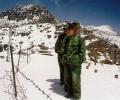
Even as Chinese troops began withdrawing from the Chumar area in Ladakh, the official media in China accused India of "instigating" incidents on the borders to divert attention during important visits of Chinese leaders.

The readouts by the Indian and Chinese sides on the meeting on Monday between External Affairs Minister Sushma Swaraj and her Chinese counterpart Wang Yi in Moscow bring out that divergences are crowding into the centrestage of their relationship, says Ambassador M K Bhadrakumar.

Faced with sluggish economic growth and dwindling exports, China on Wednesday devalued its currency for the second consecutive day.

The US wants to split Sino-India ties, says the Chinese media.

The BRICS summit made clear that China's support for Pakistan is unwavering. China will continue to pressure India to ease tensions with Pakistan and resolve the Kashmir dispute.
 © 2026 Rediff.com - Investor Information - Advertise with us - Disclaimer - Privacy Policy - Sitemap - Feedback - About us - Terms of use - Grievances