
In his speech, PM Manmohan Singh revealed education to be in focus for the 11th five year plan. The plan will mark an increase in spendings on education.

The growth story of India depends on its achievements in the S&T sector. There is a need to revolutionise the landscape of Indian science and technology and this is only possible if the scientific community is allowed to work 'professionally and scientifically' without burdening them with the baggage of the past, says Ajey Lele.
Dr Singh also wanted the management of water resources to be addressed, saying it was the "most important challenge facing mankind."

Creating a security scare, a man carrying a bag ran parallel to Prime Minister Narendra Modi's convoy in Mysuru on Saturday before being taken into custody.
Without giving the location of the reactor, he said it would cost Rs 5 to 6 crore per MW.
The organisers of the Congress, which is being held for the first time in a rural centre, seem to have no clue how to host such a big event, the delegates alleged.
Prof Deepankar Choudhury of the department of civil engineering, Indian Institute of Technology, Mumbai has received the 'Young Scientist Award' of the Indian Science Congress Association for the year 2004-2005.
The young cricketer collected donations from school children in the city for the tsunami-hit people.
Computers, Kalam said were going to give us a challenge. Not only the biologists, neurologists and psychologists but the entire scientific community would have greater responsibility of keeping mankind above man-made computers.

'Even among scientists and technology mavens -- typically communities that tend to view the world through the lens of logos or reason and not mythos, there is a shiny-eyed enthusiasm for the mythical world,' says Arundhuti Dasgupta.

'It isn't likely that he would have observed a 'strategic silence' on a sensitive and controversial issue, as is done today by the powers-that-be lest an observation lets the cat out of the bag about the ruling dispensation's mindset,' says Amulya Ganguli.
The future of the GM tech in India is still uncertain.
It wants scientists to focus on increasing agriculture income, finding efficient ways to utilise energy resources and on reducing poverty.
India on Friday unveiled a new science policy that boosts tax breaks for private research to help meet a goal of doubling research and development expenditure.

Modi asked the scientists to incorporate traditional local knowledge to develop more appropriate, effective, sustainable and affordable technologies.

The 102nd Indian Science Congress, which concluded last week, saw claims on ancient aviation and surgery, and created quite a stir
Research scholars took to the streets against the Union government's neglect towards raising the fellowship amount

5 things you must know about this scientific trailblazer.
'99 per cent of Indians who go to the US for their advanced studies they stay back there, which is a huge loss for India.
'Some intolerance is there in society. Fortunately, a majority of Indians are tolerant.'

The facts remain cloaked in mystery, but the legend goes that Talpade had created a flying machine powered by mercury and solar energy, and based on ideas outlined in Vedic texts.

Whether we flew aircraft or mastered plastic surgery is immaterial for modern India, what matters is if ancient Indians understood the science and art of settlement planning, architecture and governance of natural resources. This is the history we need to learn, says Sunita Narain

'My aim is that the message from our ancient texts reach the younger generation of Indians.' 'The trouble is that our literature is in Sanskrit and scientists don't know the language. And the people who know Sanskrit they don't know science.'
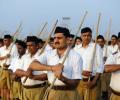
Devanik Saha wonders if saffronisation of India is on the rise

The Pythagoras theorem 'should either be an Egyptian theorem if you look at the standard of just having an idea about it, an Indian theorem if you're looking for a complete statement of it, or a Chinese theorem if you're looking for the proof of it,' Fields Medal winner and Princeton University Professor Dr Manjul Bharava tells P Rajendran/Rediff.com
 © 2026 Rediff.com - Investor Information - Advertise with us - Disclaimer - Privacy Policy - Sitemap - Feedback - About us - Terms of use - Grievances