
The Union Budget announcement of a minimum support price (MSP) that will be 50 per cent more than the cost of production has started a debate on the calculation of cost. Ramesh Chand, member, NITI Aayog, speaks to Sanjeeb Mukherjee on this and related issues.
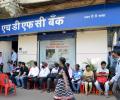
Cash withdrawal limits likely to continue

IDS-2 and raids to uncover black money stash keep receipts flowing
In other welfare schemes, such as those for cooking gas, pension and scholarships, which are linked to DBT, cash is transferred directly into the bank accounts of beneficiaries.

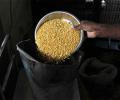
The concept of gold as an asset capable of getting anytime money is evaporating.

We should improve the business climate in Mumbai and Delhi, and India's ranking would immediately shoot up, says Bibek Debroy, a full member of NITI Aayog.
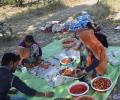
'To bring about a paradigm shift in farmers's income, we need to change our approach to agriculture, and transit from the narrow prism of cultivation to a full-fledged enterprise, by building all associated supply chain linkages.' 'This alone will make the farmer an entrepreneur in his own right.'

Empowered in the Modi government, junior ministers have enough on their plate.

Even if they score administratively, state governments ruled by the party suffer from an inability to communicate positively, say observers.

There is no foodgrain shortage in the country as our total storage capacity is more than 81 million tonnes, while the public distribution system requirement is 61 million tonnes, says Ram Vilas Paswan.
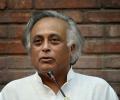
Former rural development minister Jairam Ramesh tells Sanjeeb Mukherjee that the Ordinance to amend the land acquisition Act (2013) opens the door for forcible acquisition and undermines the spirit and the substance of the legislation.

Chief Economic Advisor Arvind Subramanian says that he hopes GDP growth will be at the upper end of the 7-7.5 per cent range.

New Delhi bureaucrats, accustomed to leisurely lunches, golf in the afternoon and long weekends, have been shaken out of their somnolence, say authors. Fear and suspicion hang heavy over the red-sands.

Sanjeeb Mukherjee, who was eight years old when the deadly gas leaked from Union Carbide's factory, gives his account of living in the city during that fateful period
 © 2026 Rediff.com - Investor Information - Advertise with us - Disclaimer - Privacy Policy - Sitemap - Feedback - About us - Terms of use - Grievances