
Finance Minister Nirmala Sitharaman on Saturday said the GST rates will come down further and the work on rationalising tax rates and slabs has "almost reached a finale". She said that the revenue neutral rate (RNR) has come down from 15.8 per cent at the time of the launch of GST on July 1, 2017, to 11.4 per cent in 2023.

The final rate will be worked out by the GST Council, Finance Minister Arun Jaitley said on Wednesday.
The government intends to continue with the top GST slab of 28 per cent for luxury and sin goods, but is open to discuss narrowing down the three slabs of 5, 12 and 18 per cent into two, Revenue Secretary Tarun Bajaj said on Monday. Addressing the industry leaders, Bajaj said the rate rationalisation exercise of the GST Council is a result of introspection of GST, five years after its rollout, and the policymakers do not have a "fetish" to raise the tax rates to the revenue-neutral level of 15.5 per cent. On the industry demand for bringing petroleum products under GST net, he said since fuel constitutes a larger part of their revenues, both the Centre and states have some apprehension.

The Bill was introduced in the Lok Sabha in December.

A moderate GST rate obviates the need for the two-rate structure.

Taxes on health, excluding medicines, could rise from 8.8 per cent currently, to around 13.6 per cent - an increase of 4.8 per cent.

Chief economic advisor Arvind Subramanian discusses the Budget, goods and services tax, Centre-state relationship and larger issues facing the economy
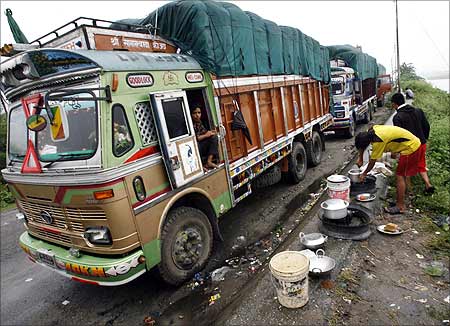
According to the draft, in the northeastern states the threshold is at Rs 500,000.

After the 2019 election, one thing is sure: GST will see a number of changes, explains Indivjal Dhasmana.
.jpg)
The year 2014 was one of the most challenging years for India. For two consecutive years our GDP growth was sub 5 per cent. Employment generation had declined, the revenue buoyancy was low and the country had become investment starved.
 © 2026 Rediff.com - Investor Information - Advertise with us - Disclaimer - Privacy Policy - Sitemap - Feedback - About us - Terms of use - Grievances