
Reliance Industries Ltd (RIL) has successfully raised a total of Rs 25,000 crore through domestic bond issues in September, including a recent Rs 13,000 crore 10-year bond at 7.90 per cent, as it prioritises funding certainty amidst expectations of a possible RBI rate hike and rising borrowing costs.

Indian benchmark equity indices, Sensex and Nifty, significantly recovered from sharp early losses, driven by buying in State Bank of India and Reliance Industries, alongside fresh foreign fund inflows, despite declines in Axis Bank and HDFC Bank.

Indian equity benchmarks Sensex and Nifty rallied up to 1 per cent in early trade, driven by strong performance in IT stocks, Reliance Industries, and favourable global market sentiment, rebounding from previous losses.

Jio Platforms' initial public offering has garnered an overwhelming institutional demand of approximately Rs 2.5 lakh crore, significantly exceeding its Rs 8,110-crore anchor book, with global and domestic investors vying for a stake in the Reliance Industries subsidiary.
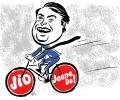
Reliance Industries Ltd (RIL) has publicly welcomed competition from Elon Musk's Starlink in the satellite communications sector, asserting that all players, including Jio, must abide by Indian laws and policies.

Indian benchmark stock indices, Sensex and Nifty, rallied significantly, with Sensex jumping over 1,500 points and Nifty reaching a nearly three-week high, driven by strong buying in banking, IT, and Reliance Industries stocks, alongside easing crude oil prices.

Indian benchmark indices Sensex and Nifty traded lower in early sessions due to profit-taking and significant foreign institutional investor (FII) outflows, despite strong performance from IT stocks like Tech Mahindra. Track Sensex, Nifty on October 16.

Jio Platforms Ltd's Rs 30,213-crore initial public offering was subscribed 3.01 times, attracting approximately Rs 66,500 crore in public bids, with qualified institutional buyers oversubscribing their portion by 9.02 times, while retail investor demand remained under-subscribed at 0.68 times.

US Secretary of State Marco Rubio visited Reliance Industries' Jamnagar refinery, a day after calling India a crude oil refining 'superpower', and met with top Indian business leaders Gautam Adani and N Chandrasekaran to advance bilateral ties in energy, trade, investment, and defence.

Indian benchmark indices, Sensex and Nifty, extended their rally in early trade, driven by strong buying in bank stocks, Reliance Industries, and positive global cues, despite foreign institutional investors offloading equities.
Jio Platforms Ltd's initial public offering (IPO), anticipated to be India's largest, is scheduled to open for subscription on October 21 and close on October 23, with reservations for employees and Reliance Industries Ltd shareholders.

Jio Platforms, the digital arm of Reliance Industries Ltd (RIL), is launching its initial public offering (IPO) with a price band of 1,065-1,119 a share, aiming to make RIL a net-debt-free company and create long-term shareholder value.
Indian benchmark indices Sensex and Nifty extended their rally for a second consecutive session, driven by a decline in Brent crude oil prices below USD 100 per barrel and strong buying in banking stocks and Reliance Industries.
The Qualified Institutional Buyers (QIBs) portion of the Jio Platforms IPO was fully subscribed at over 2x demand within minutes of its issue opening on Wednesday, indicating strong institutional interest in India's largest public issue.
Akash Ambani is leading Jio Platforms' initial public offering (IPO), set to be India's largest, with a strategy that includes appealing to regional investors and drawing parallels to his grandfather Dhirubhai Ambani's historic public listing of Reliance Industries.
Indian benchmark indices, Sensex and Nifty, surged over 1 per cent, recovering from two days of losses, driven by a strong rally in IT stocks, particularly TCS, and a moderation in global crude oil prices.

US Secretary of State Marco Rubio kick-started a three-day visit to India on Tuesday to advance bilateral ties in energy, trade and investment, defence, critical technologies, and exchange views on the West Asia crisis.

Indian benchmark equity indices, Sensex and Nifty, closed lower for the fourth consecutive session, driven by a surge in crude oil prices above USD 114 per barrel due to escalating tensions in West Asia, coupled with broad-based selling and FII outflows.

Marco Rubio will visit Mumbai and Jamnagar to discuss energy cooperation as S Jaishankar says India-US trade talks are nearing a landing point, with a few issues unresolved.

Indian equity benchmarks Sensex and Nifty extended their losses for a third consecutive session, with the Sensex declining 460.30 points and the Nifty dropping 123.70 points, primarily due to surging crude oil prices driven by escalating tensions in West Asia and weak global cues.
Isha Ambani, a director on the board of Jio Platforms, revealed that a failed attempt to upload a college assignment in 2009-10 due to poor internet connectivity in Mumbai sparked the idea and subsequent conversations that led to the creation of Jio.

Jio Platforms Ltd, the digital and telecom arm of Reliance Industries, is poised to launch India's largest-ever initial public offering (IPO) at Rs 30,213 crore, surpassing Hyundai Motor India's Rs 27,870-crore offering.

Jio Platforms' initial public offering has shattered global records by receiving over one crore applications, underscoring immense investor confidence in the company's ambitious plans for technology, AI, and cloud services, with the IPO subscribed almost seven times overall.
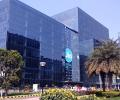
Jio Platforms' upcoming initial public offering (IPO) is anticipated to be India's largest to date, potentially listing among the top three stocks with a valuation of around Rs 12 lakh crore, and is expected to proceed without an offer-for-sale as current investors show no interest in diluting their holdings.

Indian equity benchmark indices extended losses for a second consecutive session, with the Sensex dropping 143 points, driven by a sell-off in power, banking, and financial stocks, coupled with elevated crude oil prices and persistent FII selling.
Indian equity benchmark indices Sensex and Nifty experienced a significant tumble in early trade, primarily driven by elevated crude oil prices due to ongoing West Asia uncertainty and substantial foreign fund outflows. Track Sensex, Nifty on September 29.
Indian benchmark indices Sensex and Nifty saw a rebound in early trade, primarily driven by a more than 4 per cent surge in Tata Consultancy Services (TCS) shares following its robust Q2 net profit announcement. Track Sensex, nifty on October 9.

US Secretary of State Marco Rubio's visit to India this week underscores the complex dynamics of global energy policy, as Washington re-evaluates sanctions on Russian oil buyers amidst India's continued reliance on Russian crude.
Indian benchmark equity indices, Sensex and Nifty, closed higher on Monday, driven by softer-than-expected US jobs data which reduced expectations of aggressive monetary tightening by the US Federal Reserve, boosting risk appetite across emerging markets.
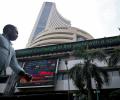
Indian equity benchmarks, the Sensex and Nifty, opened higher on Friday, driven by a strong rally in IT stocks, despite a significant overnight decline in US technology shares and broader Asian markets. Experts anticipate further market support from falling US bond yields, a strengthening rupee, and a substantial liquidity inflow following the Jio Platforms IPO allotment. Track

Investors are set to monitor quarterly earnings, crude oil prices, the Jio Platforms initial public offering, and foreign investor activity in the upcoming holiday-shortened week, according to market analysts.

The 200-DMA is a closely watched indicator of a stock's long-term trend and can serve as an early warning of trouble.
Jio Platforms Ltd's Rs 30,213-crore initial public offering (IPO) has garnered bids worth Rs 3.73 lakh crore, achieving a subscription rate of 5.57 times the shares on offer, driven by robust institutional and anchor investor demand.
Indian benchmark indices Sensex and Nifty closed higher for the second consecutive day, primarily driven by robust buying in IT stocks following strong quarterly results and positive global trends. Tech Mahindra notably surged over 8% after reporting a significant jump in net profit.

Indian benchmark stock indices, Sensex and Nifty, closed lower due to profit-taking, a spike in wholesale price-based inflation, and firm crude oil prices, despite some support from easing intraday crude oil prices and rupee appreciation.

Bharti Airtel Chairman Sunil Bharti Mittal stated that his satcom venture, Eutelsat OneWeb, is 'significantly ahead' of Elon Musk's Starlink in the Indian satcom queue, having applied for a licence five years ago, and expressed a desire to receive regulatory approval before Starlink.
Digital services major Jio Platforms is anticipated to list on the stock exchange by the end of October, with an estimated enterprise valuation of USD 143-146 billion, making it India's largest public offer at around USD 3.8 billion.

Eight BJP and two Samajwadi Party candidates are set to be elected unopposed to the Rajya Sabha from Uttar Pradesh after the nomination papers of two independent candidates were rejected. This ensures all 10 available seats will be filled without a contest, with the BJP fielding new faces ahead of the 2027 assembly polls.

Elon Musk questioned if Mukesh Ambani is India's "real boss" amidst Starlink's licensing issues, drawing a cryptic response from Rahul Gandhi. The Indian government clarified that security assessments are pending for all satcom licensees, not just Starlink, and the delay is due to the Ministry of Home Affairs.

'... but runs with the rigour and discipline of a large enterprise.'
