
The declining prices of mobile handsets and low connectivity costs have helped in doubling Internet access through cellphones this year.
In a strong pitch for limiting cut-throat competition, GSM operators have urged the government to limit the number of telecom operators per circle.
Telecom Regulatory Authority of India said on Thursday it may intervene to mend differences between ESPN and its distributors in conditional access system areas of Delhi, Mumbai and Kolkata to ensure that subscribers get to watch the sports channel.
Players such as Net4, Sify and Worldphone Internet Services are offering International long distance (ILD) calls that work out to less than a rupee a minute by using a technology called Voice over Internet Protocol (VoIP). Around 80 million minutes worth of calls are made via VoIP every month (legally), according to Telecom Regulatory Authority of India (TRAI).
Leading service provider Spice Telecom has said consumer must be given competitive choices to choose from and number of telecom players in a circle cannot be an issue.
Congestion level is rising with surging mobile subscriber base resulting in loss of calls and poor quality of service, but the Telecom Regulatory Authority of India says it cannot issue show cause over this lapse as the matter is subjudice.
Telecom Regulatory Authority of India on Friday announced setting up of a Telecom Consumers Education and Protection Fund to educate and inform the consumers.
Trai also recommended allocation of 3G spectrum in the 2.1 GHz band through auction in tranches of 2x5 MHz. And if this spectrum band was not adopted, it would be possible to provide spectrum only to two to three operators, apart from state-owned companies (Bharat Sanchar Nigam Limited and Mahanagr Telephone Nigam Limited).

VoIP services include communications applications such as Skype, Line and Viber
Telecom Regulatory Authority of India has set the ball rolling for the second phase of telecom reforms with the issue of a consultation paper seeking the industry's views on review of key license conditions and capping the number of access providers.

The Congress and other opposition parties had opposed the amendments.
The Delhi high court on Thursday fixed a timeframe for the Telecom Regulatory Authority of India
The move will deprive millions of the freedom to choose service providers without changing their phone numbers.
Proponets of subscriber-linked spectrum allocation and resultant reporting of correct user base got a further boost on Tuesday with Telecom Regulatory Authority of India Chairman Nripendra Misra supporting the authenticity of these figures.
In a major relief to the mobile users, the Telecom Regulatory Authority of India on Friday sought stakeholder's opinion in bringing down the roaming charges by various measures, including fixing a ceiling tariff for services based on usage.

Although the industry is disappointed with the government decision not to lower spectrum prices at a time telcos are saddled with over Rs 4-trillion debt and an estimated Rs 1.43-trillion licence fee dues, the DCC has relaxed the payment structure to offer some relief to the financially stressed sector.
Finding a solution to the spectrum allocation issue will be the main challenge before A Raja, country's new communications minister, who has replaced Dayanadhi Maran.
Since both are addressing the same consumer, the proposal has inter se equity as a plus point. And the business of capping the CAS/DTH bill to the TV-watching home has a certain populist appeal. The problem is that the basic proposal on CAS was unfair to channel owners and removed the incentive for channels to produce superior/differentiated programming that might cost more money and/or which commands greater audience pull.
Trai has announced that it may fix prices of pay channels on the direct-to-home (DTH) platform in line with the Rs 5 per channel cap on conditional access system (CAS) services in Delhi, Mumbai and Kolkata. This move will lower the fees but hit the income of broadcasters from DTH companies. However, new DTH entrants will benefit from the move as their cost of content will decrease. For the 2 existing DTH companies, Dish TV & Tata Sky, the current rates are likely to continue.
In a meeting between the central bank and market participants last week, it was also decided that futures would be introduced both as an exchange-traded product and over the counter. The RBI will also be reviving interest rate futures that were introduced in 2003, but failed to take off due to the lack of a well-developed pricing curve in the market across maturiites.

The previous board of Fortis Healthcare had links with Singh brothers and there was an investigation by law firm Luthra and Luthra into Rs 472 crore that was diverted into other companies.
Amid reports of a possible delay in release of spectrum by the defence forces, DoT is going ahead with regulator Telecom Regulatory Authority of India's recommendations on auctioning the airwaves with a reserve base price.
Currently, the base price (Rs 5) is also the maximum retail price for pay channels in CAS areas. The biggest impact of price revision will be on the forthcoming 55-city roll out of CAS, as proposed by Trai, and also the extension of CAS in rest of the three metros.
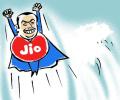
Given the fragmented nature of the domestic cable TV market and the need for last-mile connectivity, RIL, said sources, would have to do more to achieve its target of reaching 20 million homes and 15 million business establishments with its broadband services across 1,600 towns in the next few years.

'Once the lockdown is lifted, we will need the mother of all fiscal and monetary policy support to sustain the economy,' advises Akash Prakash.
In Metro circles only Bharti-Mumbai, BPL-Mumbai, Reliance- Mumbai and Tata-Mumbai meet the benchmark.

Trai's move is seen as a relief for the debt ridden sector and the industry body COAI expects that continuing with six paise mobile call termination charge will not have any impact on consumers as operators have already absorbed this charge in their recently increased mobile call and data rates.
Telecom Disputes Settlement and Appellate Tribunal has clubbed the two cases filed by Bharat Sanchar Nigam Limited challenging Telecom Regulatory Authority of India's decision to reduce the levy collected from private operators.
Private GSM operators on Thursday got a reprieve from Supreme Court, which has stayed Telecom Regulatory Authority of India's notices asking them to refund excess charges levied from customers on calls made to the networks of PSU telecom firms.
A meeting to resolve these differences has been called on April 5 by the Telecom Regulatory Authority of India.
Broadcast regulator Telecom Regulatory Authority of India will hold a meeting with the stakeholders on Thursday to discuss how to roll-out conditional access system in the metros.
It is not the urban centres alone that are powering India's phenomenal growth in mobile telephony. Data on rural telephony, compiled by the telecom regulator, shows people in villages are subscribing to mobile services in large numbers
State-run BSNL on Saturday approached telecom tribunal TDSAT against sector regulator TRAI's decision to cut a levy paid by private operators to the public sector company for its rural operations.
The telecom regulator explains how he's hobbled by government policy and clarifies some parts of his latest recommendations.
The 40 per cent market share cap suggested by the Telecom Regulatory Authority of India (Trai) is likely to make mergers between existing telecom operators extremely tough.

The government also proposed promoting 'one product one district' for better marketing and export of horticulture crops. It also called on states for early implementation of three key central model laws on land leasing, agriculture produce and livestock marketing and contract farming.
Trai suggested steps to ease regulatory norms for mergers and said that there should be no cap on the number of mobile operators in India.
The plethora of tariff schemes offered by telecom service providers has caught the attention of the Telecom Regulatory Authority of India.
 © 2026 Rediff.com - Investor Information - Advertise with us - Disclaimer - Privacy Policy - Sitemap - Feedback - About us - Terms of use - Grievances