
After four years of high double-digit growth in profits, corporate earnings of Indian companies hit a speed bump in the April-June quarter of 2024 (Q1FY25), leading to the risk of a downward revision in India Inc profit estimates for FY25 and volatility in the equity market. Earnings growth slowed despite companies in most non-financial sectors reporting higher operating margins from lower commodity prices and a decline in interest costs.

Banks recorded a higher growth year-on-year (Y-o-Y) in raising deposits during the second quarter of financial year 2025 (Q2FY25) compared to Q1FY25, owing to intensified efforts to raise liabilities by offering higher rates and innovative schemes.

'This marks a turning point for Paytm, with the regulatory environment looking much clearer than it has been in the last two years.'

Life Insurance Corporation of India (LIC) reported encouraging results for the April-June quarter (Q1) of FY26. The net premium income of India's largest life insurer was Rs 1.2 trillion, up 5 per cent year-on-year (Y-o-Y), in Q1. Renewal premium grew 6 per cent Y-o-Y to Rs 59,900 crore, while first-year and single premium grew 1 per cent and 4 per cent Y-o-Y respectively to Rs 7,500 crore and Rs 51,900 crore.

L&T surprised on the upside of consensus due to stronger-than-expected growth overseas. The Q1FY25 results were ahead of estimates on both revenue and net profit fronts. The company reported a 15 per cent year-on-year (Y-o-Y) growth in revenues along with 15 per cent Y-o-Y growth in operating profit and 12 per cent Y-o-Y growth in net profit on consolidated basis.

Commercial banks in India reported 26 per cent year-on-year (Y-o-Y) growth in slippages at Rs 63,000 crore during the first quarter ended June 2025 (Q1FY26). This was predominantly due to stress in microfinance and unsecured retail portfolios of select lenders.

The more things change, the more they remain the same for corporate India. In the April-June 2025 period (Q1FY26) - for the ninth consecutive quarter - listed companies witnessed only single-digit revenue growth, while their core earnings, excluding other income and one-time gains, contracted for the second time in four quarters. This comes as firms brace for the impact of 50 per cent US tariff on Indian goods.

Escalation of the conflict in West Asia between Israel and Iran has had a direct impact on the energy markets, and more broadly on the financial markets as well as the global economy.
Larsen & Toubro's (L&T) Q1FY26 revenue and net profit came in slightly ahead of estimates. There was strong core engineering and construction (E&C) order inflows at Rs 76,600 crore, with order wins in energy and infrastructure in domestic and international markets.

The 13th-month persistency rate of life insurers - an important metric indicating the retention of new policies - declined in the first quarter of 2025-26 (Q1FY26). This fall was primarily driven by a lower share of high-value policies, following taxation changes implemented in April 2023.

Infosys on Wednesday reported an 8.7 per cent increase in consolidated net profit in the June quarter to Rs 6,921 crore, as India's second-largest IT services firm forecast a 1-3 per cent revenue growth for the full FY26. The Bengaluru-headquartered firm had logged a net profit (attributable to owners of the company) of Rs 6,368 crore in the year-ago period, according to a regulatory filing.

Some public sector banks, including State Bank of India (SBI), Union Bank of India, Canara Bank, and Bank of India, are increasing the spread on home loans for new customers to protect margins.
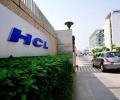
HCLTech on Monday reported a 9.7 per cent decline in consolidated net profit for the April-June quarter of this fiscal year at Rs 3,843 crore as the IT services firm and pegged the revenue growth guidance at 3-5 per cent for FY26. HCLTech had logged a net profit (attributable to owners of the company) of Rs 4,257 crore in the year-ago period, according to a regulatory filing.

Indian corporate are increasingly shifting away from bank funding towards alternative sources, such as equity and bond markets, as their deleveraged balance sheets have improved their ability to raise equity at better valuations. Moreover, the 100 basis points (bps) rate cut by the Reserve Bank of India (RBI) has enabled them to access long-term funds from the debt capital market at cheaper rates.

The combined market capitalisation of the country's top five IT firms that are part of the BSE Sensex is down 24 per cent since January and their valuation has slipped to lowest levels in the past five years.

India Inc continued to grapple with muted revenue growth in the September 2024 quarter (Q2FY25) and witnessed a decline in margins and profits. The headwinds were especially severe for non-financial companies, while banking, financial services, and insurance (BFSI) firms significantly outpaced the rest of the corporate sector. The total profit of 1,353 listed companies that have released their Q2FY25 results thus far dropped by 0.6 per cent year-on-year (Y-o-Y) - the first cumulative earnings decline in eight quarters.

The mutual fund industry's QAAUM (Quarterly Average Assets Under Management) was up 37 per cent year-on-year (Y-o-Y) (9 per cent Q-o-Q) to hit Rs 59 trillion (end Q1FY25). The equity segment grew 55 per cent Y-o-Y and equity formed 56 per cent of total AUM, up 49 per cent in Q1FY24. Sequentially, AUM grew by Rs 5 trillion.
India Inc has reported a muted start to the financial year 2024-25, with a decline in net earnings and a modest single-digit uptick in revenues. An analysis of 488 companies that have released their results for the June 2024 quarter reveals a 1.6 per cent year-on-year (Y-o-Y) drop in combined net profit -- the weakest performance in the past seven quarters. In stark contrast, the combined net profit of these companies experienced a 13.6 per cent Y-o-Y increase in the previous quarter (Q4FY24) and a 65.2 per cent Y-o-Y rise in Q1FY24.

Against the Reserve Bank of India's (RBI's) projection of 7.1 per cent, India's first quarter (Q1) 2024-25 (FY25) gross domestic product (GDP) growth came in at 6.7 per cent. This is in line with market expectations and significantly lower than the 7.8 per cent recorded in the fourth quarter (Q4) 2023-24 (FY24) and 8.2 per cent in Q1FY24. The quarter witnessed decreased government consumption and investment spending due to the parliamentary election.

The market responded positively to the Q1 results of oil marketing companies (OMCs), Bharat Petroleum Corporation (BPCL) and Hindustan Petroleum Corporation (HPCL) despite numbers being weaker than consensus. BPCL's reported gross refining margin (GRM) was in line at $7.9 per barrel (bbl) in Q1FY25, which implies marketing margin stood at Rs 4.8 per litre. Standalone profit after tax or PAT at Rs 3,000 crore was down versus consensus due to under-recoveries in LPG business.

The early-bird results for the April-June quarter of 2024 (Q1FY25) hint at a slowdown in corporate revenues and profits in FY25. Corporate profits might face headwinds from a continued revenue growth slowdown and a reversal in margin gains from lower commodity and energy prices in FY24. The combined net profit (adjusted for exceptional gains and losses) of the 210 companies that have declared their Q1FY25 results so far is down 4.2 per cent from the year-ago period - their worst showing in seven quarters.
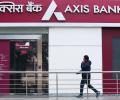
In Q1FY26, the bank reported fresh slippages of 8,200 crore, up 71 per cent Y-o-Y and sequentially. Of this, 7,500 crore is from the retail segment.

The filing of Swiggy's DRHP has led to direct comparisons with Zomato, which is a direct competitor in food delivery and the fast-growing quick-commerce segment where Blinkit (owned by Zomato) faces off against Instamart (and Zepto). In Q-commerce, Flipkart, Amazon, Reliance and Big Basket are all entering the space. All of them have deep pockets, hence competitive intensity will rise going forward.

Cement manufacturers have hiked prices after a challenging Q1FY25, and Q2FY25 (so far) when general elections and seasonal factors cut down on construction activity. The August prices are currently around 3-6 per cent above July 2024 but may not be sustainable in the face of weak demand. H2FY25 may see realisation growth which, if it happens, would drive average operating profit/tonne improvements in H2FY25 over a muted H1FY25.

The country's current account deficit widened marginally to $9.7 billion or 1.1 per cent of GDP in April-June 2024, as against $8.9 billion or 1 per cent in the year-ago period, Reserve Bank of India said on Monday. The crucial number representing the country's external sector strength has come on the heels of a surplus of $4.6 billion or 0.5 per cent of GDP recorded in the preceding January-March quarter. The Reserve Bank attributed the year-on-year widening in current account deficit to a rise in merchandise trade gap which was recorded at $65.1 billion in Q1 FY25 as compared to $56.7 billion in the year-ago period.

Cholamandalam Investment and Finance's (Chola) share has yielded one of the best returns in the last month. The company has sustained assets under management (AUM) growth at 7 per cent quarter-on-quarter (Q-o-Q), and 35 per cent year-on-year (Y-o-Y) in Q1FY25. Scaling up of new businesses now contributes to 13 per cent of loans (vs 10 per cent in Q1FY24).

Employment in urban areas in the first quarter of 2024-25 (FY25) improved over the previous one. The unemployment rate in April-June (Q1) declined to 6.6 per cent from a four-quarter high of 6.7 per cent in January-March FY24 owing to the fall in the male unemployment rate, according to the quarterly Periodic Labour Force Survey (PLFS) data, released by the National Statistical Office (NSO) on Friday.

Despite state-owned Life Insurance Corporation (LIC) reporting an improvement in value of new business (VNB) margin in Q1FY25, analysts believe the growth has not been satisfactory in the context of the insurer's medium-term targets on margins. VNB margin is a measure of profitability of life insurance companies. LIC's VNB margin improved by 20 basis points (bps) to 13.9 per cent in Q1FY25 over the same period last year due to a change in the business mix of the insurer.

The net credit card additions in the banking sector nearly halved to 2 million in the first quarter of the current financial year (Q1FY25) from the previous quarter due to seasonal and regulatory factors. According to the Reserve Bank of India (RBI) data, the net credit card additions during the April-June quarter of FY25 stood at 2 million, 48 per cent lower than 3.9 million in the December-March quarter of FY24.

Road awards were muted in Q1FY25. But the pace will accelerate with a bidding pipeline of Rs 1.1 trillion (September 2024), mostly dominated by HAM (Hybrid Annuity Model) projects, which contribute 47 per cent and engineering procurement and construction or EPC projects, which have about 36 per cent share. Hence, infrastructure companies mostly reported revenue decline on a year-on-year (Y-o-Y) basis in Q1FY25.

The hospitality industry has around 212,000 rooms, with an industry size of about Rs 82,000 crore. The industry could grow at an annual rate of 10.5 per cent for the next three financial years, despite a quiet Q1FY25. The demand will be driven by domestic travellers, who will contribute roughly 50 per cent of the growth, while foreign tourists will account for 30 per cent.

Stocks of electronics manufacturing services companies have been major outperformers, with four of the top eight listed majors by market capitalisation doubling their value over the past 12 months. The biggest gainer in this space has been the market leader, Dixon Technologies (India), which is up nearly threefold.

The gap between credit and deposit growth in the banking system is expected to decline sharply to 80 basis points (bps) in the next financial year from an average of 386 bps over the FY22-Q3FY25 period, according to rating agency India Ratings. This would be against the backdrop of sharp moderation in the incremental loan deposit ratio (LDR) of the Indian banking system to 85 per cent in February 2025 from 117-118 per cent in the same month of 2024.
The news of Dixon Technologies (India)'s tie-up with HP in addition to its existing Lenovo and Acer partnerships has led to a 5 per cent stock uptick since the start of the week. Dixon can target roughly 60 per cent of India's addressable IT hardware market with these contracts. Dixon targets Rs 48,000 crore in revenue from IT hardware under the PLI scheme over the next six years.

The IT giant has reported a decline in headcount for six consecutive quarters.

Fear of a recession in the US due to rising unemployment has added to the concerns of India's IT services sector, which was seeing some growth returning after Q1FY25 results. The Nifty IT closed 3.26 per cent down, as major IT services companies' stock value fell. Tata Consultancy Services (TCS), India's largest IT services firm, saw its stock price fall 4 per cent during intraday trading.

Fresh order wins for capital goods and industrial companies may have seen a major slump due to Lok Sabha polls in the first quarter of the current financial year (Q1FY25). At the same time, revenue and profit growth trajectory is expected to have stayed the course, according to brokerage firms. Elara Capital, Motilal Oswal, and InCred Equities expect this sector universe to report a 12- 21 per cent growth in revenue, 21 -36 per cent growth in Ebitda and 24-38 per cent growth in profit on a year-on-year (Y-oY) basis.

Trends in the global energy markets are crucial if India's growth outlook is to remain healthy. Prices for the Indian crude basket were averaging around $86.2 per barrel through Q1FY25 and then moderated to $84 in July and to $78-79 in August (so far). But global crude supply may outpace weak global demand in the short term.

While Paytm (One97 Communications) is not completely past regulatory hurdles, its share price has gained in the last month or two. The Paytm handle migration is complete along with FDI clearance necessary for the Payment Aggregator (PA) license. UPI consumer data indicates stable market share, and expansion in partner networks in financial distribution. All this implies Paytm could be set to meet guidance of turning Adjusted Ebitda breakeven by Q4FY25 (ex of UPI-incentives).

Coal India's (CIL's) revenue for the first quarter of 2024-25 (Q1FY25) came in at Rs 36,500 crore, up 1 per cent year-on-year (Y-o-Y) and down 3 per cent sequentially, which was in line with consensus. The blended average selling price was Rs 1,687/tonne, down 5 per cent Y-o-Y and down 1 per cent Q-o-Q, which was below estimates. The adjusted operating profit (excluding overburden removal or OBR costs) stood at Rs 11,500 crore up 3 per cent Y-o-Y and up 17 per cent Q-o-Q, which beat the street. This was due to lower operating expenses.
 © 2026 Rediff.com - Investor Information - Advertise with us - Disclaimer - Privacy Policy - Sitemap - Feedback - About us - Terms of use - Grievances