
Among Sensex firms, Mahindra & Mahindra, Tata Motors, Trent, Eternal, Asian Paints and Infosys were the major gainers. However, Sun Pharma, ITC, Hindustan Unilever and Titan were among the laggards.

Equity markets this week would keenly track the upcoming GST Council meeting, macroeconomic data announcements and trading activity of foreign investors for further movement, analysts said. Moreover, developments related to tariff negotiations, global market trends and auto sales data would also drive investors' sentiment.

Movement in the equity market this week will be guided by a host of macroeconomic data announcements, global trends and trading activity of foreign investors, analysts said. Stocks markets concluded the last week on a subdued note, as investors grappled with global uncertainties.

India recorded economic growth of 7.8 per cent in the April-June quarter of 2023-24 against 13.1 per cent in the year-ago period, as per the National Statistical Office (NSO) data released on Thursday. India remains the fastest-growing major economy as China's GDP growth in the April-June quarter was 6.3 per cent.

The sudden stop in economic activity led to a sharp decline in employment-intensive sectors like construction, manufacturing and trade, hotels, transport etc.

Worries related to the Iran-Israel conflict, quarterly earnings and foreign investors' trading activity are the key factors that would dictate stock markets this week, analysts said. Besides, trends in Brent crude oil and movement of the rupee against the dollar will also be crucial factors. This week will be crucial for the market amid ongoing worries about the conflict between Iran and Israel, said Pravesh Gour, Senior Technical Analyst, Swastika Investmart Ltd.
The chief statistician feels there should be a rebound after companies integrate and adopt the GST system

China's GDP jumped a record 18.3 per cent in the first quarter of 2021, riding on strong domestic and foreign demand and aided by recovery from a low base in early 2020 when Covid-19 stalled the world's second-largest economy, according to statistics released on Friday.

Propelled by robust growth in trade and telecommunication, finance and manufacturing, GDP grew by 5.7 per cent to Rs 3,28,837 crore during the first three months of the year 2003-04, even as there was slowdown in agriculture, mining and quarrying.

The economic growth slowed to a decade low of 5 per cent in the 2012-13 fiscal.

The Chinese government has vowed to fine-tune the economy which continued on the declining trend, registering 8.1 per cent GDP growth in January-March this year, the lowest quarterly rise in nearly three years.
From the Sensex pack, Power Grid, Infosys, Asian Paints, Mahindra & Mahindra, HCL Technologies, IndusInd Bank, Tech Mahindra, Bajaj Finance, Wipro, Tata Consultancy Services, HDFC Bank and Titan were the major gainers. Tata Steel and Bharti Airtel were the laggards.

Macroeconomic data announcements, global trends and trading activity of foreign investors would guide momentum in the equity market this week, analysts said. Markets ended a five-week losing streak and gained nearly a per cent last week, helped by a sharp rebound on Friday. Last week, the BSE benchmark jumped 500.65 points or 0.77 per cent and the Nifty gained 169.5 points or 0.87 per cent.

From the Sensex firms, Bajaj Finance, Bajaj Finserv, Infosys, Bharti Airtel, Kotak Mahindra Bank, Larsen & Toubro, Mahindra & Mahindra, ITC, Tech Mahindra, Tata Steel, Tata Motors, Titan, Reliance Industries and Nestle were the major winners. Hindustan Unilever, Power Grid, Axis Bank, Tata Consultancy Services, State Bank of India, Asian Paints and Wipro were the laggards.
India's gross domestic product grew by 7.4 per cent in the first three months (Apr-Jun) of this fiscal mainly due to a robust manufacturing sector which clocked 8 per cent growth.
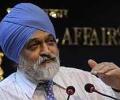
Terming the 5.5 per cent GDP growth as "good news", Planning Commission Deputy Chairman Montek Singh Ahluwalia today expressed confidence that economy would rebound in subsequent quarters.

Sandwiched between demonetisation, GST and other smaller policy changes, Gross Value Added or GVA may be a more reliable measure of economic activity over the next few quarters.

The Indian economy grew by 8.9 per cent in the first quarter (April-June)of this fiscal, up by 0.4 per cent compared to the same period last year.
The domestic equity market, which is on a record-breaking spree, will focus on macroeconomic data announcements, movement in global stocks and the US Fed minutes to get further direction, analysts said. Trading activity of Foreign Institutional Investors (FIIs) will also innfluence investors.From the domestic macroeconomic front, Purchasing Managers' Index (PMI) data for the manufacturing sector will be released on Monday, and that o,f the services sector on Wednesday. Investors, this week, will keenly watch major global market events, icluding the outcome of the Federal Open Market Committee (FOMC) minutes, scheduled to be out on Wednesday.
Days after Moody's cut its gross domestic product (GDP) forecast for financial year 2022-23 (FY23) after the official GDP print for the June quarter came in lower than expectations, the global ratings agency said it would maintain its long-term sovereign debt credit rating and outlook on Asia's third-largest economy. "The credit profile of India reflects key strengths, including its large and diversified economy with high growth potential, a relatively strong external position, and a stable domestic financing base for government debt," Moody's said on Tuesday. "We do not expect rising challenges to the global economy, including the impact of the Russia-Ukraine military conflict, higher inflation, and the tightening financial conditions on the back of policy tightening, to derail India's ongoing recovery from the pandemic in 2022 and 2023," it said.

From the 30-share basket, 28 scrips suffered losses. Over 200 stocks were at their 52-week low in Tuesday's trade.

While Bajaj Finance, Asian Paints, Tata Steel, NTPC and SBI were among the other gainers, ONGC, Axis Bank, Tech Mahindra, Infosys and ICICI Bank were among the laggards. NSE Nifty advanced 82.75 points or 0.73 per cent to settle at 11,470.25.

This is the fourth consecutive time that the RBI has kept key interest rates unchanged despite clamours from the industry to cut rates to boost economy.

Top losers in the Sensex pack included ICICI Bank, Tata Steel, Vedanta, HDFC IndusInd Bank, Tata Motors, RIL and ONGC -- falling up to 4.45 per cent.

India's likely medium-term potential growth will almost certainly be markedly lower than that experienced in pre-pandemic years, warns Shankar Acharya, former chief economic advisor to the Government of India.

According to the QNB Group report, the growth in emerging markets -- from Brazil to Indonesia, Russia and South Africa -- is slowing down, partly reflecting the tightening of domestic policies by these countries last year to stabilise foreign exchange rates.

India is in favourable position to attract foreign firms planning to relocate their manufacturing bases due to trade tension between the US and China, says Nomura.

Official data released on Friday said the GDP is estimated to have grown by 5.7 per cent for the April-June period, as against a 4.6 per cent growth notched for the same period year ago.

Among the gainers, Sun Pharma topped by rising 3.03 per cent as the weak rupee tempted buyers to accumulate shares of pharma exporters.

The broader NSE Nifty closed below the 10,600 mark by plunging 98.15 points, or 0.84 per cent, to 11,582.35 after shuttling between 11,567.40 and 11,751.80.

For the seven months since February 2014, the benchmark index surged nearly 27%.

The benchmark BSE Sensex ended down 2.23 per cent. The Bank Nifty fell 3.59 per cent.
 © 2026 Rediff.com - Investor Information - Advertise with us - Disclaimer - Privacy Policy - Sitemap - Feedback - About us - Terms of use - Grievances