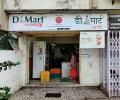
Shares of Avenue Supermarts (DMart) have gained about 5 per cent over the past week on better than expected June quarter (Q1FY25) performance, hopes of a recovery in discretionary demand, and margin gains going ahead. The key takeaway from the results was the robust gross margin performance. Riding on improving mix, DMart posted a 34 basis point year-on-year (Y-o-Y) improvement in gross margins to 14.9 per cent.

The stock of the country's largest plastic pipe maker Supreme Industries has shed 22 per cent since its highs in October. The September quarter results were below expectations as the volatility in polyvinyl chloride (PVC) resin prices led to a major destocking across the trade channel.

The stock of Voltas, the country's largest room air- conditioner (RAC) maker, is up 22 per cent in the past three months. Robust demand on the back of a sweltering summer, distribution expansion, slew of launches and backward integration are expected to forge a good operating performance for the company. In the core RAC segment, there are multiple triggers for the company.

There could be near-term margin pressures for lifestyle accessories major Titan Company. Even as the company maintains its growth outlook over the medium term, it has revised its margin guidance for the jewellery segment downwards. The company has adjusted its medium-term margin guidance to 12 per cent from the previous range of 12-13 per cent.

The stock of Apollo Hospitals Enterprise (AHEL), India's largest listed health care services company, fell 4.6 per cent on Monday (April 29) and slipped another 0.34 per cent to close at Rs 5,946.20 on Tuesday (April 30). The share declined due to a lower valuation for subsidiary Apollo HealthCo (AHL) and an aggressive valuation for Keimed, a promoter-owned drug wholesaler that is merging with AHL.

A strong performance in the July-September quarter of 2023-24 (Q2FY24), an upward revision in the margin guidance and sustained momentum in US sales has helped the stock of pharmaceutical major Cipla gain about 2 per cent over the last two trading sessions. The brokerages have upgraded the earnings estimates for this financial year (FY24) by 6-9 per cent to factor in the improved margin guidance and sales in the US market. Led by the US market, which rose by 31 per cent, the company posted a 16 per cent growth in revenues.

A weaker-than-expected sales performance, concerns about higher competitive intensity in the current year, and earning cuts by some brokerages have weighed on the stock of the country's largest paint maker, Asian Paints. While the Q3 volume show was slightly below expectations, the company's operational and bottom line beat estimates, benefiting from the falling raw material costs. The stock ended the day with a decline of over 2 per cent at Rs 3,175 apiece.

The financial numbers for 2023-24 (FY24) of the four pure-play listed asset management companies (AMCs) have enthused the Street. All firms listed robust growth in net profit and revenue both during the January-March quarter (Q4) of FY24, as well as in full FY24. The strong performance comes amid a positive growth environment for the sector, led by tailwinds such as sharp growth in assets under management (AUM) and robust performance in equity offerings.

Better than expected performance in June quarter of the 2023-24 financial year (Q1FY24) and a robust outlook led to 1.2 per cent gain in Titan Company stock on Friday (July 7). The firm reported 20 per cent growth in revenues, aided by double-digit rise in its major consumer segments. Jewellery, its largest segment, accounting for about 90 per cent of its sales, stood out with a growth of 21 per cent over the year ago quarter.

Since the start of this financial year (FY24), the stock of Aurobindo Pharma has been one of the top pharma gainers, enhancing investor wealth by over 68 per cent, with a third of those gains coming in the last three months. The stock is riding on multiple triggers given its investments in the production-linked incentive or PLI scheme, biosimilars, injectables and vaccines, which should drive revenues and profits over the medium term. Better than expected performance after the June quarter results led to a revision of earnings estimates for FY24 and FY25.

The chemicals sector's recovery could be delayed until FY25 if the current trends of weak demand and flat pricing continue. Following a subdued September quarter, the revenue and profit performance of listed chemicals companies are anticipated to fall short of initial expectations of an improvement. Despite some price stability, the demand trajectory remains uncertain.

Since their highs in September, chemical stocks have underperformed the benchmarks and broader indices over the past month with larger players witnessing a 9-22 per cent fall during this period. Expectations of weak September quarter results amid high inventory, demand woes and weak realisations have led to the underperformance.

Rise in input costs, inventory write-off, and pricing pressures led to a drop in gross margins. Higher competitive pressures led to cuts in operating profit margins and earnings estimates for FY24 and FY25. Most brokerages have a 'neutral' or a 'reduce' rating on the stock on account of valuations.

Even though Bharat Forge's performance in the July-September quarter broadly met Street estimates and defence orders are on the rise, the subdued outlook for its global business has prompted some brokerages to adopt a cautious stance on the company. Analysts have reduced the company's earnings per share (EPS) estimates to account for the slow recovery of its overseas subsidiaries. Valuations are also trading at long-term averages, which could limit potential upsides.

The Colgate-Palmolive (India) stock gained 2.3 per cent in trade on Friday, and ended at Rs 2,079 per share. This was on the back of a robust operating performance in the July-September quarter of 2023-24 (Q2FY24) and expectations of gradual sales recovery going ahead. While the stock is up 44 per cent from its lows in January this year, further gains will depend on its ability to sustain higher growth rates.

TVS Motor Company has been one of the best-performing two-wheeler stocks in the current financial year (FY24), enriching investors with gains of 24 per cent. Among listed two-wheeler stocks, only Hero MotoCorp has done better in this period. New launches, market share gains, steady margins and expectations that its performance will continue in FY24 are expected to support TVS Motor's stock.
The stock of Colgate-Palmolive (India) surged after the company delivered a better than expected operating performance for the March quarter of the 2022-23 financial year (Q4FY23) recently. The stock, however, has given up most of these gains over the last one week as the Street awaits recovery in the core toothpaste segment and sustained recovery in market share. The country's largest listed oral care company posted a gross margin expansion of 100 basis points (bps) on a sequential basis to 66.9 per cent, led by pricing and efficient sourcing.

Notwithstanding record revenues in certain media sectors like film exhibition in the July-September quarter (second quarter, or Q2), the operational performance of the broadcasting business remained subdued. Zee Entertainment Enterprises and Sun TV are expected to experience a year-on-year (Y-o-Y) decline in advertising (ad) revenues during this period. Conversely, box office (BO) collections are anticipated to exceed Rs 3,000 crore in the quarter, propelled by a series of successful movie releases.

UPL, the country's largest agrochemical company, had a weak July-September quarter (Q2), reporting a sharp fall in revenues across geographies. Overall, the revenues were down 19 per cent on the back of lower agrochemical prices and inventory destocking. While the overall volumes were down 7 per cent, prices fell by 15 per cent. Volume decline in the European market was on the back of high channel inventory and product bans while in India the fall by 27 per cent was on account of muted demand for segments such as cotton and pulses.

Bolstered by an impressive performance in the global specialty business and outstanding results in the Indian market, Sun Pharmaceutical Industries, the largest pharmaceutical (pharma) company in the country, showcased a strong performance in the July-September quarter (second quarter, or Q2) of 2023-24 (FY24).

The stock of two wheeler maker Eicher Motors was the highest gainer among BSE 100 stocks, rising 6.6 per cent in trade on Friday. The gains came on the back of better than expected performance in the March quarter of the 2022-23 financial year (Q4FY23) and earnings upgrades by brokerages. Standalone revenues (Royal Enfield) were up 19.9 per cent year-on-year (YoY), led by an 18 per cent growth in volumes and a marginal uptick in realisations.

Titan posted better than expected revenue growth in the March quarter of the financial year 2022-23 (Q4FY23), powered by strong demand trends in the jewellery and watch segment. Standalone jewellery sales for the firm were up 24 per cent year-on-year (YoY) on a slightly lower base and aided by like-to-like growth of 19 per cent. The company highlighted that new buyer growth was at 15 per cent while average ticket size was up 8 per cent.

Hotel companies, which have experienced substantial share price gains in the past six months, are not only expected to post robust revenue growth in the seasonally weak July-September quarter (second quarter, or Q2) of 2023-24 (FY24), with the trend continuing in the second half (H2) of FY24, but according to some analysts, they will also benefit from a structural uptrend in progress. To begin with, larger players in the listed hotel sector are expected to report strong growth in Q2 compared to the year-ago quarter. Led by higher demand from the business segment, the sector is expected to achieve a growth rate of 15-30 per cent.

The stock of the retail chain Avenue Supermarts (Dmart) was the biggest loser in the BSE 100 Index shedding 4.35 per cent on Thursday and added to these losses on Monday by falling an additional 1.3 per cent. The Street was reacting to lower than expected operational performance by the company in the March quarter. The country's largest listed retailer by market capitalisation reported a 20 per cent year-on-year (y-o-y) growth in its top line to Rs 10,337 crore.

Following a strong performance in the 2022-23 January-March quarter, publicly listed paint industry giants displayed a mixed performance in the 2023-24 (FY24) April-June quarter. While Berger Paints India outperformed its peers and reported results in line with expectations, market leader Asian Paints and Kansai Nerolac Paints fell slightly short of expectations.

Except for Westlife Foodworld (Westlife), a weak 2022-23 (FY23) January-March (fourth quarter, or Q4) quarter performance and a muted near-term outlook led to a downward revision of earnings estimates for quick-service restaurant (QSR) players. Brokerages have slashed estimates by as much as 10 per cent for 2023-24 (FY24) and 2024-25 (FY25). The downward revisions have weighed on the performance of listed players, who have underperformed the market with low single-digit returns over the past month.

The S&P BSE Auto Index has been one of the biggest outperformers among sectoral indices over the past year with returns of 26 per cent. By comparison, the benchmarks - the National Stock Exchange Nifty50 and the S&P BSE Sensex - managed about 6-8 per cent during this period. Improving demand, falling raw material costs, and rising product realisations, led by the premiumisation of portfolios, have led to a revision of growth estimates and upgrades by domestic brokerages.

There are multiple near-term worries for the stock of India's largest listed consumer company, Hindustan Unilever (HUL). While inflationary pressures will weigh on its profitability, demand pressures - especially in the rural market - are expected to hit the firm's revenues. This is why brokerages have cut the earnings estimates for financial year 2022-23 (FY23) by 7-10 per cent.

Tata Motors' UK-based subsidiary, Jaguar Land Rover or JLR, reported a muted operational performance in the December quarter of financial year 2021-22 (Q3FY22). The luxury carmaker saw a 33 per cent year-on-year (YoY) decline in wholesale volumes to just under 70,000 units in Q3, against estimates that were 16 per cent higher. The drop in despatches to dealers was on account of shortage in semiconductors.
 © 2026 Rediff.com - Investor Information - Advertise with us - Disclaimer - Privacy Policy - Sitemap - Feedback - About us - Terms of use - Grievances