'The use of military power to settle disputes is not always preferred and is the last preferred option, but it certainly remains an option.'
'By not even acknowledging China's occupation of Indian territory Modi signalled to Beijing that he was not prepared to used forceful means to vacate the Chinese occupation, and that his government was reconciled to this loss of territory and accepted the fait accompli engineered by the PLA.'
'We should not minimise the seriousness of Chinese encroachments because their perception is different.' 'Nor should we fall into the trap of accepting so-called 'buffer zones' in areas of overlapping claims. We cannot have buffer zones in our own territory,' asserts Ambassador Shyam Saran, a former foreign secretary.

'The Indian government wakes up after the fact when it can do nothing, or rather lacks the will to prosecute military actions to reverse these adverse PLA-driven developments.'


From Dudhwa to Veppathur and Havelock Island, the Indian tourism market is booming like never before.

China is spending billions of dollars to improve infrastructure in Tibet and other parts of its border with India. Claude Arpi explains why New Delhi can't afford to ignore Beijing's plans.

Overall, the People's Liberation Army Air Force (PLAAF) has focused on building ground-based air defense networks and network-centric operations rather than trying to match the Indian Air Force (IAF) in terms of straight fighter numbers along the border. All air assets fall under the Western Theater Command of the PLA, the largest geographic region of China's five military theater commands.
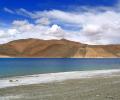
Ladakh's picturesque Pangong Tso lake is under threat from tourists who care less for the fragile environment and the Ladakhi culture
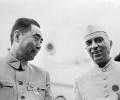
The Indians felt that if they acceded to Chinese claims in Ladakh, Beijing would simply be emboldened to press for further concessions in the future. A revealing excerpt from India And The Cold War.

The magical land of Changthang in Ladakh is the stuff of dreams, though it might be losing its pristine beauty to the onslaught of tourists and campers.

Since 1950 successive governments have tried various options but failed to reduce alienation amongst the people, for different reasons, of Kashmir, Jammu and Ladakh. It is best to accept this reality and let each region charter its own path, within the framework of the Indian Constitution, says Sanjeev Nayyar.
