
For a team that once struggled for basic infrastructure, the T20 World Cup is being viewed as a defining leap rather than just another appearance for Nepal.

Axis Bank reported a sharp drop in net profit in the second quarter of financial year 2026 (Q2FY26) on higher provisions and weak operating profit growth while revenue growth was moderate. But loan growth and deposit growth improved to double-digits year-on-year (Y-o-Y) and asset quality also improved with the gross non-performing loan or NPL ratio moving down.

Nepal takes game to new heights with T20 league

With the price of gold entering a strong bull run, gold-loan non-banking financial companies (NBFCs) are under the spotlight, even though their performance is not directly linked to gold price. Muthoot Finance outperformed in the April-June quarter (Q1) of 2025-26 (FY26), with its assets under management (AUM) growing 10 per cent quarter-on-quarter (Q-o-Q) and 42 per cent year-on-year (Y-o-Y), an improvement of 88 basis points (bps) Q-o-Q in net interest margin (NIM), and a fall in credit cost. Gold AUM rose 40 per cent Y-o-Y and 10 per cent Q-o-Q. The company recorded recoveries of 350 crore, including 100 crore from an asset reconstruction company (ARC), resulting in a 100-bp Q-o-Q yield increase.

The April-June quarter (Q1) of the current financial year (FY25) may be soft for banks with loan growth moderation, net interest margin (NIM) pressures, and higher staff and credit costs inching up, according to analysts. Credit growth could ease due to the lagged impact of the Reserve Bank of India (RBI) tightening and deposit growth has weakened, and the current account and savings account (CASA) ratio has declined 10-370 basis points (bps) quarter-on-quarter (Q-o-Q) for many banks.

Partha Pratim Sengupta, who will be taking charge as the MD & CEO of Bandhan Bank in early November, has his task cut out. The Kolkata-based lender, which converted itself from a microfinance institution to a universal bank, is in its 10th year of operation. The bank was able to cut down the share of the micro loan book over these years.

Axis Bank has strengthened its positioning -- on both the assets and liability side -- and it may be set to deliver sustained improvement in performance. The valuation gap between Axis Bank (which trades at 1.4x core book value (or BV) and peers like ICICI Bank (valued at 2x BV) is expected to narrow.

The share of listed public sector undertakings (PSUs) in the overall market capitalisation has hit a three-year high of 11.4 per cent. This comes on the back of the sharp outperformance of the PSU pack over the past two years. In 2021 and 2022, the BSE PSU index gained 41 per cent and 23 per cent, respectively. Market participants said a combination of factors like value buying and bullishness, particularly in public sector banks (PSBs), were the reason for the improved prospects.

Moody's Investors Service on Thursday said second wave of Covid infections has increased asset risks for Indian banks, but a severe deterioration is unlikely. It said that the second wave of coronavirus infections in India has exacerbated stress among individuals and small businesses that were hit the hardest by the initial outbreak. Still, a number of factors will prevent sharp increases in problem loans, and banks have sufficient buffers to absorb anticipated loan losses.

The central government is on track to meet its fiscal deficit target of 6.4 per cent of the GDP for 2022-23 on the back of strong growth in revenue collections, the World Bank said in its India Development Update on Tuesday. High nominal GDP growth in the first quarter supported strong growth in revenue collection, especially Goods and Services Tax (GST), despite tax cuts on fuel. Notwithstanding an increase in spending due to expanded fertilizer subsidies and food subsidies for vulnerable households in response to the commodity price shock, the government is on track to meet its FY22/23 fiscal deficit target of 6.4 per cent of GDP and the general government deficit is projected to decline to 9.6 per cent from 10.3 per cent in FY21/22 and 13.3 per cent in FY20/21.

Invest only if you wish to go overweight on the sector.

The Council of Scientific and Industrial Research-NPL is inviting applications from MSc/ MTech students to pursue PhD in Physical Sciences at the institute.

Capital needs are likely to increase substantially each year.

No-Punchline humour reminds us how in our daily lives, we all are by turns 'The Corrupt Politician we criticise,' 'The Chauvinist Male we frown upon,' 'The Rule Breaker we deride through our Facebook posts,' 'The Communal Virus we so easily lampoon' and 'The Bad Artist we spoof.' In a land where the aforesaid prototypes are our major sources of 'funny,' is there an audience for the NPL kind of humour, asks Sreehari Nair.

Yes Securities, the broking and investment arm of Yes Bank, on Wednesday said the Supreme Court directive on loan moratorium due to pandemic has brought the much needed clarity and there will not be any financial impact on the banks as the compound interest waiver is to be reimbursed by the government. On its verdict on a batch of pleas seeking moratorium extension beyond August 31, 2020, the apex court on Tuesday said it is a policy decision, refusing to interfere with the Centre's and RBI's decision to not extend the loan moratorium beyond the limit. However, it observed that the benefit of moratorium should go to all set of borrowers irrespective of the loan amount and asked to refund any amount collected as penal interest and compound interest during March-August 2020.
Professional services firm PricewaterhouseCoopers is close to arranging the first acquisition of a non-performing asset in India.\n\n\n\n

S&P Global Ratings on Wednesday said Indian banks face a systemic risk as the second COVID wave will impair the performance of financial institutions in the April-September period. Stating that economic recovery remains highly vulnerable to setbacks due to COVID, particularly if fresh outbreaks trigger new lockdowns, S&P said the banking sector's weak loans will likely remain elevated at 11-12 per cent of gross loans in the next 12 to 18 months. "The second wave has front-ended weakness in asset quality," said S&P Global Ratings Credit Analyst Deepali Seth Chhabria. "Financial institutions face a strained first half amid weak collections and poor disbursements."

A normal monsoon, softer interest rates and inflation, pent-up demand, along with mild budgetary support may help growth pick up in coming quarters.
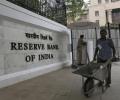
In all, RBI has cut interest rates by 110 bps this year. But this has not yet led to a boost in economic activity. While the growth rate has slowed to a five-year low, consumer confidence is waning and foreign direct investment has plateaued.

GST has been hanging fire with the Opposition Congress yet to come on board

Non-performing loans in the Chinese banking system stood at RMB 1.27 trillion at the end of 2015.

"The hike in RBI's provisioning requirements is likely to have a significant impact on profits over the short term, especially for those banks that currently have relatively low NPL provision cover ratios," Moody's said.

While analysts remains overweight on financials, property, discretionary, industrials and materials, they maintain a neutral stance on pharma, telecom and energy; and underweight on staples, utilities, and IT services.

All real estate developers may not be able to avail the benefit of Reserve Bank of India's one-time restructuring scheme as they might not meet the required financial ratios and have the necessary credit rating, HDFC vice chairman and CEO Keki Mistry said. He was speaking at a real estate and infrastructure investor summit organised by Naredco. "Restructuring may not necessarily help every developer because not too many will be able to meet the criteria laid down in terms of meeting the various ratios and getting credit ratings," Mistry said.

The agency said that over the next two years new NPL formation rates would witness a gradual decline.

YES Bank, Bank of Baroda, SBI, IndusInd Bank, and RBL Bank are amongst the banks, Jefferies says, are most prune to "high risk" emanating from ADAG, Cox & Kings, CG Power, DHFL and Essar Shipping.

The 'Indian story' will be badly damaged if the Modi government is not re-elected, argues investment banker Christopher Wood.

Report says stressed asset level to peak at 15% in 2014-15.

Fitch said the full implications of Patel's resignation will only become clearer once there is some indication of the RBI's policy approach under his replacement, Shaktikanta Das

'The probability of another negative year in 2019 is low.'

'With technology advancing rapidly, the need for branches is declining.'

Stating that a weak fiscal position continues to constrain India's sovereign ratings, Fitch said the next government's medium-term fiscal policy will be of particular importance from a rating perspective.

This was the companies' highest loss in two years.

Fitch had last upgraded India's sovereign rating from BB+ to BBB- with a stable outlook on August 1, 2006.

"Fitch Ratings has placed Punjab National Bank's (PNB) Viability Rating of 'bb' on Rating Watch Negative (RWN), following the large fraud reported by PNB," the US-based agency said in a statement.

'Till now, we were under tremendous stress. The economy was not recovering, the financial cycle was not moving and the banks were not supporting.' 'With the government pumping in money to the banks and asking the NBFCs to give priority to the MSME sector, there will be a revival.'

Consensus continues to be cautious with analysts pointing towards tougher days ahead

Till March 2011, things were manageable.
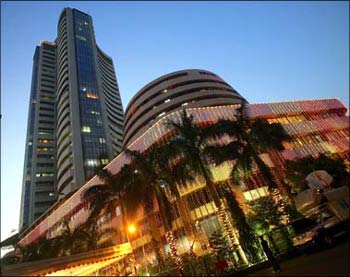
'There is no change in the overall story of economic recovery.'

India remains an attractive destination and the recent sell-off has made valuations attractive in the large-cap space.
 © 2026 Rediff.com - Investor Information - Advertise with us - Disclaimer - Privacy Policy - Sitemap - Feedback - About us - Terms of use - Grievances