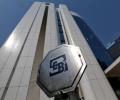
Capital markets regulator Sebi has kept in 'abeyance' the proposed initial share sale of securities depository NSDL. However, the Securities and Exchange Board of India (Sebi) did not clarify further. The National Securities Depository Ltd (NSDL) filed its preliminary papers with the capital markets regulator on July 7.

BSE (formerly Bombay Stock Exchange) has seen its market share go past the critical 20 per cent mark in the derivatives segment, intensifying its battle with bigger rival - the National Stock Exchange (NSE) - which, less than a year ago, had a monopoly in this space. In April, the average daily trading volume (ADTV) for BSE stood at Rs 89 trillion, accounting for 20.6 per cent of the overall ADTV of Rs 432 trillion (based on notional volumes for options).

Among the Sensex firms, JSW Steel, Tata Steel, Tech Mahindra, Infosys, Wipro, Tata Consultancy Services, Nestle, HCL Technologies, HDFC Bank and Maruti were the major laggards. IndusInd Bank, ITC, Bharti Airtel and State Bank of India were among the winners.

Among the Sensex firms, Larsen & Toubro, Axis Bank, Tata Steel, Bajaj Finance, Power Grid, Asian Paints, Mahindra & Mahindra and Bajaj Finserv were the biggest gainers. State Bank of India, Hindustan Unilever, Tata Motors and Titan were the laggards.

Benchmark equity indices Sensex and Nifty settled with marginal gains on Thursday in a highly volatile trade amid the scheduled monthly derivatives expiry and muted trend in the US markets. The 30-share BSE Sensex closed 86.53 points or 0.13 per cent higher at 66,988.44, registering its third day of gains. During the day, it hit a high of 67,069.89 and a low of 66,610.35.
HDFC Bank's latest shareholding data showed that the room for foreign investment has fallen just 5 basis points short of the threshold set by Morgan Stanley Capital International (MSCI) to fully include the stock in its indices. Currently, the index provider has applied an adjustment factor of 0.5 since the foreign room is less than 25 per cent. Removal of the adjustment factor will result in inflows of a massive $4.8 billion (Rs 40,000 crore) into HDFC Bank, according to Brian Freitas, a New Zealand-based analyst with Periscope Analytics.

Equity mutual fund (MF) schemes have raked in Rs 46,200 crore in net lump-sum inflows in the past six months (ended February 2024), almost thrice the inflow in the previous six-month period.

Retail investors now own a larger share of smallcap companies than they did a year ago, thanks to their conviction in mutual fund (MF) schemes focused on this segment. Data from Capitaline shows that MFs' average holding in the National Stock Exchange Nifty Smallcap 250 Index stood at 9 per cent at the end of the October-December quarter of 2023-24 (FY24), up from 7.76 per cent in the same quarter of 2022-23.

'It is advisable to stay away from the markets for now and buy only on a dip.'

This is the case even though the benchmark index is only 5 per cent below its all-time high. The list of stocks trading at a discount primarily consists companies in the automotive, banking, oil and gas, insurance, healthcare, and metal sectors.

Notwithstanding the ongoing decline in equity markets week after week, August has proven to be the most successful since December for initial public offerings (IPOs). In August of this year, six companies have collectively raised approximately Rs 4,269 crore through IPOs.

Five firms, including ACC Ltd, HDFC Asset Management Company and FSN E-Commerce Ventures that runs Nykaa, will be dropped from Nifty Next 50 index from September 29. NSE Indices Ltd, an arm of the National Stock Exchange, on Thursday said that Indus Towers and Page Industries will also be dropped from the index. Punjab National Bank, Trent, Sriram Finance, TVS Motor Company, and Zydus Lifesciences will be included in the Nifty Next 50 index, NSE Indices said in a statement.

Maharashtra Congress chief Nana Patole on Monday alleged that the agenda of the upcoming special session of Parliament is to separate Mumbai from the state and declare it as a Union territory.

The dealers operating in the space have jumped nearly three times over the past two years.

Stocks in the automotive, financial, cement, metal, and hotel sectors are likely to benefit if the Narendra Modi-led Bharatiya Janata Party (BJP) comes back to power for a third time. The key investment themes have been identified after analysing the Sankalp Patra - the party's manifesto for the next five years - released on Sunday.

Exchange-traded currency derivatives volumes are likely to drop in view of new Reserve Bank of India (RBI) rules, casting a cloud over further participation of retail investors and proprietary traders. There are concerns that existing positions without any underlying exposure will need to be liquidated. Also, weighed down by dollar demand from local oil companies and weakness in its Asian peers, the rupee on Wednesday (April 3) ended at a new closing low of 83.44 versus the US currency.

The domestic equity markets are expected to extend gains following the strong showing of the Narendra Modi-led Bharatiya Janata Party (BJP) in the state elections - a crucial precursor to the general elections in May. The BJP decisively secured victories in three of the four key states - Madhya Pradesh, Rajasthan, and Chhattisgarh. While the battles in these three states were closely contested, the scale of the BJP's triumph has surprised many, heightening expectations for regime continuity in 2024 - a positive catalyst for the markets.

After a sharp rally in the equities market this year, investors could be better off rotating some funds towards the debt market. Experts believe several tailwinds could spur bond market returns over the next 12-18 months. These include India's robust macroeconomics, declining inflation, and the imminent passive flows of close to Rs 2.5 trillion on account of domestic sovereign bonds getting included in the JP Morgan global indices.

In a bid to enhance its equity exposure and earn higher returns for its nearly 65 million subscribers, the Employees' Provident Fund Organisation (EPFO) is considering reinvesting 50 per cent of its exchange-traded funds (ETFs) redemption proceeds back into equity. Sources close to the development said a proposal regarding this was discussed in the investment committee (IC) meeting in October last year, and the recommendation has been sent to the Central Board of Trustees (CBT), the apex decision-making body of the EPFO for its approval. The next CBT meeting is scheduled to be held on Saturday.

The Securities and Exchange Board of India (Sebi) has asked fund houses operating smallcap funds with a large corpus to share data on their holdings in the total free float of smallcap stocks, according to sources. This is part of the stress tests that the regulator wants fund houses to undertake amid a surge in inflows into smallcap schemes and growing concerns about valuations. Free float refers to the quantum of freely available shares for trading on the stock market.

Equity fundraising through qualified institutional placements (QIPs) has gained traction, thanks to supportive equity markets and the need for fresh fundraising to meet capital expenditure (capex) requirements.

Investors are reluctant to take long-term positions this year after the spectacular gains in 2023. The delivery-based trades on the National Stock Exchange (NSE) have declined to below 36 per cent this year from an average of 38.1 per cent in 2023. Investors tend to seek delivery for stocks where they see a long-term investment opportunity or tactical positional trade.

'We emphasise the importance of not basing investment decisions solely on electoral outcomes.' 'Instead, focusing on investing in high-quality businesses capable of prospering regardless of the political landscape is paramount.'

The froth in the small and midcap (SMID) space is limited to a few pockets, but regulatory scrutiny could lead to sustained volatility, observe India's top-drawer wealth managers. They add that they have been advising clients to reduce their exposure to smallcaps. Anand Rathi Wealth, which manages investor wealth through mutual funds (MFs), reports that its exposure to smallcap stocks, both through MFs and directly, has decreased by nearly 7 percentage points in the past few months, now standing at 23 per cent.

Among the Sensex shares, Infosys rose the most by 1.37 per cent, followed by Larsen & Toubro (0.90 per cent), and Wipro (0.83 per cent). HDFC Bank, ICICI Bank, Reliance Industries, ITC, TCS, Kotak Bank, Asian Paints and Titan were among the lead gainers.

Micro-cap stocks are in the line of fire as market regulator Securities and Exchange Board of India (Sebi) is tightening its noose around investment in small-cap stocks. Given this, analysts suggest investors exit the segment, at least, for the time being. Independent market analyst, Ambareesh Baliga, for instance, said that regulators have gotten worried on the valuation front, though belated, which could prove to be the last straw on the camel's back.

The stock of the country's largest passenger vehicle maker, Maruti Suzuki India (MSIL), has been hitting successive all-time highs over the past three trading sessions. The rally in the scrip has helped it notch over a 21 per cent gain since the start of February, outperforming the National Stock Exchange Nifty Auto Index. The gains for the leader of small passenger cars have been more recent, as the company still trails the Nifty Auto over one- and two-year periods.
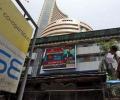
Rising outgo towards clearing and settlement fees has led to an altercation between the BSE and the National Stock Exchange of India (NSE), with the latter striking down the former's request to lower the charges. NSE said it has no plans to restructure the same and that it will continue with the pricing defined under the interoperability framework. The interoperability framework, introduced in 2019, allows trades executed on any of the exchanges to be settled or cleared at either of the two clearing corporations -- NSE Clearing (NCL) or Indian Clearing Corporation (ICCL), fully-owned by the NSE and the BSE, respectively.

The index is currently trading at 149 per cent of its historical P/B valuation, surpassing its previous peak of 125 per cent made in 2020-21.

Leading bourses BSE and NSE will put the securities of NDTV, an Adani Group company, under the short-term ASM framework from Tuesday. The parameters for shortlisting securities under ASM include high-low variation, client concentration, number of price band hits, close-to-close price variation and price-earning ratio. New Delhi Television Ltd (NDTV) is shortlisted in the short-term Additional Surveillance Measure (ASM) framework Stage-I effective from May 30, the National Stock Exchange (NSE) and BSE said in two separate circulars on Monday.

Madhabi Puri Buch, the first female chairperson of Sebi, doesn't plan to rest on her laurels in her third and final year in office and has set out an ambitious goal, such as moving towards a same-day and instantaneous settlement cycle for the secondary market.

Social stock exchange (SSE) saw its first listing on Wednesday, with SGBS Unnati Foundation becoming the first entity to take this route to avail financing. The foundation - engaged in vocational training of youth - raised Rs 1.8 crore from four investors. These include brokerage firm Zerodha and National Bank for Agriculture and Rural Development (Nabard).
'While Indian markets are indeed not inexpensive, the valuations of largecap stocks are still a considerable distance from being overstretched.'
The cash pile within smallcap mutual fund (MF) schemes has grown over the past few months amid a relentless rally in stocks in this space. While fund managers usually don't make cash calls, incessant inflows and valuation discomfort have forced their hand. At the end of January, the top 10 schemes had over Rs 12,160 crore in cash, compared to Rs 8,700 crore in August 2023.

After pumping in close to $20 billion in the preceding five months, foreign portfolio investors (FPIs) have yanked out $220 million from domestic stocks this month. The selling by overseas funds has led to turbulence in the domestic markets, with benchmark indices swinging wildly recently.

Notwithstanding the recent sharp decline in the stocks of public sector companies, analysts at Jefferies remain bullish on this segment. State Bank of India, Coal India, and NTPC are their top picks in this space, they said in a recent note. The public sector undertaking (PSU) or state-owned enterprise (SOE) index, with a 70-percentage-point outperformance versus the National Stock Exchange Nifty50 over the past 12 months, comes after a decade of underperformance before 2020.

ICICI Bank, Axis Bank, Infosys, M&M, Tech Mahindra, Tata Steel, SBI and Maruti were also among the gainers. On the other hand, IndusInd, TCS, Titan and Asian Paints declined.

Shares of One97 Communications (OCL), which provides financial services under the brand 'Paytm', and has a banking arm Paytm Payments Bank (PPBL), hit the 5 per cent upper circuit at Rs 428.10 on the National Stock Exchange (NSE) in Monday's (February 26) intraday trade. The up move in the stock on Monday came after the Reserve Bank of India (RBI) asked the National Payments Corporation of India (NPCI), in post stock market hours, to look into the possibility of migrating PPBL customers, using the UPI handle '@paytm', to four-to-five other banks.

A buoyant equity market, coupled with an improved performance of mutual funds (MFs) on the returns chart, has heightened retail investors' appetite for equities. In the past few months, equity MF schemes have seen a surge in fresh investments through both lump sum (one-time investments) and systematic investment plan (SIP) routes. During the August-September 2023 period, equity MF schemes recorded net lump sum investments of Rs 35,270 crore, compared to just Rs 5,550 crore in the previous three months, according to data from the Association of Mutual Funds in India (Amfi).

Questions sent to CFSL director Rajiv Giroti and Directorate of Forensic Sciences remained unanswered.
 © 2026 Rediff.com - Investor Information - Advertise with us - Disclaimer - Privacy Policy - Sitemap - Feedback - About us - Terms of use - Grievances