
Sources said about hundreds of companies, including Facebook and Amazon, could seek tax refund because they import software for sale in India.

The income tax department on Tuesday said its new utility developed to help TDS deductors and TCS collectors identify non-filers or "specified persons" on whom higher rate of taxes will be levied will help ease compliance burden. From July 1, non-filers of income tax returns for the past two fiscal years would be subjected to higher tax deducted at source (TDS) and tax collected at source (TCS) rate if such tax deduction was Rs 50,000 or more in each of those two years. The provision was introduced in the 2021 Budget. The TDS deductors and TCS collectors would be required to check on the functionality of the PAN of the vendor from whom TDS is to be deducted or TCS to be collected, only at the beginning of the financial year.

As per the Budget proposals, migration of a fund to a fund in IFSC will not be regarded as transfer if done on or before March 31, 2023. Transfer of units will be tax neutral. Grandfathered investments of the fund to continue to enjoy capital gains exemption on future sale by the IFSC fund. There is no impact on carry forward of losses for the investee company.

A series of steps taken by the government to promote ease of doing business and liberalisation of foreign direct investment norms have helped India receive record FDI inflows so far this year, and implementation of measures like PM Gati Shakti, single window clearance and GIS-mapped land bank are expected to further push investments in 2022. Notwithstanding the global slowdown and the COVID-19 pandemic, total foreign direct investments into India rose to a record $81.72 billion in 2020-21. During April-July this fiscal, FDI (foreign direct investment) into the country increased by 62 per cent to $27.37 billion.
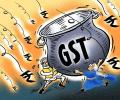
With Goods and Services Tax (GST) officers under pressure to exceed the Rs 1-trillion collection mark per month, industry has faced a barrage of recovery notices and summons issued over the last one month across sectors, according to company executives. Industry bodies have claimed harassment by field officers, blocking of input tax credit, cancellation of GST registration, threats of arrest and steep penalties, impacting their working capital and operations. Company executives pointed at an atmosphere of apprehension and fear due to such notices and summons.

Companies wanting to consider treaty benefits and deducting tax at a lower rate will have to examine the qualitative factors. They will have to consider whether FPIs are liable to tax and whether they are the beneficial owner of dividend income.

'Rationalising TDS on dividends for FPIs to reduce it to treaty rates ranging from 5 to 15 per cent, depending on the country of residence of FPIs from current rate of 20 per cent will provide a big cash flow relief for FPIs.'

India conceding ground to bring only top 100 digital companies like Google, Facebook, and Netflix into the global taxation pact may have revenue implications. This will mean that New Delhi will have to withdraw the contentious 2 per cent equalisation levy on e-commerce operators by 2023. This may have revenue implications for India, experts pointed out, as the equalisation levy has a much lower annual revenue threshold of Rs 2 crore (euro 0.2 million) as against euro 20 billion agreed by 130 countries at the Organization for Economic Cooperation and Development (OECD). India, along with other developing countries, was pitching for at least euro 1 billion threshold to cover at least 5,000 global entities. India collected Rs 2,057 crore from the equalisation levy in 2020-21, an 85 per cent growth over Rs 1,136 crore in the previous fiscal.

The bill to nullify retrospective taxation offers a fair solution within the framework of Indian law and Parliamentary sovereignty to companies which have been subjected to such demands, Finance Secretary T V Somanathan said on Thursday. Finance Minister Nirmala Sitharaman introduced 'The Taxation Laws (Amendment) Bill, 2021' in the Lok Sabha that seeks to withdraw tax demands made using a 2012 retrospective legislation to tax the indirect transfer of Indian assets. The Bill provides for the withdrawal of tax demand made on "indirect transfer of Indian assets if the transaction was undertaken before May 28, 2012 (i.e. the day the retrospective tax legislation came into being)."

E-commerce giants such as Amazon, Netflix and Flipkart, whose headquarters are not in India, potentially have to pay the additional levy of 2 per cent from April 1.

The CMS allows e-adjudication of certain lapses and paying penalties online, doing away with the need to visit an MCA office or go through a legal process.

The government on Saturday made its prior approval mandatory for foreign investments from countries that share land border with India to curb 'opportunistic takeovers' of domestic firms following the COVID-19 pandemic, a move which will restrict Foreign Direct Investment from China.

This could impact non-resident Indians staying in countries such as UAE which does not impose income tax on individuals under local tax laws.

There is considerable speculation as to whether this award would have any bearing on another Vodafone-type case, namely, the ongoing tax-related arbitration proceedings with Cairn Energy.

The US Trade Representative's (USTR) office will also conduct the Section 301 probe against nine others, including Austria, Brazil, Indonesia, Italy, Spain, Turkey, the Czech Republic, the UK, and the EU, for levying or considering digital services taxes "discriminating against US companies".

US proposal to raise the global corporate tax rate to 28% from 21% might face resistance from countries unwilling to give up their edge and compete with America on its terms.
The Budget has relaxed a few safe harbour rules that aim to make it easier for fund managers overseeing offshore India-focused funds to relocate to the country.

Experts consider Sebi's takeover code in its present form to be on a par with any foreign code governing public mergers and acquisitions.
 © 2026 Rediff.com - Investor Information - Advertise with us - Disclaimer - Privacy Policy - Sitemap - Feedback - About us - Terms of use - Grievances