
Pakistan's military can go to any length to inflict harm on India, so don't write off the possibility of an ISI-IS alliance, says Rajeev Sharma.

Former Inter-Services Intelligence chief Ahmed Shuja Pasha Pasha knew of Osama bin Laden's hideout in Pakistan and LeT founder Hafiz Saeed was in regular contact with the slain Al Qaeda chief, a media report said on Wednesday.

With the release of the film's trailer, we revisit how the crisis was actually handled.

'It is important to note that American officials were trying their best to use the Taliban for their oil games till December 1997 when Mullah Ghous was invited to America. State Department officials did not show any interest in capturing or killing Osama bin Laden even at that time.'

Bard of Blood works up several moments of intrigue and drama but falls short of culminating into a satisfying watch, says Sukanya Verma.

What does the Taliban chief's death means for various stakeholders?
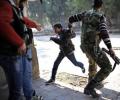
Agencies like the Tauheed Jammat have been set up in Kerala, Tamil Nadu and Telangana to radicalise the youth and recruit them to carry out terror activities in other countries. Vicky Nanjappa reports

Former Inter-Services Intelligence chief Ahmed Shuja Pasha has admitted that the deadly Haqqani network was created by it and America's Central Intelligence Agency and claimed that the insurgent group's chief Jalaluddin Haqqani had "in fact been invited to the White House by President (Ronald) Reagan".

The Afghan deputy foreign minister explains how his nation's President became disillusioned with Pakistan. Ajai Shukla listens in.
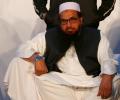
The perpetrators of the 2008 Mumbai attack, who shot dead 166 people, had confessed to details that should have been enough to hang him, but Pakistan enjoyed his anti-India rhetoric and let him spread his tentacles. A revealing excerpt from Khaled Ahmed's Pakistan's Terror Conundrum.

With the Afghanistan government in Kabul approaching Islamabad for help in opening "reconciliation" talks with the Taliban, a Pakistani role in shaping the political landscape in Afghanistan is now an uncomfortable likelihood for New Delhi.

Rediff.com reproduces the translation of the remarks made by President Ashraf Ghani at a press conference.

Rebuffed by the Obama administration on its effort to seek US intervention on Kashmir, Pakistan has said that it has never made such a "demand" and just presented its wish list to Americans on the issue.
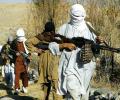
Pakistan National Security Advisor Sartaj Aziz brings to New Delhi a newfound Pakistani confidence, stemming from its leverage in Afghanistan, says Ajai Shukla
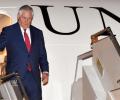
Pakistan Prime Minister Shahid Khaqan Abbasi assured the Secretary of State that his country is committed to the war against terrorism.

India and China on Friday agreed to set up a dedicated communication channel to boost security cooperation as Home Minister Rajnath Singh held talks with China's security czar on issues like cross border terrorism from Pakistan and the Afghan situation.

A proposed nuclear deal aims to stop Pakistan from building small tactical nuclear weapons that could fall into terrorist hands.

Hein Kiessling has the kind of access in Pakistan that journalists (and spies) would die for, says Kanika Datta.

Can Modi and Obama forge a common outlook on international terrorism?

'Modi wants to be pragmatic -- acknowledge the problem of Pakistan and that full reconciliation is essentially a non-starter, but at the same time grab the low-hanging fruits (such as trade) to put things on a more even keel, to engender enough stability in the relationship to allow him to focus on other priorities.'

'US counter-terrorism policy was encouraging and emboldening the Indians to deal with the problem of Pakistani-supported terrorism once and for all.' 'The US had been trying to browbeat Pakistan into doing what it wants, with very limited success.'
