
Of the six-member rate-setting monetary policy committee, five members voted for a 25 bps cut while one by 40 bps, the RBI said.

Shaktikanta Das is a master of the finest balancing act who listens to all but takes his own decisions, discovers Tamal Bandyopadhyay.

They have also called for giving cash to the poor, so that demand is generated in the economy.

Armed with necessary macro and micro growth drivers, India is on its way to becoming the fastest growing major economy in the world, a finance ministry report said. Rapid vaccination and teeming festivities will push India's ongoing recovery resulting in narrowing of demand-supply mismatches and greater employment opportunities, as per the monthly Economic Review prepared by the ministry.
With retail inflation witnessing significant uptick in May, the Reserve Bank of India (RBI) is likely to maintain status quo in its August monetary policy review, according to a report. According to the SBI's research report- Ecowrap, inflation may remain elevated in the coming months due to several global and domestic factors. "We expect a status-quo in August. We believe RBI would still try to find a marriage of convenience of regulatory and developmental measures and monetary policy in August policy," the research report said on Wednesday.

The first task before him is to get used to the idea of working with the Monetary Policy Committee

India's services sector remained in contraction territory for the third straight month in July, as business activity, new orders and employment declined further largely due to the COVID-19 pandemic and local restrictions, a monthly survey said on Wednesday. The seasonally adjusted India Services Business Activity Index rose from 41.2 in June to 45.4 in July, but was stuck in the red due to subdued demand conditions amid the COVID-19 crisis. In Purchasing Managers' Index (PMI) parlance, a print above 50 means expansion, while a score below 50 denotes contraction.

Tata Steel was the top gainer in the Sensex pack, rising around 4 per cent, followed by Infosys, Bajaj Finance, TCS, HCL Tech, ICICI Bank and Tech Mahindra. On the other hand, Bharti Airtel, M&M, L&T and Axis Bank were among the laggards.
Rs 5,000 crore additional liquidity facility to be provided by the National Housing Bank to boost liquidity in housing sector, the RBI said.

RBI Governor Shaktikanta Das said that early containment of the pandemic could impart an "upside" to the economic growth outlook.

The earlier high was in January this year at 5.07 per cent.
The SBI report ruled out a October rate hike
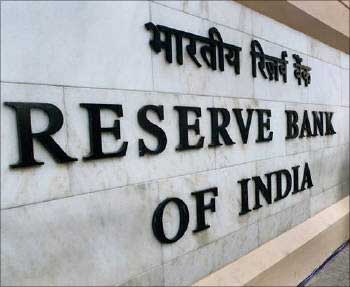
In policy review meet in June, RBI Governor Raghuram Rajan kept interest rates intact.
Striking a different note from its peers, US brokerage Bank of America Securities has maintained that the Reserve Bank will leave rates unchanged next week, recognising growth-focused and capex-driven fiscal expansion, which though poses huge price pressure and interest rate risks later. The RBI's rate setting panel Monetary Policy Committee (MPC) will begin its deliberations next Monday and announce the policy moves on Wednesday (February 9) in the backdrop of a massive spike in bond yields post the Budget. Almost all major central banks are in the process of hiking rates to tame inflation.
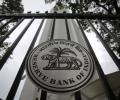
The Reserve Bank of India on Friday decided to keep the benchmark interest rate unchanged at 4 per cent but maintained an accommodative stance as the economy is yet to recover from the impact of the second Covid wave.
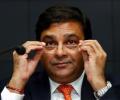
RBI retained the GDP growth for the financial year 2018-19 at 7.4 per cent.

As COVID-19 infections spike in the country resulting in restrictions in various states and impacting the fragile recovery, many economists are expecting RBI to delay the policy normalisation move, which is expected in the February review. The country has reported a single-day rise of 58,097 new Covid-19 cases as of Wednesday morning--the highest in around 199 days -- of which 2,135 are Omicron cases and later in the day, the first confirmed Omicron-related death has also been reported. Maharashtra recorded the maximum number of 653 Omicron cases followed by Delhi at 464, Kerala 185, Rajasthan 174, Gujarat 154 and Tamil Nadu 121 cases, taking the total tally of cases to 3,50,18,358.

India's economy will do well once vaccination reaches a critical mass as pent up demand, global recovery and easy financial conditions will boost activities, RBI's Monetary Policy Committee (MPC) member Ashima Goyal said on Tuesday.

There are respected names arguing both for and against this recommendation of the Urjit Patel committee.
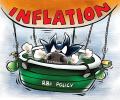
The Reserve Bank of India on Friday raised the retail inflation forecast for 2021-22 to 5.7 per cent due to supply side constraints, high crude oil and raw materials cost. The RBI in June had pegged the retail inflation estimate at 5.1 per cent for the current financial year. The RBI has the mandate to keep inflation in a band of 2-4 per cent, with a tolerance level of 2 per cent on either side.

Maintaining 4 per cent inflation is appropriate for India as targeting a lower rate could impart deflationary bias to the monetary policy, said a Reserve Bank paper. Under the current dispensation, the RBI has been mandated by the government to maintain retail inflation at 4 per cent with a margin of 2 per cent on either side. The paper, authored by RBI Deputy Governor Michael Debabrata Patra and another official Harendra Kumar Behera, has found a steady decline in trend inflation to 4.1-4.3 per cent since 2014.

However, it may still not change its stance on the policy rate as inflationary pressures are coming from high commodity prices.

Retail inflation fell to a five-month low of 4.35 per cent in September from 7.27 per cent in the year-ago period as prices of vegetables and other items declined, according to government data released on Tuesday. The moderation in Consumer Price Index-based inflation is in line with the assessment of Reserve Bank Governor Shaktikanta Das who recently projected substantial softening of retail inflation. The CPI inflation was at 5.3 per cent in August and at 7.27 per cent in September 2020.

Probably 35 bps. There could be even an encore in February 2023 to take the policy rate to 6.5% before the financial year ends, predicts Tamal Bandyopadhyay.

The government has no plan to print currency notes to tide over the current economic crisis triggered by the outbreak of COVID-19 pandemic, Finance Minister Nirmala Sitharaman informed Parliament on Monday. To a question on whether there is any plan to print currency to tide over the crisis, the finance minister said, "No Sir". Many economists and experts have suggested to the government to print more currency notes to tide over the difficult economic situation with a view to support the economy ravaged by the spread of COVID-19, and protect jobs.

India needs foreign exchange buffer reserves to insulate itself from exchange rate volatility as we have "no friends" for swap lines and Japan was the only country that helped during the taper tantrum in 2013, former RBI Governor Raghuram Rajan said on Tuesday. Participating in a virtual event organised by economic think tank NCAER, Rajan said during the taper tantrum in 2013, India asked for swap lines, and only country who helped was Japan. "We need this (foreign exchange) reserve buffer to insulate ourselves because we have no friends.

The Reserve Bank will go for a "dovish pause" at Wednesday's policy review announcement amid developments such as a rise in inflation, government maintaining the inflation target band and a likely impact on growth due to local lockdowns on rising COVID-19 infections, analysts said on Monday. Economists at American brokerage Bofa Securities said price stability, growth and financial stability will become the prime focus areas for the central bank going forward. "The RBI MPC (Monetary Policy Committee) should deliver another dovish pause on Wednesday," it said. The policy announcement, the first for the fiscal, will come days after the government maintained the RBI's target to ensure inflation to be within 2-6 per cent band for five more years.

IndusInd Bank was the top gainer in the Sensex pack, rallying over 4 per cent, followed by SBI, Bajaj Finance, Bharti Airtel, Axis Bank, Sun Pharma, HDFC and PowerGrid.
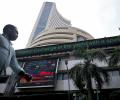
RBI policy, macro data, company earnings to decide market course this week: Experts

A three-year validity of an inflation target is, perhaps, more reasonable and practicable.
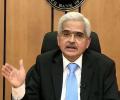
With inflation under control, the Monetary Policy Committee's (MPC's) job is to support growth because the economy had recovered well from the lows in the initial months of the pandemic, according to the panel's members, who met in the first week of this month. The minutes of the meeting show the Reserve Bank of India (RBI) governor in his statement said: "Given the sharp moderation in inflation along with a stable near-term outlook, monetary policy needs to continue with the accommodative stance to ensure that the recovery gains greater traction and becomes broad-based." Ashima Goyal, external member of the MPC, said: "The current macroeconomic configuration and its expected future evolution imply there is space for the MPC to continue to support the revival of the economy with inflation remaining in the target band."

ICICI Bank was the top gainer in the Sensex pack, rising around 4 per cent, followed by UltraTech Cement, Sun Pharma, Bharti Airtel, HUL, SBI, L&T, Axis Bank and IndusInd Bank. On the other hand, Reliance Industries, Bajaj Finserv, HCL Tech and HDFC were among the laggards.

Arguing that the recent elevation in retail inflation is not structural but supply-driven and therefore potentially transitory, a foreign brokerage report has forecast that the benign interest rate regime will continue at least until next June. The assessment comes a day ahead of the third bimonthly monetary policy review on Friday wherein it's widely expected that the monetary authority will leave the key rates unchanged at 4 per cent even though the consumer prices have been on remaining above 6 per cent since May and crude prices have been north of $70 a barrel for months.

The Reserve Bank's rate-setting panel began its three-day deliberations on Monday to decide the next monetary policy amid expectations that the central bank will maintain status quo on the benchmark interest rate in the backdrop of global scare due to the new coronavirus variant Omicron. Reserve Bank Governor Shaktikanta Das headed six-member Monetary Policy Committee (MPC) is scheduled to announce the policy resolution on Wednesday. If the RBI maintains status quo in policy rates on Wednesday, it would be the ninth consecutive time since the rate remains unchanged.
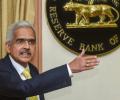
Financial markets are under stress and require steps by the central bank for market stability and revival of economic growth, he said while announcing the decisions taken by the Monetary Policy Committee in Mumbai.
The man widely expected to be India's next central bank chief favours clipping the autocratic power of the role and giving more say to a monetary policy committee.

The Reserve Bank on Friday retained the GDP forecast for the current financial year at 9.5 per cent and flagged global semiconductor shortages, elevated commodity prices and potential global financial market volatility as downside risks to economic growth. In his address after the three-day meeting of the rate-setting panel, RBI Governor Shaktikanta Das said recovery in aggregate demand gathered pace in August-September, and it is reflected in high-frequency indicators, like railway freight traffic; port cargo; cement production; electricity demand; e-way bills; GST and toll collections. "The ebbing of infections, together with improving consumer confidence, has been supporting private consumption," he said, and added the pent-up demand and the festival season should give further fillip to urban demand in the second half of the financial year.

Despite admitting to price pressures both from food items and input prices, RBI Governor Shaktikanta Das on Wednesday hoped that a normal Southwest monsoon will have a "soothing impact" on inflation pressures and ruled out any wide variations in medium-term inflation forecast from what was given in April. In an unscheduled address earlier in the day amidst the raging pandemic, Das said the overall outlook for the economy is highly uncertain and is clouded with downside risks. He offered a slew of relief and liquidity measures to individuals and small businesses apart from a Rs 50,000 crore special liquidity window to the healthcare sector.

The wholesale price-based inflation rose for the second consecutive month in February to 4.17 per cent, as food, fuel and power prices spiked. The WPI inflation was 2.03 per cent in January and 2.26 per cent in February last year. After witnessing months of softening of prices, the food articles in February saw 1.36 per cent inflation. In January it was (-) 2.80 per cent.
Monetary policy committee had recommended no change in the key rate.
 © 2026 Rediff.com - Advertise with us - Disclaimer - Privacy Policy - Sitemap - Feedback - About us - Terms of use - Grievances