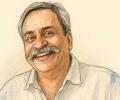
Few people have left the kind of imprint on India's advertising canvas as Piyush Pandey. An observer who seemed to know what made the country tick, a man who could find humour in life's everyday struggles and spin magic from it, one who understood that to reach the masses you needed to communicate with them in their language and context -- he was all of this and more.

'Many were caught in a burnout race, chasing unsustainable growth without innovating.'

Can the launch of smartphones under its own brand name by Finnish company HMD Global - despite having a licence to use the Nokia brand which it bought from Microsoft - help it regain its once dominant position in the mobile phone sweepstakes in India, where it was once routed? In 2009, Nokia was the country's largest MNC with revenues of $4 billion and a market share touching 80 per cent in 2010. After this, its fortunes fell. Although it had been the first global player to set up an assembly plant, not only to assemble phones for the local market but for exports, it had to shut down operations in 2014.

Mobile manufacturer Motorola is planning to introduce around 10-15 new models for the Indian market this year, including `Motorokr' and `MotoQ' for the upper segment of the market.
The company plans to leverage its tie-up with NTT DoComo to offer many value-added services.
The world's second largest mobile phone company, Motorola, is expecting its manufacturing unit in India to commence production by the first quarter of 2007.
Mobile handset manufacturer, Motorola has launched an entry-level phone, Motofone, to tap the rural market in India.
 © 2026 Rediff.com - Investor Information - Advertise with us - Disclaimer - Privacy Policy - Sitemap - Feedback - About us - Terms of use - Grievances