
Japan is expected to increase its investment target in India from the earlier 5 trillion yen ($34 billion) to almost 10 trillion yen.

Nikkei 225 index hit the 40,000 mark for the first time ever on Monday, continuing its bull-run that saw the index reclaim its 1989 peak of 34,000 levels in February. as global investors latched on to Japan's biggest companies on improving shareholder returns, the weaker yen and booming corporate profits. Analysts remain bullish on Japan, mostly aided by gains in technology shares. Adoption of artificial intelligence (AI), according to a note by Morgan Stanley, is likely to benefit Japanese companies, which is almost at par with the US-based companies.

Data with the Department of Industrial Policy and Promotion reveals that between April 2005 and July 2008, Japan Inc pumped in 50 per cent of the total investments inflows between April 2000 and July 2008. In fact, between June and October this year, Japanese companies said they would pump in $8 billion. Experts say this is not a knee-jerk reaction by the Japanese, who are known to be very meticulous with their investments.

India has become the most sought destination for investment by Japanese companies, next to China, and ahead of other Asian countries and emerging economies like Russia, Brazil, Mexico and even the United States and the United Kingdom.
Hopeful that the tax will be implemented by 2014.
Presently, there are only 2000 Indian engineers in Japan and most of them work for onsite jobs of Indian or multinational corporations.

The cruise ship Diamond Princess with 3,711 people on board arrived at the Japanese coast early last week and was quarantined after a passenger who de-boarded last month in Hong Kong was found to be the carrier of the novel virus on the ship.
Cruise ship Diamond Princess, carrying 3,711 people, arrived at the Japanese coast early last week and was quarantined after a passenger who de-boarded last month in Hong Kong was found to be the carrier of the novel virus on the ship. Around 60 people tested positive of the virus on Monday, taking the total number of those infected on the ship to 130.
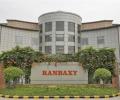
The FDA actions eventually led to a $500-million fine for Ranbaxy as well as the effective mothballing of many of its Indian factories.

For the past few years the top brass at Pearson did pretty well to grapple with the threat of digital disruption.
 © 2026 Rediff.com - Investor Information - Advertise with us - Disclaimer - Privacy Policy - Sitemap - Feedback - About us - Terms of use - Grievances