
MIT, in a release, said the 'work of Duflo and Banerjee has emphasised the use of field experiments in research, to bring the principles of laboratory-style randomised, controlled trials to empirical economics'.

On Monday, the Royal Swedish Academy of Sciences announced that Abhijit Banerjee, Esther Duflo and Michael Kremer had won the 2019 Nobel Prize for economics "for their experimental approach to alleviating global poverty". The research conducted by them has considerably improved the ability to fight global poverty. In just two decades, their new experiment-based approach has transformed development economics, which is now a flourishing field of research, said the Royal Swedish Academy of Sciences. Here are some interesting facts about the Indian-origin Abhijit Banerjee.

A programme that endeavours to graduate the poorest people could have seminal implications for Prime Minister Narendra Modi's government.

Infosys chief mentor N R Narayana Murthy on Friday said rupee appreciation was a macro-economic issue and called upon corporates to become more efficient, productive and reduce costs.

Amartya Sen was the other Presidency alumni to win the Economics Nobel. Banerjee won the 2019 Nobel Economics Prize along with two others - his wife Esther Duflo and Michael Kremer on Monday "for their experimental approach to alleviating global poverty."
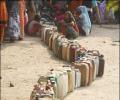
The research found that 50% of the people were receiving either nothing or less cash than they were entitled in lieu of the subsidised grains that were stopped under the pilots starting from September 2015 till May 2016.
 © 2026 Rediff.com - Investor Information - Advertise with us - Disclaimer - Privacy Policy - Sitemap - Feedback - About us - Terms of use - Grievances