
The country's foreign exchange reserves fell by $249 million to $583.697 billion in the week ended February 12, RBI data showed on Friday. In the previous week, the reserves had declined by $6.24 billion to stand at $583.945 billion. It had touched a record high of $590.185 billion in the week ended January 29, 2021.

The country's foreign exchange reserves jumped by a massive $7.779 billion to touch a lifetime high of $568.494 billion in the week ended November 6, RBI data showed on Friday. In the previous week ended October 30, the reserves had increased by $183 million to $560.715 billion. In the reporting week, the jump in reserves was mainly on account of an increase in foreign current assets (FCAs), a major component of the overall reserves.

Gold reserves rose by $320 million to $31 billion.

The International Monetary Fund (IMF) on Tuesday lowered India's economic growth projection for the current fiscal to 5.9 per cent from 6.1 per cent earlier. Yet India will continue to be the fastest-growing economy in the world. In its annual World Economic Outlook, IMF also lowered the forecast for 2024-25 fiscal (April 2024 to March 2025) to 6.3 per cent from the 6.8 per cent it had predicted in January this year. The growth rate of 5.9 per cent in the 2023-24 fiscal compares to an estimated 6.8 per cent in the previous year.

The country's foreign exchange reserves soared by $16.663 billion to touch a lifetime high of $633.56 billion in the week ended August 27, mainly due to an increase in Special Drawing Rights (SDR) holdings, RBI data showed. On Wednesday, RBI had said the International Monetary Fund (IMF) made an allocation of SDR 12.57 billion (equivalent to around $17.86 billion at the latest exchange rate) to India on August 23, 2021. SDR holdings are part of the foreign exchange reserves of a country.

Gold reserves were down by $580 million in the reporting week to $37.440 billion.

The summit is being attended by more than 30 heads of state and top officials from the European Union and invited guest countries and 14 heads of international organisations.

Gold reserves were down by $1.441 billion in the reporting week to $35.999 billion.

The central government is likely to further consolidate its fiscal deficit by 50 basis points (bps) to 5.9 per cent in FY24 from 6.4 per cent in FY23, according to a recent report released by Goldman Sachs on Tuesday. In the current fiscal year, there is going to be an upside of 0.5 per cent on the receipts side due to higher nominal GDP growth, and higher tax buoyancy because of the formalisation, the report said. The upside to expenditure is mainly going to come from incremental subsidies (0.8 per cent of GDP), in both food and fertilizer, it said. The upcoming pre-election Budget will carry forward the trend of the increased capital expenditure seen in recent years.

The country's foreign exchange reserves swelled by USD 3.005 billion to a lifetime high of USD 490.044 billion in the week ending May 22, mainly on account of a rise in foreign currency assets, RBI data showed on Friday. In the previous week, the reserves had increased by USD 1.726 billion to USD 487.04 billion.

India's deployment of a direct cash transfer scheme and other similar social welfare programmes is a "logistical marvel", the International Monetary Fund (IMF) said on Wednesday. "From India, there is a lot to learn. There is a lot to learn from some other examples around the world. "We have examples from pretty much every continent and every level of income. "If I look at the case of India, it is actually quite impressive," Paolo Mauro, deputy director of the Fiscal Affairs Department at the IMF, told reporters at a news conference in Washington.

Pakistan-India bilateral relations remained frozen for the fourth year over the vexed Kashmir issue but analysts hope the strained ties could be repaired if Nawaz Sharif becomes the prime minister for a record fourth time in the general elections in February in the absence of his main challenger Imran Khan who is in jail in multiple cases.

Gold reserves were down by $331 million to $37.264 billion.

Union Minister Nirmala Sitharaman on Thursday said speaking Hindi gives her 'shivers' and she speaks the language with hesitation.

Foreign currency assets, a major component of the overall reserves, fell by $490 million to $441.458 billion in the reporting week.

The country's foreign exchange reserves surged by $5.271 billion to touch a record high of $598.165 billion in the week ended May 28, RBI data showed on Friday. In the previous week ended May 21, 2021, the reserves had increased by $2.865 billion to $592.894 billion. While announcing the second bi-monthly monetary policy review earlier on Friday, RBI Governor Shaktikanta Das said the country's forex reserves may have crossed $600 billion currently.

India's external debt rose by 8.2 per cent year-on-year to $620.7 billion as of March 2022, which according to the finance ministry is sustainable. While 53.2 per cent of it was denominated in the US dollar, Indian rupee-denominated debt, estimated at 31.2 per cent, was the second largest, as per the status report on India's external debt released by the ministry. "India's external debt continues to be sustainable and prudently managed. As of end-March 2022, it stood at $620.7 billion, growing by 8.2 per cent over the level a year ago.

Exports had recovered in November to grow at 0.59 per cent from a 12 per cent contraction in October.

India will grow at around 7.4 per cent in 2022-23 and continue at the same pace in the next year as well, Union Finance Minister Nirmala Sitharaman said on Friday. Sitharaman said there are risks on the external front and this is not the right time to throw caution to the wind, and also assured exporters of all the necessary support from the government as they face the headwinds. Speaking at the FE Best Bank Awards event here, Sitharaman said global agencies like IMF and the World Bank have taken cognisance of the strengths of the Indian economy by saying that it will be among the fastest growing ones in the next two years.
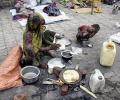
Extreme poverty in India declined by 12.3 percentage points between 2011 and 2019, with rural areas doing better than urban centres, according to a working paper of the World Bank. India has not released a new household consumption survey since the NSS from 2011. By extension, the country has not released any official estimates of poverty and inequality for over a decade now, added the paper co-authored by economists Sutirtha Sinha Roy and Roy van der Weide.

The country's forex reserves inched higher to $292.24 billion as of January 24, from $292.08 billion in the earlier week.

Gold reserves were up by $712 million to $34.729 billion.

Test your knowledge of international finance with our quiz on the renminbi
During the week, gold reserves declined by $443 million to $26.910 billion.

Finance Minister Nirmala Sitharaman will have to do a tight-rope walk between staying fiscally prudent and general public expectations of lower taxes and a wider social security net, while at the same time firing the engines of the economy before general elections. Sitharaman will on Wednesday present her fifth straight Budget at a time when the economy is slowing due to global headwinds and specific sectors need attention. In the run-up to the Budget presentation, expectations are rife that she may tweak income-tax slabs to provide relief to the middle class and increase spending on the poor through programmes such as the rural job scheme while ramping up financial incentives for local manufacturing.

The International Monetary Fund (IMF) has said India and China will account for half of the global economic growth in 2023, as the multilateral agency retained its growth forecast for Asia's third-largest economy for 2023-24 (FY24). "India remains a bright spot. Together with China, it will account for half of global growth this year, versus just a tenth for the US and euro area combined," the IMF said in its latest update to the biannual World Economic Outlook. Growth in India is set to decline from 6.8 per cent in 2022 (FY23) to 6.1 per cent in 2023 (FY24) before picking up to 6.8 per cent in 2024 (FY25), the global lender said while citing "resilient domestic demand despite external headwinds".

The International Monetary Fund (IMF) on Tuesday said it is expecting some slowdown in the Indian economy next fiscal year and projected the growth to 6.1 per cent from 6.8 per cent during the current fiscal ending March 31. The IMF on Tuesday released the January update of its World Economic Outlook, according to which the global growth is projected to fall from an estimated 3.4 per cent in 2022 to 2.9 per cent in 2023, then rise to 3.1 per cent in 2024. "Our growth projections actually for India are unchanged from our October Outlook.

Gold reserves increased $1.54 billion to $32.68 billion in the reporting week.
The United States continues to remain the world's largest economy.
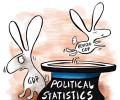
The Economic Survey 2022-23 (FY23), to be presented a day before Union Budget 2023-24 (FY24), is likely to project India's real gross domestic product (GDP) growth between 6 per cent and 7 per cent for FY24, Business Standard has learnt. The broader theme of the Survey could be on how India has dealt with two years of a global pandemic and the ongoing geopolitical disturbance, the strengths and weaknesses that emerged, and what lessons may be learnt. The much-awaited Survey will be the first one by Chief Economic Advisor V Anantha Nageswaran and his team in the finance ministry's economic division.
Gold reserve also declined by $340 million to $30.55 billion.
Prime Minister Manmohan Singh has expressed disappointment at developing countries being ignored in the selection of the president of world's key financial body, the International Monetary Fund (IMF).

They welcomed the guests before the start of the dinner from the reception dais, with its backdrop showcasing the ruins of the Nalanda University in Bihar besides India's G20 presidency theme -- 'Vasudhaiva Kutumbakam - One Earth, One Family, One Future'.
China's banks and financial sector are healthy, but there are vulnerabilities that should be addressed by the authorities.
The International Monetary Fund (IMF) on Tuesday cut its projection of India's economic growth in 2022 to 6.8 per cent, as it joins other global agencies that have trimmed forecasts. The IMF had in July projected a gross domestic product (GDP) growth of 7.4 per cent for India in the fiscal year that started in April 2022. Even that forecast was lower than 8.2 per cent projected in January this year. India had grown at 8.7 per cent in 2021-22 fiscal (April 2021 to March 2022).
India lags behind 132 countries in per capita income.

A high-tech Chinese research ship docked at the strategically important Hambantota port departed from Sri Lankan waters on Monday after a controversial six-day visit.
A rapidly deteriorating balance of payments may warrant that but the political climate is too risky

"The BRICS are open to consider, if necessary, providing support through the IMF or other international financial institutions in order to address the present challenges to global financial stability, depending on individual country circumstances," said a joint communiqu issued by the BRICS finance ministers after their meeting.
European Union leaders are expected to clear the way for releasing 31.5 billion euro ($41 billion) in urgently-needed financial assistance for debt-stricken Greece at their two-day summit which opens in Brussels today.
 © 2026 Rediff.com - Advertise with us - Disclaimer - Privacy Policy - Sitemap - Feedback - About us - Terms of use - Grievances