
Among 30 Sensex firms, UltraTech Cement, Tech Mahindra, HCL Tech, Tata Consultancy Services, Eternal, Asian Paints, Tata Steel and Kotak Mahindra Bank were among the biggest gainers. Tata Motors, Adani Ports and Sun Pharma were the laggards.

'From tariff tensions and border skirmishes to unrest in West Asia.' 'The worst may be behind us. But any further upmove will now have to come from earnings.'

India's top IT services firms delivered single-digit revenue growth in April-June, capping off a mixed, somewhat-sobering quarter as macroeconomic instability and geopolitical tensions weighed on global tech demand and delayed client decisionmaking. Management commentary painted a mixed picture, caution prevailed, yet industry CEOs also emphasised cost optimisation, vendor consolidation, and opportunities in AI makeovers.

From the Sensex firms, Hindustan Unilever, Kotak Mahindra Bank, Trent, Reliance Industries, Asian Paints and ITC were among the gainers. However, Bharat Electronics Ltd, Tech Mahindra, UltraTech Cement, Maruti and Eternal were among the laggards.

'As long as Sebi maintains transparency and market stability, the Jane Street episode is unlikely to deter long-term foreign capital.'

Stock investors will track the ongoing conflict between Iran and Israel, Brent crude oil prices, inflation data and the US Fed interest rate decision for further cues this week, analysts said. Tariff-related news would also dictate trends in the equity market, experts noted.

Promoters of India's top private listed companies have cut their stakes sharply since 2021, taking advantage of elevated valuations and reshaping ownership dynamics in the market. Holdings of promoters in the top 200 privately owned listed firms declined nearly 600 basis points (bps) to 37 per cent at the end of FY25, from 43 per cent in FY21.

'Even if India is attractive, FPIs currently lack the funds to invest, as money is being redirected to the US.'

Revenues from Bangladeshi patients have declined by 30% to 35% in 2024-2025. Bangladesh typically accounts for 70% to 75% of all medical visas issued by India.

Firmly committed to prioritise national interest over all other considerations: JioStar

Pharma major Dr Reddy's Laboratories delivered a muted operational performance in the fourth quarter of financial year 2024-25 (Q4FY25), even as revenue growth remained healthy. Lower gross margin performance and muted domestic growth are key concerns. Most brokerages have a "Sell" or "Reduce" rating as there are uncertainties related to the development of a new product portfolio and the launch timelines.

Banks have outperformed the broader market in the past six months and most of the leading lenders have given positive returns to investors compared to a negative return delivered by benchmark indices.

The Reserve Bank of India (RBI) has started winding down its short position in the dollar forward book, after a gap of seven months, on the back of a softening dollar, while infusing funds via open market operations (OMOs) to counter the resulting liquidity drain.

US strikes on Iran's three main nuclear facilities have once again raised concerns that Tehran might shut down the Strait of Hormuz - one of the world's most critical chokepoints, through which a fifth of global oil and gas supply flows.

Brokerages expect a further slowdown in Indian firms' revenue and earnings growth in Q4FY25, following low single-digit growth in the preceding three quarters, as factors like weak consumer demand and credit growth linger on.

Macrotech Developers (Lodha), the country's second-largest listed real estate company, exceeded its 2024-25 (FY25) guidance, aided by a strong pre-sales performance in the January-March quarter (Q4), driven by launches. The company had guided for Rs 17,500 crore in pre-sales for FY25 and surpassed that with bookings of Rs 17,630 crore.
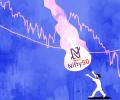
The changes will take effect on March 28, with portfolio adjustments expected before the market closes on March 27.
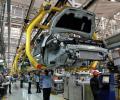
Auto parts exports from India may see a slight slowdown as US President Donald Trump's 25 per cent tariff could increase car prices for buyers by 8-25 per cent, thereby affecting demand, experts believe.
There remains a debate on who said this: "When the facts change, I change my mind. What do you do, Sir?" Was it the British economist John Maynard Keynes or the American economist Paul Samuelson. Irrespective of who said it, this sentiment appears to have found resonance in ITC's boardroom in recent years.

Dr Reddy's Laboratories (DRL) share price plunged 6.66 per cent to Rs 1,203.50 per share on the NSE during Friday after analysts remained cautious on the company's Q3 performance and differed on its growth outlook. DRL's Q3 performance was viewed as subdued by some analysts when they adjusted it for one-time grants and incomes that the company received during the quarter.
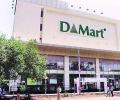
Brokerages on DMart Q3 results: Avenue Supermarts (DMart) shares slipped as much as 5.74 per cent to hit an intraday low of Rs 3,474 per share on Monday. However, the stock recovered slightly to close at Rs 3,507.95, down 4.82 per cent. Notably, the 52-week low for DMart shares is Rs 3,400. The downward movement in DMart's share price was triggered by the company's 2024-25 (FY25) October-December quarter (Q3) results, which missed Street expectations.
Analysts have largely maintained their positive outlook on HDFC Bank, as the private lender reported in-line results for the October-December quarter (Q3) of the current financial year (2024-25/FY25). They believe the results were 'strong' given the tough macro environment, and relative to peers.

In January, SIP account closures surpassed new registrations for the first time.

The recent selloff in the Indian equity market has been far more painful for mid and smallcap stocks compared to largecap stocks. The benchmark BSE Sensex is now down 9.5 per cent from its record monthly closing of 84,300 at the end of September last year. In the same period, the BSE MidCap has lost 17 per cent of its value, while the BSE SmallCap has corrected by 17.1 per cent.

Lock up on shares worth nearly Rs 1.2 trillion ($14 billion) belonging to 50 companies will end between now and January 31, said Nuvama Institutional Equities in a note. Most of the shares are held by promoters, strategic investors or pre-listing shareholders in companies that have gone public in recent weeks or months.
Reliance Industries Ltd, India's most valuable company, is back on a growth path after six months of challenges as it posted better than expected earnings in the December quarter, brokerages said.

India's healthcare and pharmaceutical sectors raised Rs 14,811 crore through initial public offerings (IPOs) in 2024, the largest since 2019, driven by strong domestic demand amid expanding global opportunities. According to data, key contributors to the record fundraising included Sai Life Sciences (Rs 3,043 crore), IKS Health (Rs 2,498 crore), and Sagility India (Rs 2,107 crore).
Defying the bearish sentiment in the markets on Monday, ICICI Bank's share price rose by 2 per cent, reaching an intraday high of Rs 1,234.4 per share on the BSE. With a 1.5 per cent gain at the close, the stock emerged as the top performer on both the BSE Sensex and the National Stock Exchange Nifty 50 indices.

Overall, volume growth is likely to be in the range of 3-8 per cent for two-wheelers and 5-7 per cent for passenger vehicles owing to healthy demand from urban and rural areas and pending order books.

Stock market investors became richer by a whopping Rs 77.66 lakh crore in 2024, helped by an overall optimistic trend in equities, where the BSE Sensex surged over 8 per cent. Analysts said the year witnessed a tug of war between the bulls and bears marked by volatility but, despite the uncertainties around the world, the Indian markets sustained the pressure and delivered impressive returns.
IndiGo share price today: IndiGo share price fell as much as 4.8 per cent to a low of Rs 4,275 per share on the BSE in Monday's intraday trade as investors booked profit in the stock post a its April-June quarter (Q1) results for financial year 2024-25 (FY25). The stock ended 1.36 per cent lower at Rs 4,430 as against a 23-points gain in the benchmark BSE Sensex. The selling also got exacerbated as the management commentary, post Q1FY25 results, highlighted that inflationary pressure could likely dent July-September (Q2FY25) performance.

India's most valued company, Reliance Industries Ltd (RIL), reported a robust performance in the third quarter of the current financial year (Q3FY25), surpassing analyst expectations. This coupled with positive commentary by brokerages led to the stock of the oil-to-telecom conglomerate surging as much as 4.44 per cent to hit an intraday high of Rs 1,325.1. It settled at Rs 1,301.3 apiece, up 2.57 per cent.

The ratio of market capitalisation to gross domestic product (GDP) in India remains elevated despite the recent correction in the equities markets. It was 147.5 per cent on December 3, 56 per cent higher than the 10-year average of 94 per cent. The current ratio is slightly lower than the all-time high ratio of 154 per cent at the end of September this year.
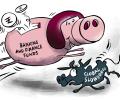
Companies in the banking, finance sector and insurance (BFSI) sector have underperformed on the bourses despite leading the earnings growth charts in the post-pandemic period. This has created a dichotomy between their earnings and share prices. BFSI companies have never been less expensive than the rest of the equity market.

A robust margin performance in the September quarter (Q2FY25) led to a 12 per cent rise in the stock of defence major Bharat Electronics (BEL). While the stock has given up most of those gains in the recent market correction, analysts are positive on the company due to its strong order book, new order inflows, and margin trajectory. The near-term trigger has been the operating performance in Q2FY25.

Global firm Accenture's fourth quarter results prove that the worst is behind for the Indian information technology (IT) sector, said analysts on Friday (September 27). While the pace and the broadness of recovery is debatable, they said Accenture's results and revenue growth guidance for the next financial year (FY25) reduce downside risks for Indian IT companies.

The paint sector is seeing heightened competition with the entry of deep-pocketed groups like Aditya Birla and JSW. However, some brokerages see an opportunity in select stocks.

The June quarter is usually considered as a seasonally strong period for the IT sector.

A sharp rise can be attributed to the significant changes in India's share buyback tax regime, which will come into effect from October 1, 2024.

Domestic institutional investors (DIIs) have infused a record Rs 4.6 trillion into Indian equities over the course of Samvat 2080, marking the highest net annual investment in any Samvat to date. This robust domestic inflow has effectively counterbalanced the comparatively subdued investments from foreign portfolio investors (FPIs), who contributed a net Rs 90,956 crore within the same timeframe. Against this backdrop, the Nifty 50 and BSE Sensex indices are on track to achieve their best performance in three Samvat years, despite recent market corrections.
 © 2026 Rediff.com - Advertise with us - Disclaimer - Privacy Policy - Sitemap - Feedback - About us - Terms of use - Grievances