
But three years after the apex court settled the Ram Janmabhoomi-Babri Masjid land dispute, there are no signs of any building activity on the proposed mosque site.
"The design of the mosque has been prepared using modern technology, and it will be egg-shaped without any dome. The two-storeyed mosque will not have any minaret. Solar power will be installed in the mosque, and around 2,000 people will be able to offer 'namaaz' at the same time," he said.

The plea, filed by advocates Shishir Chaturvedi and Karunesh Kumar Shukla, said that apart from private individuals and members of state Sunni Board, the presence of central and state government representatives was essential to ensure proper management of the funds.
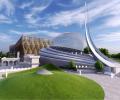
The Indo Islamic Cultural Foundation, which has been set up for the construction of the mosque, will build a mosque along with a hospital, library, community kitchen and research institute, on the land.
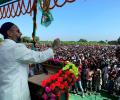
With the Uttar Pradesh Assembly elections drawing close, AIMIM president Asaduddin Owaisi will begin a three-day visit to Uttar Pradesh from Ayodhya starting September 7, his party said on Friday.
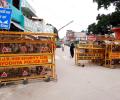
Unlike in the past, the Vishwa Hindu Parishad is not celebrating any "Shaurya Diwas" (Bravery Day) on Tuesday and there are no plans by the Muslim community to observe a "Black Day".
The Allahabad high court on Monday dismissed a petition filed against the allotment of land in Ayodhya's Dhannipur village for the construction of a mosque, following the Supreme Court verdict in the Ram Janmabhoomi-Babri Masjid dispute.

The state government has allotted the five-acre plot in Ayodhya's Dhannipur for the construction of the mosque on the directive of the apex court.
During the freedom struggle, Shah had launched revolts in the Awadh region. He made the local mosque, Masjid Sarai, located in Chowk area of Faizabad his headquarters. As he liberated Faizabad and larger part of Awadh region, he used the premises of this mosque to hold meetings with rebel leaders.

The Places of Worship (Special Provisions) Act, 1991 provides for maintaining the 'religious character' of holy structures as it existed on August 15, 1947.
The mosque is coming up in the Uttar Pradesh district pursuant to the Supreme Court verdict in the Ram Janmabhoomi case.

Ayodhya Nagar Nigam corporator Haji Asad hoped that Kashi and Mathura issues will not be raked up after the CBI court ruling.

"The Trust chose January 26, 2021 for laying the foundation stone of the Ayodhya mosque as on this day our Constitution came into effect over seven decades ago. Our Constitution is based on pluralism, which is the leitmotif of our mosque project," said Athar Hussain, secretary of the Indo-Islamic Cultural Foundation (IICF).
'The idea is to have a place where people can come together and bridge the gap. It will be a contemporary design for the future, and not have the shadows of the past' Ritwik Sharma reports.
AIMPLB member Zafaryab Jilani on Wednesday said the proposed mosque in Ayodhya following last year's Supreme Court verdict is against the Waqf Act and 'illegal' under the Shariat laws.

From the kind of food to the art which will be displayed at the museum, historian Pushpesh Pant shares his vision.
 © 2026 Rediff.com - Investor Information - Advertise with us - Disclaimer - Privacy Policy - Sitemap - Feedback - About us - Terms of use - Grievances