
The output of eight key infrastructure sectors slowed down to a five-month low of 2.9 per cent in February, as against 7.1 per cent growth registered a year ago, according to official data released on Friday. On a monthly basis, the production growth of the core sectors was lower than the 5.1 per cent expansion recorded in January.

Retail inflation eased to a nearly six-year low of 3.16 per cent in April mainly due to subdued prices of vegetables, fruits, pulses, and other protein-rich items, creating enough room for the Reserve Bank to go for another round of rate cut in the June monetary policy review. The Consumer Price Index (CPI) based inflation was 3.34 per cent in March and 4.83 per cent in April 2024. It was 3.15 per cent in July 2019.
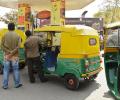
The government has slashed by up to a fifth the supplies of cheaper gas to city gas entities that retail CNG to automobiles, increasing their dependence in costly imported fuel. Buying costly imported gas to make up for the shortfall should result in a hike in CNG price but given the ensuing assembly elections in Maharashtra, that may be put off for now. Indraprastha Gas Ltd and Mahanagar Gas Ltd in regulatory filings stated that supplies of domestically produced gas, which was available at a capped rate which is half of the imported price, has been cut.

Indian airline industry is expecting to prune its net losses to Rs 3,000-5,000 crore in this fiscal from an estimated Rs 17,000-17,500 crore in FY2023 on the back of improved yields and stable cost environment, credit ratings agency ICRA said on Tuesday. At the same time, ICRA also estimated that domestic air passenger traffic will expand by 8-13 per cent each in FY2024 and FY2025. The rating agency has also maintained its stable outlook on the industry in view of healthy passenger traffic growth, improved yields and a stable cost environment.
The surprise decision of OPEC and its allies, including Russia, to cut oil output may cause an immediate rise in prices, delaying revision in fuel prices in India, industry sources said. The grouping of Organisation of Petroleum Exporting Countries (OPEC) and its allies, called OPEC+, on Sunday decided to further cut oil output by around 1.16 million barrels. The move led to Brent rising by almost 6 per cent to $84.58 per barrel on Monday.
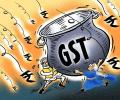
GST collection grew by 12 per cent in April to Rs 1.87 lakh crore, the highest monthly mop-up since the rollout of the indirect tax regime. The gross GST revenue collected in the month of April 2023 is Rs 1,87,035 crore of which CGST is Rs 38,440 crore, SGST is Rs 47,412 crore, IGST is Rs 89,158 crore (including Rs 34,972 crore collected on import of goods) and cess is Rs 12,025 crore, the finance ministry said in a statement. The previous high collection of Rs 1.68 lakh crore was in April last year.
The Reserve Bank is likely to maintain status quo on interest rates in its forthcoming monetary policy review but may change the stance in view of retail inflation piercing its upper tolerance limit, global uncertainties created by the ongoing Russia-Ukraine war, and the urgency to protect and boost growth, feel experts. The RBI governor-headed rate setting panel -- Monetary Policy Committee (MPC) -- will be holding its first meeting of the 2022-23 fiscal from April 6 to 8. The outcome will be announced on April 8.

The Union government's fiscal deficit works out to be Rs 5.47 lakh crore or 36.3 per cent of the budget estimates at the end of October 2021 on the back of improvement in revenue collection, according to the data released by the Controller General of Accounts (CGA) on Tuesday. The deficit figures in the current fiscal appear better than the previous financial year when the gap between expenditure and revenue had soared to 119.7 per cent of the last year's Budget Estimates (BE) mainly on account of a jump in expenditure to deal with the COVID-19 pandemic. In absolute terms, the fiscal deficit was Rs 5,47,026 crore at the end of October, the CGA said.

Retail inflation slowed to 4.29 per cent in April from 5.52 per cent in March, mainly due to easing food prices, government data showed on Wednesday. The Reserve Bank mainly factors in the retail inflation based on Consumer Price Index (CPI) while arriving at its monetary policy. As per the data released by Ministry of Statistics and Programme Implementation, inflation in the food basket was 2.02 per cent in April, down from 4.87 per cent in the preceding month.

Retail inflation remained above the RBI's comfort level for the second consecutive month despite slipping slightly to 6.26 per cent in June while the factory output recorded a growth of 29.3 per cent in May, mainly on account of the base effect, the government data showed. The marginal slippage in the Consumer Price Index (CPI)-based inflation was noticed despite little firmness witnessed in the food inflation which inched up to 5.15 per cent in June from 5.01 per cent a month ago. Retail inflation based on Consumer Price Index (CPI) was 6.3 per cent in May 2021 and 6.23 per cent in June 2020.
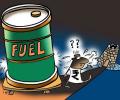
The wholesale price-based inflation accelerated to a record high of 12.94 per cent in May, on rising prices of crude oil and manufactured goods. Low base effect also contributed to the spike in WPI inflation in May 2021. In May 2020, WPI inflation was at (-) 3.37 per cent. This is the fifth straight month of uptick seen in the wholesale price index (WPI)-based inflation. In April, 2021, WPI inflation hit double digit at 10.49 per cent. "The annual rate of inflation, based on monthly WPI, was 12.94 per cent for the month of May, 2021 (over May, 2020) as compared to (-) 3.37 per cent in May 2020.

To help revive the economy battered by COVID-19, Finance Minister Nirmala Sitharaman on Monday announced a slew of measures, including Rs 1.1 lakh crore credit guarantee scheme for improving health infrastructure, and enhancing the limit under the ECLGS by 50 per cent to Rs 4.5 lakh crore for the MSME sector facing liquidity crunch. Sharing the details of stimulus package, the finance minister said this comprises eight relief measures and other eight measures to support the economic growth. She announced Rs 1.1 lakh crore loan guarantee scheme for COVID-affected sectors, including health sector, which includes guarantee cover for expansion or for new projects. Besides, she said, additional Rs 1.5 lakh crore limit enhancement done for Emergency Credit Line Guarantee Scheme (ECLGS) scheme.

India's factory output climbed 22.4 per cent in March, benefiting from the base effect of the lockdown-marred month a year back as well as a turnaround in the manufacturing sector, while retail inflation slipped to a three-month low of 4.29 per cent in April. The high positive annual growth in the index of industrial production (IIP) in March 2021 came on back of a contraction of (-)0.9 per cent and (-)3.4 per cent in January and February 2021 respectively, according to the data released by the National Statistical Office (NSO) on Wednesday. This turnaround was led by recovery in the mining, manufacturing and electricity sectors.

Declining vegetable prices brought down the retail inflation to a 15-month low of 4.59 per cent in December and within the comfort zone of the Reserve Bank, government data showed on Tuesday. It is for the first time during the current fiscal that the Consumer Price Index (CPI) based inflation print is below 6 per cent or in the RBI's target range of 2 to 6 per cent. The central bank factors in the CPI-based inflation while arriving at its monetary policy. The inflation in December 2020 came down from 6.93 per cent in November, mainly on account of 10.41 per cent decline in vegetable prices over the year-ago period.
 © 2026 Rediff.com - Investor Information - Advertise with us - Disclaimer - Privacy Policy - Sitemap - Feedback - About us - Terms of use - Grievances