
The US is in desperate need to conjure up an ideology-driven relationship with India, to enable it to boost its arms exports to the Indian market, says M K Bhadrakumar.
The government has used four methods to value the assets that it is looking to monetise under its Rs 6-trillion National Monetisation Pipeline (NMP). The value of the assets on the block is indicative that the government is expected to realise either in the form of upfront accruals or by the way of private sector investment, NITI Aayog said in its report. Valuations are essentially estimates, so multiple methodologies are useful to get a range, said Manish Agarwal, infrastructure expert and co-founder of AskHowIndia.org. Different valuation methodologies depend on the different assumptions that are being considered for valuing a business, he said.
In a rare gesture, the government on Tuesday announced a special pay and other facilities for two surviving marshals of the country's armed forces as a 'mark of the country's deepest gratitude.'

Italian marines Massimiliano Lattore and Salvatore Girone have got a deal similar to that of the gangster Abu Salem, which ensures that they won't get the death penalty. Sheela Bhatt reports on how a diplomatic stand-off was averted.

The government is planning to comprehensively revise tax treaties with as many as 25 nations, including Switzerland and Mauritius, and re-negotiate with 51 others, to trace black money.

'As Indians, we should be claiming and celebrating 'Bhartiyata' rather than seeking commitment to beliefs which are divisive and exclusionary.'
Since some multi-purpose projects and shipyards could be on the terrorist hit list, the southern states have been asked to procure speed boats and other paraphernalia needed to boost security.
If Indian companies do not understand the roots of India's culture and genius, they will not succeed
"The good thing here is, unlike the real world, you don't have to suffer the nations if you don't agree with their ideologies. You can just finish them."
"The approach is not to solve the problem using force but by providing means to reduce unemployment and improve economy," he said.
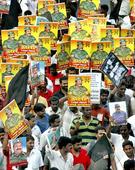
Publicly, India maintained it would not give Sri Lanka any offensive weapons. The Congress party obviously did not want the shadow of Sri Lanka's ethnic conflict to fall on the politics of Tamil Nadu and needlessly complicate matters during the election campaign. A fascinating exclusive excerpt from Nitin Gokhale's new book, Sri Lanka: From War to Peace.
 © 2026 Rediff.com - Advertise with us - Disclaimer - Privacy Policy - Sitemap - Feedback - About us - Terms of use - Grievances