
Private sector lender HDFC Bank on Thursday said the Reserve Bank of India (RBI) has asked it temporarily stop all launches of its upcoming digital business-generating activities and sourcing of new credit card customers after outage at its data centre which impacted operations last month.

The July-September quarter (Q2) results for 2024-25 (FY25) from the largest listed consumer electrical solutions companies, Havells India and Polycab India, followed similar trends, demonstrating robust revenue growth while falling short of profitability expectations. Both companies witnessed overall growth in the 16-30 per cent range, but margins declined by 130-290 basis points (bps) year-on-year (Y-o-Y). Although brokerages are bullish on long-term prospects and have raised revenue projections, earnings forecasts have been revised downward due to margin pressures.

Market benchmark Sensex tumbled over 323 points after an intense last-hour sell-off on Wednesday, triggered by losses mainly in index heavyweights Infosys, Reliance and HDFC.
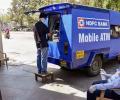
With slippages increasing every quarter, any derailment on growth or change in customers' repayment behaviour after moratorium may impact the overall asset quality. Correction, though, presents attractive buying opportunities, given the bank's sustained leadership position.

On a five-day rolling basis, FPI selling is the highest in 24 years.

If the index is unable to sustain above 24,500 levels, technically it can then slip to its 200-DMA placed at 23,365 levels.

The outcome of the Union Budget, quarterly earnings from corporates and global trends are the major factors to drive stock market sentiments this week, analysts said. Besides, the trading activity of foreign investors, the rupee-dollar trend and the movement of global oil benchmark Brent crude are also crucial aspects to watch out for.

While Paytm (One97 Communications) is not completely past regulatory hurdles, its share price has gained in the last month or two. The Paytm handle migration is complete along with FDI clearance necessary for the Payment Aggregator (PA) license. UPI consumer data indicates stable market share, and expansion in partner networks in financial distribution. All this implies Paytm could be set to meet guidance of turning Adjusted Ebitda breakeven by Q4FY25 (ex of UPI-incentives).

India's second-largest passenger vehicles firm will be valued at Rs 1.59 trillion at the top-end of the price band of Rs 1,865-Rs 1,960.

Imagine transforming a modest Rs 10,000 monthly investment into a steady Rs 1 lakh monthly income in your retirement years. This is the power of compounding -- a strategy that rewards you for starting early and staying consistent with your investments, says Ramalingam Kalirajan.

From the Sensex basket, PowerGrid, Bharti Airtel, Wipro, HDFC Bank, Kotak Mahindra Bank, UltraTech Cement, Asian Paints, Infosys and Reliance Industries were the major laggards. Bajaj Finance, NTPC, Larsen & Toubro, Axis Bank, Tata Motors, IndusInd Bank and Bajaj Finserv were among the gainers.

A day after the Reserve Bank of India (RBI) lifted its ban on HDFC Bank on issuing new credit cards, the country's largest private sector lender on Wednesday said it had resources and plans in place to "further reinforce pole position in the credit card segment" and that it would "come back with a bang". "We will aggressively go to the market, with not just our existing suite of credit cards but also new offerings in the form of co-brands and partnerships," Sashidhar Jagdishan, managing director and chief executive officer of HDFC Bank, said in a letter to his employees. The bank's management had earlier indicated that the lender had been sourcing liability customers aggressively over the past few months.

Tata Consultancy Services (TCS) is India's most-valuable brand in 2022 replacing HDFC Bank, which held the number one spot since 2014, according to Kantar BrandZ report on India's most-valuable brands. TCS was able to grab the top slot due to rising global demand for automation and digital transformation, following the pandemic. Indian brands have bounced back from the pandemic to increase their brand value by 35 per cent compound annual growth rate (CAGR) since 2020.
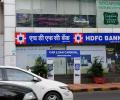
HDFC Bank on Thursday said network outages that led to a regulatory ban on new credit card sales were not due to transaction volumes, and affirmed that it continues to stay in touch with the RBI for restarting the services but giving a timeline for it will be difficult. The bank said it is on its way to creating a new technology architecture for the future as part of the "digital factory" and "enterprise factory" initiative. But, it conceded that outages will continue under the older system though it will be working to minimise the time taken to bring the service back. In December 2020, the RBI took the unprecedented step of stopping the largest private sector lender from selling any new credit cards and also launching new digital services, because of a series of network outages.
If the entire amount of Rs 24,000 crore is raised, then it would be the biggest fundraising exercise by any Indian company ever.

Among the Sensex pack, Kotak Mahindra Bank, Bharti Airtel, IndusInd Bank, Tata Motors, ICICI Bank, Bajaj Finance, State Bank of India and Titan were the biggest laggards. Larsen & Toubro, Infosys, HDFC Bank, Tata Consultancy Services, HCL Technologies and Tata Steel were the biggest gainers.
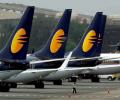
Lenders of bankrupt airline Jet Airways, led by the State Bank of India (SBI), on Thursday told the Supreme Court that successful bidder Jalan Kalrock Consortium (JKC) was "unwilling" to pay the dues and that the "liquidation" was the only option left. The bench led by Chief Justice of India (CJI) DY Chandrachud was hearing the SBI-led consortium plea against the NCLAT's March order upholding ownership transfer of the bankrupt airline to JKC.

The rupee has depreciated by 0.6 per cent so far in the current financial year.

Among the Sensex pack, HCL Technologies, ICICI Bank, Tata Motors, Sun Pharmaceuticals, Tata Consultancy Services, Infosys, Kotak Mahindra Bank and Mahindra and Mahindra were the gainers. In contrast, HDFC Bank, Bajaj Finance, Larsen & Toubro, Tech Mahindra, UltraTech Cement and IndusInd Bank were among the laggards.

From the Sensex pack, Larsen & Toubro, Bajaj Finserv, Mahindra & Mahindra, UltraTech Cement, State Bank of India, IndusInd Bank, Reliance Industries and Sun Pharma were among the biggest gainers. Bharti Airtel, Titan, ITC, Kotak Mahindra Bank, Tech Mahindra and HDFC Bank were among the laggards.

'Credit card debt comes with high interest cost and stringent penalties.' 'If you do not repay on time, the costs balloon.'

'A credit line on UPI is going to make banks think about credit fundamentally as they digitise the credit process entirely.'

Bajaj Finance was the top loser in the Sensex pack, shedding around 3 per cent, followed by Bajaj Finserv, Reliance Industries, M&M, Nestle India and SBI. On the other hand, Axis Bank, Tech Mahindra, PowerGrid and Maruti were among the gainers.

The index is currently trading at 149 per cent of its historical P/B valuation, surpassing its previous peak of 125 per cent made in 2020-21.

Among the 30-share Sensex pack, State Bank of India, Reliance Industries, Hindustan Unilever, NTPC, Larsen & Toubro, Nestle India, Power Grid, ITC, JSW Steel and Sun Pharmaceuticals were the major gainers. On the other hand, HDFC Bank, Titan, Mahindra & Mahindra, IndusInd Bank, UltraTech Cement, Tata Motors, HCL Technologies and Asian Paints were among the laggards.

Dr Nagesh Kumar, one of the three new MPC members, wanted the MPC to reduce the repo rate by 25 basis points to 6.25%.

The three day MPC meeting began on Monday and the decision will be announced on Wednesday by RBI Governor Shaktikanta Das.

Among the 30 Sensex firms, Asian Paints, Infosys, JSW Steel, UltraTech Cement, Power Grid, Larsen & Toubro, HCL Technologies and Tata Steel were the biggest laggards. Tata Motors, HDFC Bank, Bharti Airtel, ITC, IndusInd Bank and Axis Bank were the gainers.

'We have filed a complaint with the police authorities.'
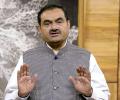
Adani group is on track to surpass a combined Ebitda (earnings before interest, taxes, depreciation, and amortisation) of Rs 1 trillion in the ongoing financial year (FY25) as it prepares for a $2 billion (over Rs 16,700 crore) share sale by its flagship entity Adani Enterprises next month, according to a source close to the matter.
Movement in the stock market this week will largely be driven by global trends, macroeconomic data announcements and trading activity of foreign investors, analysts said. Equity benchmark indices, which are on a dream run for the past several days, will also track trading in global oil benchmark Brent crude and movement of rupee against the US dollar. "The next FOMC (Federal Open Market Committee) meeting is scheduled for mid-September, but before that, the market will be closely watching upcoming US economic data.
A media report in the run up to the board meet had mentioned the names of Sashidhar Jagdishan, Kaizad Bharucha and Sunil Garg as the ones who had made the cut. Jagdishan and Bharucha are internal candidates, while Garg is working with American banking major Citigroup.
Benchmark equity indices Sensex and Nifty slumped over 1 per cent on Friday, tracking a weak trend in global markets and fresh foreign fund outflows. Falling for the third day running, the 30-share BSE Sensex tumbled 1,017.23 points or 1.24 per cent to settle at 81,183.93.

From the 30 Sensex pack, State Bank of India, Mahindra & Mahindra, Bharti Airtel, Titan, HDFC Bank, IndusInd Bank, Axis Bank and Bajaj Finance were the biggest laggards. JSW Steel, Tech Mahindra, Larsen & Toubro, Hindustan Unilever, HCL Technologies and Reliance Industries were among the gainers from the pack.

The US Fed interest rate decision, ongoing quarterly earnings, macroeconomic data and FII trading activity are the major triggers that will drive stock markets this week, analysts said. Investors would also track global market trends and the movement in global oil prices for further cues. "This week, the focus will shift to global cues, particularly the US markets," Santosh Meena, Head of Research, Swastika Investmart Ltd said.

Unperturbed by election uncertainty, investors poured record sums into equity mutual fund (MF) schemes in May, driving India closer to a $5 trillion market capitalisation. The Rs 34,697 crore net inflows into actively managed equity funds last month surpassed the previous high of Rs 28,463 crore recorded in March 2022. In April 2024, equity schemes had garnered nearly Rs 19,000 crore.

Among the Sensex pack, HDFC Bank, ICICI Bank, Kotak Mahindra Bank, Bajaj Finance, IndusInd Bank, Bharti Airtel and Nestle were the biggest gainers. Tata Consultancy Services, Sun Pharma, Infosys and Tata Motors were among the laggards.

Customers frequently sign without reading the terms and conditions, resulting in a poor understanding of coverage, and eventually leading to partial payouts
People's Bank of China's holding in HDFC stood at 1,74,92,909 equity shares, accounting for 1.01 per cent of the share capital of the company as of March-end, as per exchange data.
Housing finance major HDFC on Monday reported a 16 per cent growth in standalone net profit to Rs 3,700 crore for the January-March quarter, helped by record loan sales on the back of benign interest rates and the resultant fall in cost of funds along with the near-total repayments that culled provisions and credit costs. For the full year, the company, which is working on a reverse merger with its banking subsidiary, has booked a net profit of Rs 13,742 crore, up from Rs 12,027 crore in FY21, vice-chairman and chief executive Keki Mistry said on Monday in an earnings call with analysts. On a consolidated basis, net profit for the quarter surged 21.6 per cent to Rs 6,892 crore on-year and for the full year it jumped 21 per cent to Rs 22,595 crore, Mistry said and guided towards better days.
