
ICICI Prudential Asset Management Company has set a price band of Rs 2,061- Rs 2,165 per share for its Rs 10,600-crore initial public offering (IPO) that will open on Friday. At the upper end of the band, the country's largest asset manager will command a valuation of Rs 1.07 trillion.

The Reserve Bank of India (RBI) on Friday allowed multiple entities in a bank group to undertake the same business as long as they cater to different client segments, while mandating board approval to ensure that any overlap in business has proper rationale and justification.

The primary market is set for a busy week as two major companies, Tata Capital Ltd and LG Electronics India Ltd, gear up to launch their initial public offerings (IPOs), collectively worth more than Rs 27,000 crore.

Non-banking financial company (NBFC) Tata Capital is set to launch its much-anticipated $2 billion (Rs 17,200 crore) initial public offering (IPO) in the week beginning September 22, market sources familiar with the matter said on Sunday. The issue is expected to value the company around $11 billion, they added. Tata Capital is likely to make its stock market debut by September 30.
Market watchers link the pullback to underwhelming listing-day performance and the lack of big-name IPOs.

The more things change, the more they remain the same for corporate India. In the April-June 2025 period (Q1FY26) - for the ninth consecutive quarter - listed companies witnessed only single-digit revenue growth, while their core earnings, excluding other income and one-time gains, contracted for the second time in four quarters. This comes as firms brace for the impact of 50 per cent US tariff on Indian goods.

Over 60 companies are ready to launch IPOs in the coming months.
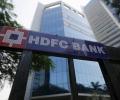
The country's largest private sector lender HDFC Bank on Saturday said it will grow its loan book slower than the industry in the current financial year (FY25). The move comes as the lender looks to bring down its elevated credit - deposit (CD) ratio to pre-merger levels. "We will bring down the CD ratio faster than what we had anticipated.
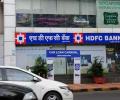
HDFC Bank on Wednesday reported a 2.3 per cent year-on-year rise in its consolidated net profit to Rs 17,657 crore for the October-December quarter, restricted by slower loan growth. On a standalone basis, the largest private sector lender's net profit came at Rs 16,735.50 crore for the period, up from Rs 16,372.54 crore in the year-ago period, but marginally down from the preceding quarter's Rs 16,820.97 crore.
The country's largest private lender HDFC Bank on Saturday reported a 6.51 per cent decline in its consolidated net profit to Rs 16,474.85 crore in the April-June quarter compared to the previous January-March quarter. The city-headquartered lender, which merged its mortgage major parent HDFC into itself in July last year, had reported a net profit of Rs 17,622.38 crore in the March quarter. On a standalone basis, the net profit declined to Rs 16,174.75 crore in April-June 2024-25 from Rs 16,511.85 crore in January-March 2023-24.
Fundraising momentum is expected to accelerate further in the New Year, potentially surpassing 2024's record figures
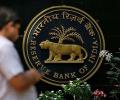
Reserve Bank of India on Thursday said 15 large NBFCs, including LIC Housing Finance, Bajaj Finance, Shriram Finance and Tata Sons, will be subject to enhanced regulatory requirements. The central bank has categorised NBFCs into Base Layer (NBFC-BL), Middle Layer (NBFC-ML), Upper Layer (NBFC-UL) and Top Layer (NBFC-TL). A list of 15 large Non Banking Finance Companies (NBFCs) falling in the Upper Layer category has been released.
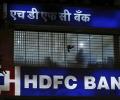
Weakness in HDFC Bank's net interest margin (NIM) might have bottomed out in the July-September quarter (Q2-FY24), analysts said on Tuesday, as most of the merger-related one-time adjustments have been done. The bank, they believe, should be able to grow from here on, allowing the stock to reverse its underperformance. "The weak NIM print was not unexpected given the merger and regulatory impact caused by the incremental cash reserve ratio (ICRR; 5-10 bps for the quarter).

Even as you fight the ongoing health challenge, here are some tips to strengthen your personal finance in the time of coronavirus.
 © 2026 Rediff.com - Investor Information - Advertise with us - Disclaimer - Privacy Policy - Sitemap - Feedback - About us - Terms of use - Grievances