
Retail inflation rose to a three-month high of 1.33 per cent in December 2025 mainly due to higher prices of kitchen essentials, including vegetables and protein-rich items.

The country's largest IT services company TCS on Monday reported 13.91 per cent decline in December quarter net profit at Rs 10,657 crore. The Tata Group company had posted a net profit of Rs 12,380 crore in the October-December period of FY25 and Rs 12,075 crore in the preceding September quarter.

There is positive sentiment for Tata Steel on the basis of strong domestic demand, a turnaround of European operations and moderate valuations. A combination of capacity expansion, efficiency gains, higher asset utilisation, and improved operating leverage may lead to margin expansions.

The largest tranche came in July, in the wake of Operation Sindoor, with the DAC according acceptance of necessity -- or initial approval -- for 10 capital acquisition proposals amounting to approximately 1.05 trillion through indigenous sourcing.

The government on Wednesday launched Rs 4,531 crore market access support (MAS) intervention scheme for a six-year period (FY26-31) to improve global reach, visibility and competitiveness of Indian exporters through 'structured and outcome-oriented' interventions.

The upcoming Union Budget to be presented on February 1 is likely to assume a nominal gross domestic product (GDP) growth between 10 and 10.5 per cent for FY26, a Business Standard poll of 10 economists showed. The first advance estimates released by the National Statistics Office (NSO) had estimated a nominal GDP growth of 9.7 per cent for FY25. Nominal GDP, calculated at current market prices, factors in the effect of inflation. It is used as the base to calculate crucial macroeconomic indicators, such as fiscal deficit, revenue deficit, and debt-to-GDP ratio.

Growth accelerated for Zomato operator Eternal in the second quarter of financial year 2026 (Q2FY26). Zomato's business to commerce (B2C) operations delivered a strong 57 per cent year-on-year (Y-o-Y) rise in net order value (NOV) to Rs 23,164 crore while consolidated revenue soared 183 per cent Y-o-Y (90 per cent Q-o-Q) to Rs 13,590 crore during the period, with like-for-like (LFL) growth of 65 per cent, and acceleration in the quick commerce (QC) segment, which recorded NOV growth of 137 per cent Y-o-Y (27 per cent Q-o-Q).

IT services firm Wipro's revenue is likely to increase by about 4.5 per cent in FY26, mainly driven by favourable sectoral trends and recovery in discretionary customer spending, according to global rating agency Fitch.

'The bigger unknown remains global geopolitics, which is inherently unpredictable, including developments in our neighbourhood.' 'Another concern is the increasing tilt of government finances towards welfare subsidies, especially at the state level.' 'This could constrain capital expenditure, which is critical for long-term growth.'

India's real GDP grew 8.2 percent in the second quarter of 2025-26, up from 7.8 percent in the first quarter and 7.4 percent in the fourth quarter of the last fiscal.

* Repo rate reduced by 25bps to 5.25 pc; * 4th rate cut, totalling 125 bps, since February 2025; * MPC also decided to continue with neutral stance; * GDP growth forecast for FY26 raised to 7.3 pc from 6.8 pc;

Brokerages expect the company to continue outperforming in the auto segment, driven by launches and the strong trajectory of healthy bookings.

India's third-largest telecom operator Vodafone Idea (Vi) has secured a 10-year breather on adjusted gross revenue (AGR) payments from the Department of Telecommunications (DoT). This is expected to ease pressure on its balance sheet and enable the company to raise bank debt for capital expenditure.

Net direct tax collection grew 8 per cent to over Rs 17.04 lakh crore this fiscal till December 17 on slower refunds and higher advance taxes from corporates, the income tax department data showed on Friday.

Highlighting India as the company's most important growth market, Fabricio Bloisi, group chief executive officer (CEO) of the Dutch technology investor Prosus signaled a sharp acceleration in artificial-intelligence investments across its portfolio in the country.

The July-September quarter (Q2) business update on revenue by FSN E-Commerce Ventures (Nykaa) was well received by most investors and the share price surged over 6 per cent, driven by one block deal. Even after Wednesday's minor dip, it was still higher at Rs 257.50 as compared to Monday's close of Rs 255.55.

Retail inflation inched up to 0.71 per cent in November on rising prices of vegetables, protein-rich items, and fuel, government data showed on Friday. The consumer price index (CPI)-based retail inflation had fallen to a record low of 0.25 per cent in October, mainly due to lower prices helped by GST rate cuts and a favourable base.
FSN E-Commerce Ventures Ltd, the parent company of beauty retailer Nykaa, recorded a 3.4x growth in net profit at ~34.43 crore in the second quarter of FY26, up from ~10.04 crore in the corresponding period last year.

The consolidated net profit of Marico, the maker of Parachute coconut oil, declined 0.7 per cent in the second quarter (July-September) of 2025-26 (Q2FY26).

The July-September quarter (Q2) performance of consumer electricals and durables major Havells India in 2025-26 (FY26) was broadly in line with Street estimates. While the top line was supported by robust growth in the wire and cable, switchgear, and lighting segments, the consumer durables segment restricted overall gains.

The Indian steel industry is faced with a paradox: Rising demand and falling prices. Demand continues to surge as user industries gather pace, with the World Steel Association projecting around 9 per cent annual growth for India over 2025 and 2026, the year domestic demand is projected to be almost 75 million tonnes (mt) higher than in 2020.

Axis Bank reported a sharp drop in net profit in the second quarter of financial year 2026 (Q2FY26) on higher provisions and weak operating profit growth while revenue growth was moderate. But loan growth and deposit growth improved to double-digits year-on-year (Y-o-Y) and asset quality also improved with the gross non-performing loan or NPL ratio moving down.

Shares of tyre manufacturers have outperformed broader equity benchmarks, buoyed by multiple tailwinds. Softer raw material prices, an uptick in demand from automakers following the reduction of the goods and services tax (GST) rates, and steady replacement demand have lifted sentiment toward the sector.

'Earnings growth will be the main driver of India's market in 2026, with profits expected to rise 9% to 10% in H2 FY26 and accelerate to 12% to 15% in FY27.'

Public sector banks' (PSBs') employee count grew for the first time in five years while private sector banks' staff strength saw a decline in 2024-25 (FY25), according to latest data released by the Reserve Bank of India (RBI). The employee count of state-owned lenders rose 0.22 per cent year-on-year (Y-o-Y) to 757,641 at the end of March 31, 2025 from 756,015 in FY24.

The operating performance of the country's largest passenger carmakers, Maruti Suzuki India (MSIL) and Hyundai Motor India (HMIL), in the July-September quarter (Q2) of 2025-26 (FY26) outpaced brokerage expectations.

Hit by a slowdown in information technology (IT) hiring, Info Edge (India)'s results for the July-September quarter (Q2) of 2025-26 (FY26) fell short of brokerage expectations. What helped the online recruitment major offset the weak IT hiring trend was broad-based growth across other sectors.

Wholesale price inflation (WPI) came in at (-) 0.32 per cent in November, driven by an uptick in prices of food articles like pulses and vegetables on a month-on-month basis, government data showed on Monday.

Coforge's planned $2.35 billion all-stock acquisition of US-based Encora has divided the Street, with a few brokerages terming it a "strategically positive" but execution-heavy bet while others raising valuation concerns.

Companies are squeezing more profits from their operations relative to the capital they put to work, the highest now since 2011. Profit after tax relative to capital employed came in at 10.47 per cent in September, shows data from the Centre for Monitoring Indian Economy (CMIE), higher than the 8.41 per cent seen in September last year. This is the highest since March 2010.
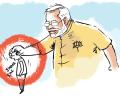
Fitch Ratings on Monday said India's steady GDP growth outlook, improved banking sector's financial health and expected interest-rate cuts in 2025 will support credit access for corporates in FY26.
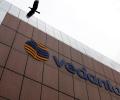
Mining major Vedanta's consolidated net profit plunged 58.69 per cent year-on-year (Y-o-Y) to Rs 1,798 crore in the second quarter of 2025-26 (Q2FY26), dragged down by exceptional losses booked during the period under review. The company had reported a net exceptional gain of Rs 1,160 crore in Q2FY25.

The government's indirect tax collection is expected to increase by 8.3 pc in the financial year 2025-26 (FY26), according to a report by ICICI Bank. The report also noted that this growth is higher than the 7.1 per cent increase seen in FY25 and is mainly driven by rise in GST revenue from strong urban consumption. It said "The increase is driven by higher goods and services tax collections which in-turn is explained by boost to urban consumption".

From the Sensex firms, Adani Ports, Bharat Electronics, Eternal, Tata Motors Passenger Vehicles, State Bank of India and Kotak Mahindra Bank were among the biggest gainers. However, ITC, Bajaj Finance, Titan and Tech Mahindra were the laggards.

The pickup was driven partly by fresh corporate investment but more by higher working-capital demand.

Adani Energy Solutions on Monday posted a 28 per cent decline in consolidated net profit to Rs 557.10 crore for the September quarter, mainly due to one-time adjustment of deferred tax of Rs 314 crore in the year-ago period. Adani Energy Solutions Ltd (AESL) had reported a net profit of Rs 773 crore in the July-September quarter of the last fiscal.

Healthcare major Max Healthcare Institute delivered a healthy performance in the second quarter (July-September) of 2025-26 (Q2FY26). Strong patient volumes and average revenues not only boosted the top line but also aided the operating performance.

ICICI Bank delivered satisfactory results in the second quarter of 2025-26 (Q2FY26), sustaining return on assets (RoA) of around 2.3-2.4 per cent and improving asset quality. Provisions declined 26 per cent year-on-year (Y-o-Y) and 50 per cent quarter-on-quarter (Q-o-Q).

India's economy is projected to grow between 6.3 per cent and 6.8 per cent in FY26, according to the Economic Survey 2024-25, tabled in Parliament on Friday. The survey highlights that the country's economic fundamentals remain strong, supported by a stable external account, fiscal consolidation, and private consumption. It noted that the government plans to strengthen long-term industrial growth by focusing on research and development (R&D), micro, small, and medium enterprises (MSMEs), and capital goods.

The Indian rupee, swaying through multiple headwinds, tiding over global trade disruptions and massive foreign fund outlfows, is unlikely to arrest its descent until tariff impact overhangs, notwithstanding robust domestic macroeconomic tailwinds. The Reserve Bank of India (RBI), which sees the rupee's depreciation as a silver bullet to offset the tariff shock, expects the currency to find its stable course once India reaches a trade deal with its largest trading partner, the US.
 © 2026 Rediff.com - Advertise with us - Disclaimer - Privacy Policy - Sitemap - Feedback - About us - Terms of use - Grievances