
With inflation turning negative, industry has been demanding interest rate cuts to propel demand. However, RBI Governor D Subbarao had said there is no threat of deflation as food and crude oil prices are still firm.

The recently released RBI First Quarter Review of Monetary Policy 2009-10 and the accompanying 'Macroeconomic and Monetary Developments First quarter review 2009-10 have indicated that on the basis of Balance of Payments (BoP) the export growth for 08-09 has declined by over 22% to 5.4% and also the import growth has declined by over 21% during the same period.
Rapid depreciation of the rupee put us in a vicious spiral: D Subbarao
Calls for decisive fiscal policy action to revive growth
To first take a position that the currency would be managed, and then to witness it fall, is a grave loss of credibility for any government, and for any central bank.
Subir Gokarn says credit-deposit growth mismatch for a longer period could put pressure on liquidity.

Though monsoon risks to overall economic growth could be limited due to small share of agriculture output in GDP, the impact may be significant because it affects the poor through inflation and income, RBI noted in its 'First Quarter Review of Monetary Policy 2012-13'.
The Reserve Bank of India, in its first-quarter review of monetary policy, kept the benchmark policy rate constant at 8 per cent.
RBI's policy stance must address concerns over slowing output
The Reserve Bank of India on Monday gave strong hints of another hike in its key interest rates at the policy review on Tuesday, saying that high inflation requires further monetary tightening, slowdown in growth notwithstanding.
Bankers and other stakeholders are now almost certain that the Reserve Bank of India (RBI) will increase the key policy rate, or the repo rate, by 25 basis points (bps) on Tuesday.

To consider revising interest rates after RBI's review.

Select bankers will meet RBI Deputy Governor Subir Gokarn, who is in-charge of the monetary policy department, and other central bank officials on July 12.

As the first quarter review of the credit policy approaches, voices from the market are getting louder by the day that 'baby steps' may not be sufficient to fight rising prices.

High deposit rates may put pressure on teaser home loan rates

To stamp on inflation, RBI raised its key short-term lending and borrowing rates by 0.25 per cent and 0.50 per cent respectively.
Ahead of the first quarterly review of credit policy on Tuesday, RBI Governor D Subbarao on Friday met Prime Minister Manmohan Singh and Finance Minister Pranab Mukherjee to review the macro economic situation.

It could add to pressure on inflation, especially food inflation, which was already high, it said.
Macroeconomic and Monetary Developments: First Quarter Review 2007-08.
Checks on the large capital flows could be on the anvil as the Reserve Bank of India on Wednesday said its inflation target for 2007-08 hinges on a "more active" capital account management.
The manufacturing sector's robust performance was largely contributed by machinery and equipment, food products, basic metal and alloy industries and chemicals and chemical products, the RBI said.
Flush liquidity, apart from softening short-term money market rates, poses inflationary risks.
Though interest rates have peaked, a hike in cash reserve ratio by the Reserve Bank of India cannot be ruled out in the first quarterly review of monetary policy later this month, a top official of a foreign bank said on Monday.

The Reserve Bank of India has kept the key short term lending rate (repo rate) unchanged at 7.25%.
Average price of the Indian basket for international crude rose by 42.4 per cent during 2005-06 as compared to the previous year, leading to a sharp increase in merchandise import payment during the year, says RBI.
Reserve Bank of India Governor Yag Venugopal Reddy presents the First Quarter Review of Annual Statement on Monetary Policy for the Year 2006-07.

The RBI left key policy rates unchanged and cut the GDP growth estimate for this fiscal to 5.5 per cent from 5.7 per cent.
The Reserve Bank of India on Tuesday left all the key interest rates unchanged in the first quarterly review of the monetary policy.
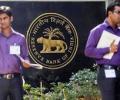
On July 15, the Reserve Bank put in place measures to restore stability in the foreign exchange market, including raising the Marginal Standing Facility and bank rates to 10.25 per cent and restricting access by way of repos to Rs 75,000 crore (Rs 750 billion).
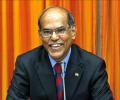
Amidst bankers and industry crying foul over RBI's move to squeeze liquidity, Reserve Bank Governor D Subbarao on Friday met Finance Minister P Chidambaram ahead of first quarter policy review next week.

Standard Chartered on Friday lowered India's growth forecast for the current financial year to 4.7 per cent from earlier 5.5 per cent, citing "upside risks" to inflation and fiscal deficit.

The HSBC India Composite Output Index, which maps both services and manufacturing activity, fell to 48.4 in July, down from 50.9 in June, indicating an overall contraction.

The HSBC/Markit purchasing managers index for the manufacturing industry stood at 50.1 in July, slightly more than 50.3 in June, indicating a broad stagnation of manufacturing operating conditions in India.

The Reserve Bank of India had taken steps to tighten liquidity in a bid to curb volatility in the forex market after the rupee fell to a record low of 61.21 to the dollar on July 8.
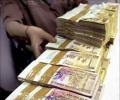
The steep fall in rupee came on a day when the Reserve Bank of India in its first quarter review of monetary policy kept the all key rates unchanged but cut the gross domestic growth forecast to 5.5 per cent for FY'14 from 5.7 per cent earlier.
.jpg)
The rupee is set to breach the Rs 60-a-dollar mark again this week as the Street expects foreign institutional investors to continue pulling out of domestic markets. According to the street, this would result in government bond yields rising.
.jpg)
The Reserve Bank is scheduled to unveil its first quarter review of the monetary policy on July 30.

Commercial papers, certificates of deposit also dry up

Hawkish tone likely to guard rupee from further slide

After fighting inflation for more than two years, Reserve Bank of India (RBI) Governor Duvvuri Subbarao finally managed to bring it below the five per cent level - the tolerance level of the central bank - in FY14.
 © 2026 Rediff.com - Investor Information - Advertise with us - Disclaimer - Privacy Policy - Sitemap - Feedback - About us - Terms of use - Grievances