
The Indian rupee, swaying through multiple headwinds, tiding over global trade disruptions and massive foreign fund outlfows, is unlikely to arrest its descent until tariff impact overhangs, notwithstanding robust domestic macroeconomic tailwinds. The Reserve Bank of India (RBI), which sees the rupee's depreciation as a silver bullet to offset the tariff shock, expects the currency to find its stable course once India reaches a trade deal with its largest trading partner, the US.

Stock markets are likely to trade in a range-bound manner in a holiday-shortened week where trading activity of foreign investors, currency movement and global macroeconomic data announcements are expected to drive sentiments, analysts said. Several global markets may see subdued activity on account of Christmas and New Year holidays, an expert said.

Companies are squeezing more profits from their operations relative to the capital they put to work, the highest now since 2011. Profit after tax relative to capital employed came in at 10.47 per cent in September, shows data from the Centre for Monitoring Indian Economy (CMIE), higher than the 8.41 per cent seen in September last year. This is the highest since March 2010.

Foreign investors pulled out Rs 17,955 crore (Rs 2 billion) from Indian equities in the first two weeks of this month, taking the total outflow to Rs 1.6 lakh crore (Rs 18.4 billion) in 2025.' This sharp withdrawal follows a net outflow of Rs 3,765 crore in November, extending the pressure on domestic equity markets.

Overall economic activity continued to hold up in November with demand conditions remaining robust, thanks to strengthening urban demand, but manufacturing and rural demand showed some signs of deceleration even as services remained strong, according to an article on the State of the Economy written by Reserve Bank of India (RBI) officials in the central bank's December bulletin.

E-commerce giant Amazon plans to make a mega-investment of $35 billion, over Rs 3.14 lakh crore, in India by 2030 across its businesses with a focus on AI-driven digitization, export growth and job creation, a senior company official said on Wednesday.

Among the Sensex constituents, Eternal, Trent, Bharti Airtel, Infosys, Tech Mahindra, UltraTech Cement, ICICI Bank, HDFC Bank, Bajaj Finance, Tata Consultancy Services, Bharat Electronics Ltd, Larsen & Toubro and Tata Motors Passenger Vehicles were the laggards. However, Tata Steel, Sun Pharmaceuticals, ITC, NTPC, Reliance Industries, HCL Technologies, PowerGrid, and Asian Paints were among the gainers.

Leading non-banking financial company (NBFC) Shriram Finance on Friday said Japan-based MUFG Bank would invest Rs 39,618 crore, or $4.4 billion, to acquire a 20 per cent stake on a fully diluted basis through a preferential issue of equity shares.

Ghost malls have a vacancy rate of over 50 per cent.

'We have seen that stablecoins lack the basic attributes of money, their advantages are neither unique nor unambiguous and their risks are all too real.'

Sun Pharmaceutical Industries on Wednesday posted a 2.56 per cent increase in its consolidated net profit to Rs 3,118 crore for the second quarter ended September 30, aided by robust sales in India and emerging markets. The Mumbai-based drug major reported a net profit of Rs 3,040 crore for the July-September quarter of the last fiscal.

Equity markets fell on Monday, with benchmark indices recording their worst session in over two months amid caution ahead of the US Federal Reserve's (Fed's) policy announcement and renewed uncertainty over the US-India trade deal. Sustained selling by foreign portfolio investors (FPIs) also weighed on sentiment.

Despite trailing the benchmark Nifty 50, small and midcap (SMID) stocks appear pricey on a 12-month forward price-to-earnings (P/E) basis. The Nifty trades at roughly 21x forward earnings, compared with around 28x for both the Nifty Smallcap 100 and Nifty Midcap 100 indices.

'If we don't become part of this, if we don't embrace this particular technology, millionaire brands might go down, which we cannot allow.'

After a brief pause in October, foreign investors resumed selling, pulling out a net Rs 3,765 crore from Indian equities in November, driven by global risk-off sentiment, volatility in global tech stocks and selective preference for primary markets over secondary markets.

iPhone maker Apple hit an all-time revenue record in India during September quarter, marking a strong growth streak in the world's second largest smartphone market where the tech titan has been deepening retail footprint and local manufacturing.

'We expect inbound numbers in 2025 to come close to pre-pandemic levels -- if not fully match them -- by early 2026.'

India needs to increase the investment rate to 34-35 per cent from 31-32 per cent currently to achieve a growth rate of 7 per cent and above, said S Mahendra Dev, chairman, economic advisory council (EAC) to the Prime Minister, on Wednesday.

'Calibrated depreciation will help rebalance external fundamentals, offset some of the tariff differentials with competitors, improve the competitiveness of domestic substitutes vis-a-vis Chinese imports, and contribute to the easing of financial conditions at a time when the inflation rate is unusually low,' explains Sajjid Z Chinoy, head of Asia Economics at JP Morgan.

Analysts at Morgan Stanley have updated their outlook for the Indian markets, and they now expect the Sensex to hit the 107,000 mark by December 2026 in a bull-case scenario, translating into an upside of 26 per cent from current levels.

So far this year, the rupee has fallen by 4.2 per cent, the worst among its Asian peers.

'In the long run, India's strong growth story and reforms to make assets globally attractive will determine the rupee's resilience.'

Assessing where their funds are flowing gives traders a hidden edge in predicting the market direction and momentum.

Global index provider MSCI has announced the addition of four Indian companies-including Fortis Healthcare and Paytm - to its Global Standard indices. According to Nuvama Alternative & Quantitative Research, each of these companies is expected to see passive inflows exceeding $400 million. Shares of Paytm rose 4.3 per cent on Thursday, while Fortis Healthcare dipped 1.1 per cent.

From the Sensex pack, Asian Paints, Tech Mahindra, Tata Consultancy Services, Bajaj Finserv, Adani Ports, HCL Technologies, Bharti Airtel, Infosys, Trent, Reliance Industries, UltraTech Cement, Sun Pharmaceuticals, Eternal, Titan and Bajaj Finance were the gainers. On the other hand, Tata Steel, Tata Motors Passenger Vehicles, Tata Motors Commercial Vehicles, Bharat Electronics, Kotak Mahindra Bank and PowerGrid were the laggards.

After withdrawing money on a net basis for the past three months, foreign portfolio investors (FPIs) have turned buyers with a Rs 6,480 crore investment in October so far, driven by strong macroeconomic factors.

UBS has turned bullish on emerging markets (EM), including India, as it finds benign macro trends, positive momentum in earnings revisions, and resilient EM currencies helping these economies sustain higher valuations and attracting flows. Among regions, it has upgraded Mainland China to 'attractive' and China Tech to 'most attractive', while downgrading Philippines to 'neutral'.

Ness Wadia says bigger IPL window needed, all for Champions League revival.

The government on Wednesday approved two schemes worth Rs 45,000 crore to help exporters tide over the impact of high tariffs imposed by the US on Indian shipments.

India's computer services exports have risen 30 per cent since the advent of ChatGPT in November 2022, even as overall services exports have plateaued, World Bank's South Asia Chief Economist Franziska Ohnsorge said, terming Artificial Intelligence (AI) and the conclusion of more trade agreements that can trigger a "manufacturing renaissance", as the two big investment opportunities for India in coming years.

From the Sensex firms, Bharti Airtel, Power Grid, Tech Mahindra, Infosys, Bajaj Finance and Reliance Industries were among the major laggards. However, Larsen & Toubro, Bharat Electronics, UltraTech Cement and Maruti were among the gainers.

Pharma major Cipla Ltd on Thursday reported a 3.7 per cent rise in consolidated net profit at Rs 1,353.37 crore for the second quarter ended September 30, 2025. The company, which had posted a consolidated net profit of Rs 1,305.01 crore in the second quarter of the last fiscal year, said its managing director & global CEO, Umang Vohra, has decided not to seek re-appointment upon completion of his current term on March 31, 2026, Cipla Ltd said in a regulatory filing.

The Reserve Bank of India's (RBI's) short dollar forward positions rose by $6 billion in September - the first increase in seven months - indicating the central bank's readiness to defend the rupee in the forward market amid pressure on the currency, latest data showed. The net short dollar position stood at $59.4 billion at the end of September, up from $53.4 billion in August.

'The danger is that when the music stops, the fall will be sudden, faster, and deeper than anyone expects,' warns Debashis Basu.

Deloitte India on Thursday projected India's economy to grow 6.7-6.9 per cent in the current fiscal amid buoyant demand and policy reforms. Indian economy grew 7.8 per cent in the April-June quarter of current fiscal.

The World Bank on Tuesday raised India's growth forecast for the current fiscal to 6.5 per cent from 6.3 per cent estimated earlier, and said the country is expected to remain fastest-growing major economy, underpinned by continued strength in consumption growth.
Stock market investors this week would track the renewed tariff tensions between the US and China, domestic inflation data, besides, quarterly earnings from blue-chips HCL Tech, Infosys and Reliance Industries would also drive the momentum in equities, analysts said.
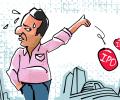
'The primary market's rhythm mirrors investor confidence. While sentiment may appear cautious, it reflects maturity, not weakness.'

'The outlook for the next Samvat is more constructive, as many of the earlier drags are gradually becoming supports.'

Indian drugmakers Eris Lifesciences, Wockhardt and Lupin are prepping to cash in when Danish company Novo Nordisk bows out of the human insulin pen market by the end of this year and creates an opportunity estimated to be worth Rs 600-800 crore in the domestic market. Some self-use disposable pens are pre-filled with insulin and others can be reused with new cartridges.
 © 2026 Rediff.com - Investor Information - Advertise with us - Disclaimer - Privacy Policy - Sitemap - Feedback - About us - Terms of use - Grievances